
Xavier Dolléans, AFC: Building Baghdad in Cairo for High Value Target
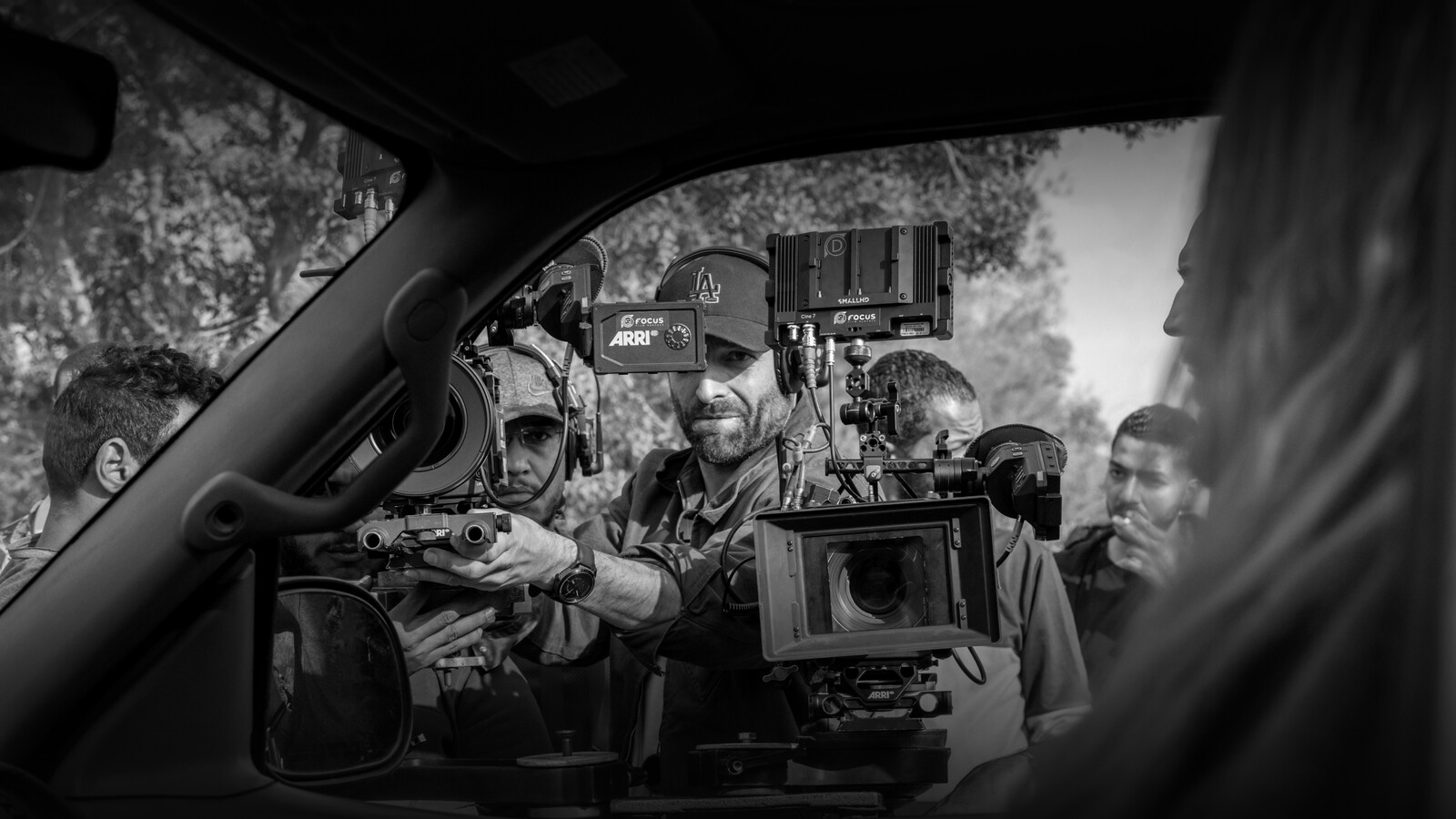
We want almost the frame to be a window on the story. We don't want to have any pieces of glass to interfere with the look.
Xavier Dolléans, AFC spent five to six months in Cairo photographing High Value Target: The Hunt for Saddam, the TNT limited series directed by Leslie Greif, with a local crew he met on arrival. He calls himself "a big anamorphic guy," but chose ARRI Signature Primes here. "We want almost the frame to be a window on the story," he tells host Jared Levy. Halation and grain came later, in the grade with colorist Karim El Katari.
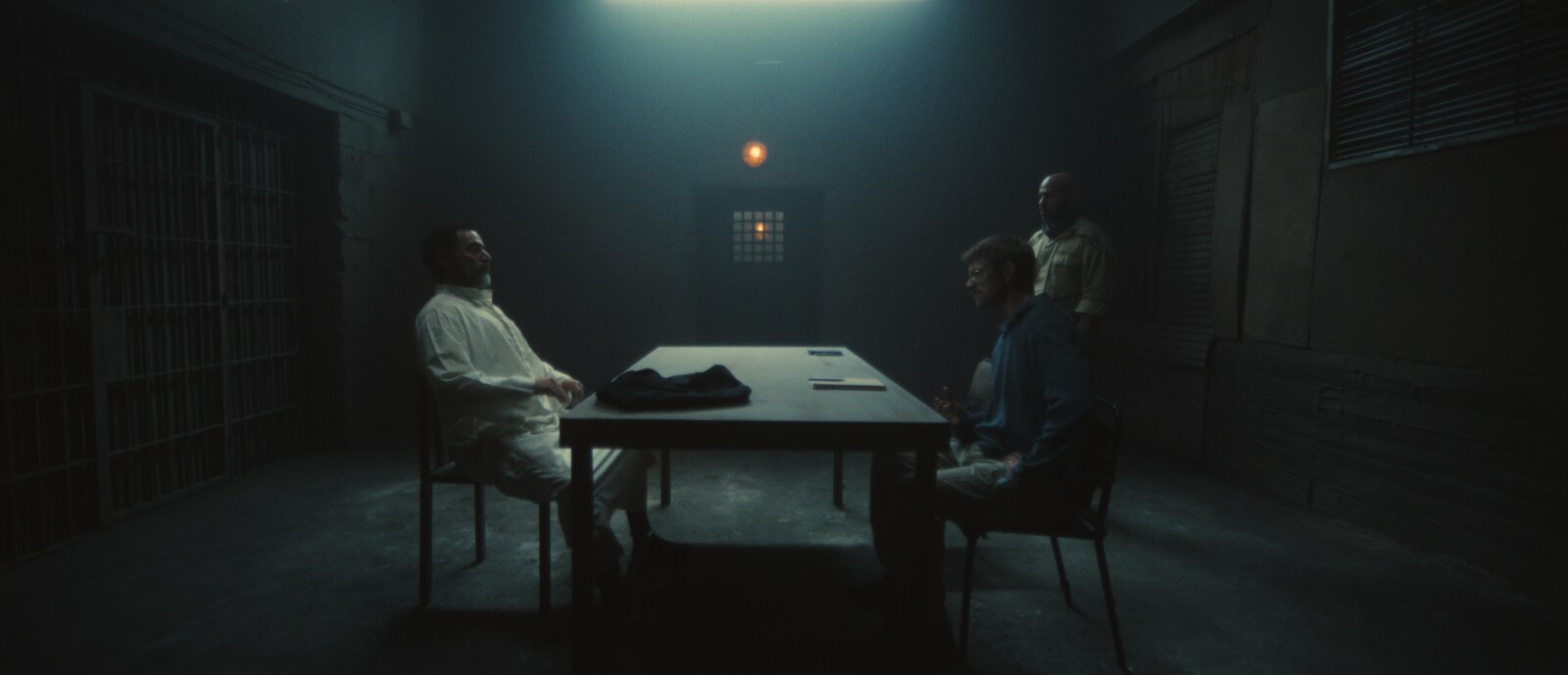
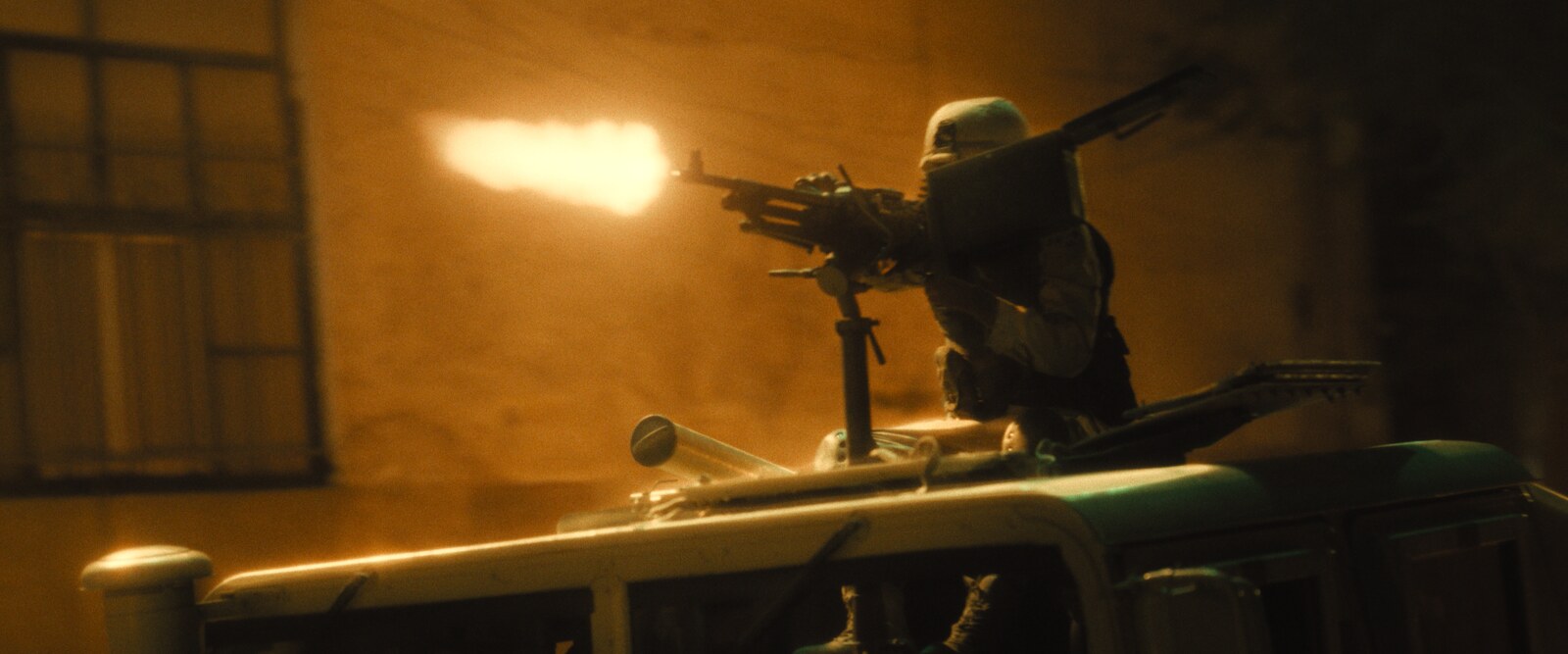
For the night raid that ends in Saddam Hussein's capture, filmed in the desert near Saqqara, two soft boxes of about 10 by 6 meters hung from cranes over four to six cameras and a drone. "The fill light is becoming the key light," he says. The interrogations ran on three cameras, which pushed his lamps back from the actors. "When you do so, all your lightings are more realistic."
-
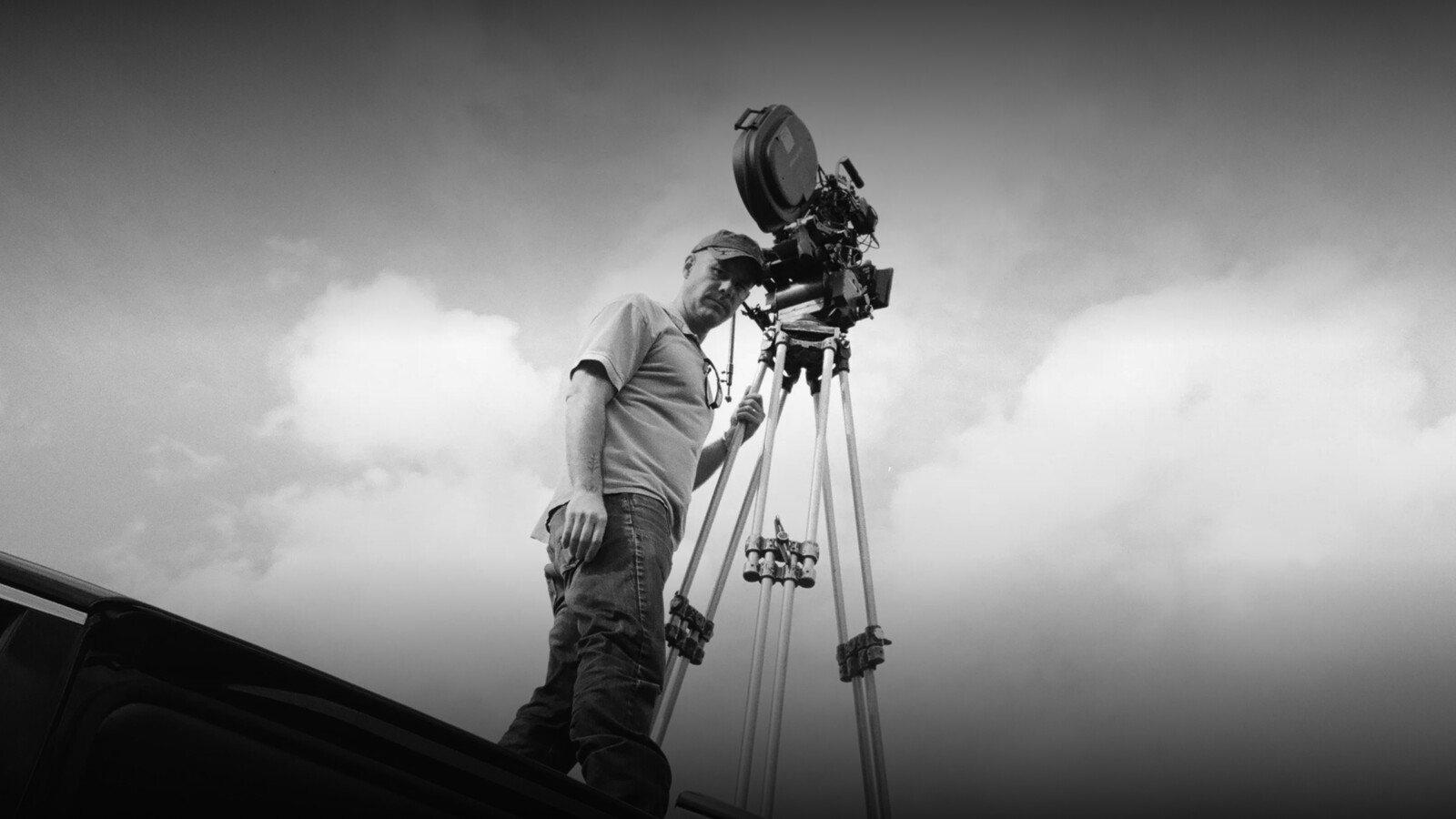
Xavier Dolléans, AFC
-
Jared Levy
-
David Kruta
-
Topher Hammond
This episode is made possible by Fujifilm.

FUJIKINA comes to New York, October 16 to 18: three days of exhibitions, talks and workshops on the Lower East Side. Schedule and tickets: shopusa.fujifilm-x.com/fujikina ↗
Read the full conversation
All right. So just wanna thank you for coming on. In preparation for this, I started watching some episodes, and I'm super into the show. It's totally my kinda historical retelling, and it has a little bit of CIA craft, but also there's some really big battle scenes and historical battle scenes. When you first had the project presented to you, I was curious, how did it come across your desk, and what were your first thoughts when it came? I could see things being exciting about it, but also what maybe made you nervous and thought would be quite challenging about it?
Yeah. I was first very excited. I mean, like you, I like to watch them. So I was like, "Oh, wow, okay, this is a CIA/historical also show, and about a story that you don't really know." We were telling a part of the story that you don't really know about how Saddam Hussein has been really captured, and also the interviews that happened just after the capture. So I was very excited. I didn't know about the scale of the battle first because I mean, you read them, and then you go in Cairo. We were shooting in Cairo, Egypt, and then you realize, okay, this is going to be that size. This is going to be so big, and this is going to be at night, and we are doing the Battle of Baghdad at night in that big area in Cairo. Very hard to access everywhere on the rooftop for lighting. Very hard to do the ITC with all the vehicles, and bringing also some equipment from the army. We were not very far to Gaza. If you look just in straight line, we were 300 kilometers. So this was also during the war, very close to a war zone. So many questions about safety, organization, working with the Egyptian Army, and those things were a bit frightening at first, yes.
I didn't even realize there was that component to it. I was gonna ask what country you were filming in, but Cairo and Egypt, quite interesting. But before we dive into the specifics of the shooting, I just wanted to talk during prep, knowing that it's a period piece, I think it's always interesting to hear about how each filmmaker was thinking about how to capture that period. 'Cause I feel like you can go a few different routes. Philosophically, you can try and use lenses from that era, or you can try and make it feel like the way footage looks from that era, or you can kind of avoid that entirely, there really is no way to do it. One way to do it. So how were you thinking about capturing the period?
That's an interesting question because obviously we had this talk about what do we do in term of style and what do we do with lenses? So very quickly we were like, "Oh no, we need some sharp and precise lens because we want to be close to the subject." And also we wanted to be close to some picture that you can find on Getty Images. This war, this is a period, but this is not so far. So all the images that you find, especially photo, pictures, they are like this has been taken yesterday. You just see the pieces of equipment which are a bit like 20 years ago, mobile phone and computers and vehicles. But apart from that, this is so close to us. So we wanted to have that feel and that's why we selected Signature Primes lenses. I knew I'm a big anamorphic guy, but I knew for this one I wanted to be historical.
What made that choice for you? Why was that so clear?
Well, because we did a little bit of test and a little bit of talking, and we were like, we want to be sharp and precise, and we want to have a very straightforward image. We want almost the frame to be a window on the story. We don't want to have any pieces of glass to interfere with the look, the frame, impressionistic distortion. So at the end, we worked a bit around the lenses digitally. We did some little bit modification of the halation, of the contrast, and of the resolution a little bit, I mean, in the post-production with Harbor and my colorist. But at first, we want it to be very sharp and precise and straight. And also the network, they ask us, they said, "Oh, we are okay for 239, 240, the ratio. But we don't want any anamorphic." So I was like, "Oh, we are all going in the same direction." They didn't want, they probably had bad experience with the distortion or the blurry side if you open too much or... And I was a bit surprised, because for example, in France, this is mostly the opposite. You can shoot with whatever lenses you want, but you have to fill the whole area.
'Cause I was gonna say, I noticed the halation. And so you're saying that that was strictly in post. That wasn't filtration.
No, no filtration. I was also very straightforward. Very quickly, we were like, "Okay, we want to have three cameras all the time for all the interviews, but we want to have also three cameras all the time shooting for everything else, and more than that, four to five to six camera for action scenes." So very quickly I was like, "Okay, I need a big lens package. So I need to find all those lenses available in Cairo in Egypt. I need to be straightforward with my thoughts about filtration and everything, so I will remove all the filtration." I'm more a guy who is doing everything on set. I'm not the person trying to fix stuff in post-production. But I'm trying to do as much as I can, but on this one, that was more a logistical question also, to be able to, okay, we want to work fast. We will have some splinter unit, we will have some second unit, drone unit, stunt unit, and stuff, and camera going, cameras going everywhere. So I need all the settings for everybody to be very easy to find and access and to manipulate and straightforward. And that's funny because the philosophy of it, the artistic point of view was giving the tone, but also everything on the ground was giving me the same signal, when things align. I'm like, "Oh, okay."
Well, it's always so funny. I joke that when you're on the right path, the film gods give you a wink letting you know. It's like in those moments, you're just reminded that yeah, I'm feeling less tension in this direction, and there's a reason for it. How was it working with the halation in post? Did you enjoy the experience, especially being someone that, as you mentioned, prefers to do it on set?
Well, this is a good question. The short answer is you have to have the good people to use the plugin. And the long answer is I'm working with Karim El Katari, and he's my colorist since many years. He was in France first, then he moved to Montreal. Now he's working at Harbor New York. So at Harbor New York, they are, I mean, these guys, they are crazy with plugins and color science and testing new things all the time. The architecture of the workflow are really great, and they are very precise, and they are giving you answers, and they were guiding me on the technical side. And also with Karim, we had the artistic vision at first. So we did some testing at first, during the prep, and we were like, "Look, this is the kind of halation I can give you after. And we can even push more. Are you happy with that? Do you want..." And I was like, "Yeah, yeah, yeah, definitely we need to, we need..." Because the image was at one point maybe too sharp and too modern. So we want it to be in between, and so we worked with halation and some special settings, and stuff they have with Harbor. Layer of grain, and they have their own recipes of texture, which is grain halation, and then working on the frequencies on the image, in some places of the image where you can just bring some softness. And yeah, they are really great to help the DPs to go with that vision.
Yeah, and did you find that... 'Cause I could see there being a lot of advantages to it. I'm like you where I prefer to do it in camera, but I could see where being able to change the intensity of it based on elements that are happening in the frame, where if you're doing it with a filter, you don't have necessarily that type of revisionist ability. Did you end up arguably liking it more, that you could dial things slightly differently in post, like if one scene, it was feeling better to have it less or more that you had that freedom?
Yes. For this show, yes. Pick again, because we were shooting with multiple cameras over a six month, many units, different countries, different camera bodies, different lenses coming from everywhere in the world. 'Cause also a part of the show is shot in Washington, so new lenses, new stuff. And then I was like, we had all, we were also shooting with some Alexa Mini LF at one point, so the main cameras were the Alexa 35 and Alexa Plus, Alexa Mini LF. And then they were shooting without me some stunts and stuff, and then when you see the final edit, you are like, "Oh my goodness, this is coming from so many different places and weather condition and stuff." I knew that. I knew because I was like checking the dailies every day, but then when you see it, you are like, "No, I'm happy that I can, that part I can handle it digitally," and I can dose it precisely.
And I just heard you say that at parts it was Alexa 35 and at parts it was LF. I'm curious what the decision-making there is when you're flipping back and forth between 35 and large format. What was that about?
No, no, that was not about flipping. That was more a question of camera availability in Cairo. Past six camera, six Alexa 35, we needed to add more mini LF, backup camera body. But also because they were shooting a lot. They are shooting a lot in Cairo Ramadan series for all the Middle East, and we were at the same time shooting our show. So they were shooting everywhere. And the crews were, some of them, they were working at night on some other shows or shootings or commercials. So Cairo is really a busy place in term of they have a big rental. And yeah, so and camera and lens is also the signature brand. I was like, "Okay, I need something robust," and because the dust is everywhere in Cairo, and I need to have them in big quantities, in big, big quantities. Like two, three, four, five sets, plus all the signature zooms that you can imagine. So that was this kind of decision.
When you're filming in a country like that, you have every single Alexa package that exists in the country is on your set.
Not really, but yeah, that was the idea. Again, the Focus Film Rentals, the rental, the big one in Cairo, they are really big. They have a lot of camera bodies at the same times, but we were shooting during the Ramadan series time. So basically they are shooting all the series that they are going to watch during Ramadan. So just prior to the Ramadan, a few months before, they are shooting like crazy in Cairo. So even to find a crew was kind of difficult.
I was gonna ask, in terms of the prep and knowing that you're gonna be working in a country like that, which key crew members did you take with you? And then how was it working with the foreign crew, especially in prep maybe before you were on the ground? What was that interaction like?
I went very quickly on the ground because I did the interview, I think, December 20, and January 1st I was on the ground. So during these 10 days I've done some interviews. First, my plan was to bring my gaffer, and then I realized, no, I need to... This is so different, in term of crew organization and the way people are also working together. I was like, I need to take the crew local. So I want everybody to be local, and this is always better for myself to adapt to everybody, rather than to ask to two or three keys to come, and then you have to double this with local. And you have to ask them to adapt to a specific way of working. And I was like, "No, I want to be the only one to adapt myself, and I want the crew to be local." But I had only the option to bring only the gaffer. And I said very quickly, we were like, "No, this is not going to work." So also this was a very long shooting, like five to six months. So to find people able to go away for so long, because you don't come back home. And then during the prep, I didn't do that much prep during the 10 days. I probably just send a camera list and starting to talk with some camera assistant. But then on the ground I discovered all my crew and I had one month, five weeks of prep in Cairo to prep everything. This was crazy. Discovering...
That seems really short.
Yeah, I think with a good crew you can do a lot. And the way they are working in Egypt, this is a mix of the US way of working, the European way of working, and this is also a lot of improvisation. And they are the power of the number. They can be very quickly a lot of people. And the electrician crew or the grip crew, the rigging grip crew, they can do stuff during the night that you can't imagine with a shooting in Europe, for example. So once you start to understand that, you are, "Okay, this is working this way. This is going to be like that. I need two more 18Ks. We don't know where to find them. We are going to call someone during the night." And they are going to go somewhere in Cairo at the end of the commercial shooting, bring the two 18K, then put them on a cherry picker during the night and the next morning you will have this, which is kind of impossible. I mean, they were working at night very easily.
That reminds me of shooting in India. I had a very similar experience. I didn't realize that I was gonna have a rigging crew overnight for a commercial, and I get on set ready to light for the first couple hours, and I walk on set and it's already done. And it took me completely by surprise. It's interesting.
I had the same in India. And actually, it reminds me a little bit of India for this part. For the camera crew, for example, the rental is giving you all the camera assistant except the focus puller. So I selected the focus pullers, three of them, and then the rest of the camera crew, they were attached to a camera body, actually. I had three camera assistant coming from the rental attached to one camera body in a minivan. So every camera body with a minivan and a set of lenses capable of moving everywhere. Very interesting organization.
Well, and it's nice that you were able to use that and it makes sense then that adapting to this way opened up some possibilities for you and made it a bit more realistic. That makes sense. Getting into the show now and thinking about... I guess a lot of the footage with battles and specifically that this was a documented war in modern times, what were you referencing when you were thinking about your ideas for how to capture it? I was curious how you were thinking about capturing the battles and what references and discussions you were having with the director about that.
Camera-wise, the idea was to set up the action, to rehearse, and then when we were ready, all the cameras were shooting in all the angles that you can imagine. I was just here to say, "No, no, no. Not that angle, not that part, because this is not lit yet." And I was on this one. I was not operating. I was using camera operators on all the big battle scenes. And lighting-wise, I found some very interesting images in Getty Images, with the production designer. He showed me a lot of images from the time and we were looking at some footage of the time and I was like, "Oh, this is this kind of light, the sodium merc... But this is not the perfectly lit city. Some parts were, like, broken, so you had some pool of light, and then this is green, and then this is orange, but this is imperfect." So I tried to do this. Funny enough, like everywhere in the world, they are changing all their streetlights, they are switching to LED. So you have to go back to sodium, mercury's, vapor, mercury or sodium vapor, and then you have to switch back. And you have a lot of LEDs everywhere in the shops, so you have to switch off everything, and you have to say, "No, no, no, we want more blue. We want..." So I think I worked more with the colors, and I tried to bring back all the colors and also the messiness of the organization of the lighting. And in term of shooting, because shooting with four cameras, the temptation is to cover everything. And every time we are doing this, we are like, "No, we want to follow this guy. We want to follow John Nixon. We want to be closer to him. We want to be closer to that part of the action." Then that was the way to behave with all the cameras. Because if you don't do that, then suddenly you shoot everything all the time, many times.
Well, no, I could see it being overwhelming and almost... Having too much choice can cause you to get paralyzed. Because the question that I kept having was, how are you shot listing such large set pieces? What was that shot listing process like? Or potentially I could see it not even being shot listing, more camera placement, and then you have options later. 'Cause I also enjoyed that, and it makes sense listening to you talk now, that there would be moments in these scenes where it would just have almost journalistic style cuts to just quick little moments. And I'm like, "That's"... I could see that being really tedious to shot list, but if you just have certain cameras that are devoted to just grabbing what's effectively B-roll of these scenes that you could just pepper it in, and I don't even know if you need to necessarily have such a dedicated or descriptive shot list for that. So how did you approach this, preparing for this?
Well, some scenes they were fully storyboarded, as a base. The storyboard was probably the main tool, I think, for action scenes. And some of them, they were storyboarded up to a certain point, but then we, on the day, especially some of them, we... For example, the capture of Saddam Hussein, we shot it over three days. And the first day was with Joel Kinnaman, doing the main action, and then we shot two more days. So I think we were setting the action on large areas. Okay, the helicopters are going to land here, then the guys are coming from here to here, then they are doing that part of the building, and then on the compound in here, and whatever, and then we find Saddam, and then they go back this way. So the idea was like, okay, we have the crane, we have the drone, we have so Supertechno and many, we have steady cam and stuff and okay, we want to go from here to... And for that scene, for example, we didn't use the storyboard so much. A little bit at first when they arrive, but then everything else is more like, we were looking at the blocking and then, okay, let's roll. We were more shooting like that. For example, there is one explosion at the beginning of one episode. I think this is episode four or five. They are driving in the city, and a guy is bombing in the middle of a cafe. For that one, we did a very precise storyboard because we knew we need to be precise to shoot in that part of Cairo with explosions and stuff. At the end of it, we didn't made the explosion. We made it in post, but we were ready to do it for real and then we said, "No, no, we can't because of this safety stuff in Cairo." But for that one, for example, I remember we were very, very precise. For the capture of Saddam also, but then for the two more days that we did, we were more like following the action, doing more action, sending B-roll and cameras to shoot some part of people looking at people firing, people... We were like more like that. No, I mean, the conclusion is more like this was a mix. Some of them storyboarded precisely and some of them were more like following the action.
And that makes sense. I was gonna say that it reminds me of a story about Spielberg for the opening beach, for storming at Normandy for Saving Private Ryan. The first day was a disaster 'cause he was trying to shoot it like a normal movie, and nothing was working. And then the next day he realized that he just wanted to set up six guys almost in a documentary style shooting, just grabbing everything as it was happening. And it just gave so much more life to it. And that makes sense 'cause at a certain point with that cacophony of action, I just think how you were going about it makes a lot of sense.
And what is interesting, this is like when I had a talk with one of the editor, and they told me, "Hey," because we did some reshoot, and he said Can you try to be more closer to some of them or to John Nixon at this point? Or... And I was like, when you shoot with four cameras at the same time, and you don't want to clean up too much after, 'cause we did some cleanups. We erased some cameras, some shadows, some stuff, but not that much I would say. So when you shoot like that, you shoot mostly with long lenses. So when you shoot with long lenses, you lose the feeling of being close to the main character or this style of wide angle very close. Then if you do so you have only one camera because you are in the middle of the battlefield with the main actor, and then nobody can shoot anything anymore. So that was a strange combination of working with four cameras and trying to be close to some actors at some part, or sometime doing just one take with the actor very close, but the rest of it is long lenses and stuff. So you have to coordinate everybody. And some days when you are shooting daylight, this is more, the DP work is more like coordination of the craziness rather than lighting. You know what I mean?
Oh, no, especially on such large sets. And were you dealing with live fire, or was all of the muzzle rounds VFX? Because I could see that adding a layer of coordination that can slow things down.
So depending on where we were, we were able to use them or not. But I think I will say 70% is muzzle flash added in post, and 30% are done locally. I mean, physically on set, yeah.
You can't tell, so.
No, it works. Even at night, I was surprised. I mean, now they are doing great stuff. They are lighting around the face and lighting a bit the weapon with the muzzle flash. So this is not just a simple muzzle flash on the top of the edge of the gun. It is like... it's very layered and complex.
The fact that I even have to ask means I didn't, I couldn't tell, which is great. That plus the sound design and you're fine. So for the nighttime exterior work, I was curious to just hear about your philosophy when dealing with this, especially for something like Operation Red Dawn when you're in the desert and getting motivation is so much harder, as well as getting lights into certain places is so much harder remotely. How do you go about conceptualizing a plan and then executing?
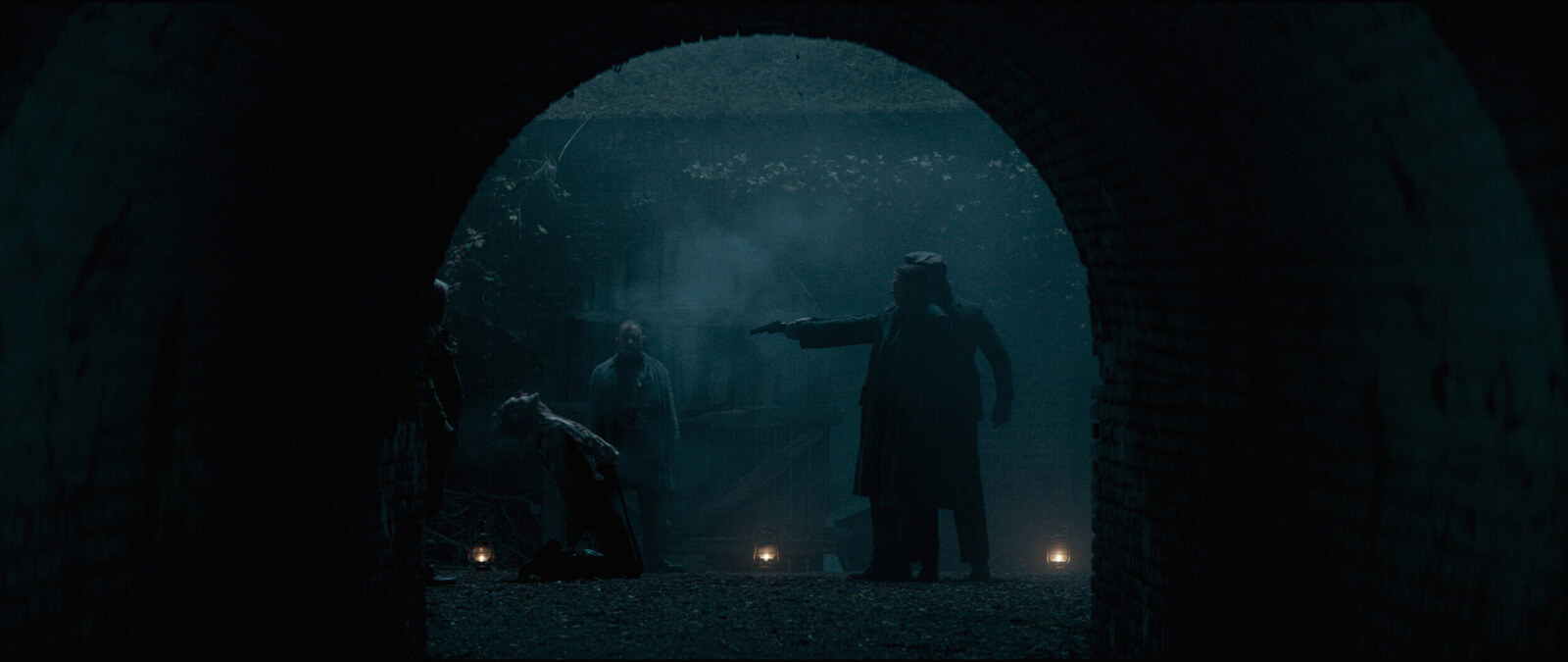
At first, I was like, okay, the size of the area was very big. And we were shooting in the desert very close to the Saqqara Pyramid, which is one hour driving from Cairo in the middle of the desert. So I was like, okay, this is so big and so huge with four to five to six cameras all the time, plus the drone. I need to have a big soft box, or... And it ended up with two big soft boxes, like 10 meters by six meters soft, so with a mix of HMI and SkyPanel inside. Very high, as high as we could with the local crane and going into the sand with the crane above the area. And I was like, okay, I will just dim down as much as I can to have the fill light everywhere, and this is becoming the main effect. The fill light is becoming the key light, I mean, because this is your main effect. And I was playing with that, and that was very useful and we worked very efficiently because you were able to look at all the angles at the same time. On top of that, I've added a layer of practicals. So torchlights, Asteras hidden here and here, Astera bulbs, tungsten bulbs. And we were... And I was surprised also with how many torchlight on the guns. They were already lighting with the guns. So at first, the operation is at full night, so they don't use the torch. But then suddenly they are using the torchlight and on the second part of the operation. So there was more of that, yeah. My inspiration came from Zero Dark Thirty. They used a very dimly lit soft box on top of the helicopter crash, when the helicopter crashes in the courtyard. So I was like, I want to have this kind of same feeling. But then you have to... Fortunately enough, the production knew this was a big, big piece, so they had a separate budget for lighting for this part.
When producers can help you out, what a gift.
Yeah, they told me, "No, for that part we know that you need a lot of stuff, so we will help you on that." And also I had a very good gaffer, Ahmed Disha from Cairo. Never impressed by anything. "Oh, you want something big and bigger and bigger? Yeah, we can find." I asked for some profile lighting, motorized profile lighting, to mimic the helicopter lights a little bit also. So we put that below the boxes, to be able to have some moving lights. We played a lot with that. So yeah, that was it. Plus a couple of 18Ks and also some other moving head lighting the background of the desert. This is interesting to use the profile, the moving head like that, because when you use the 18K you have a lot of output close to the light source. But when you light the desert, you want to see far away, you know what I mean? And with the profile we were able to be very precise. So you cut everything close to the fixture, and then you only use a slice of the light on the far sand area that you see. And you can light up just a little bit just to have the light level on the wave form in the darkness, and that was very interesting to work this way.
Were you finding that the local crew had a good handle on just working in the desert? Because that's their bread and butter.
Yeah. They are very good. Also you can see at working with frames for the sun. They are working with frames all the time, and how to handle the wind and moving into the desert, and they were very good at that. I have to say, Cairo, if you look at the history of cinema, the first Lumière projection was did in 1895 in Paris, and in 1896 they did one in Cairo. So very quickly, movie making became something in the Middle East in Cairo, and they have a big, big history of studio also in the '50s. So there is a big knowledge over there in that part of the Middle East around the cinema, and a big history of cinema also. So all the crews are very well-trained. And they have good eyes. Also the gaffers and they have very good eyes. So I was really impressed by the relationship and the quality of the work that I had with them.
It's fun when stuff like that happens. For something like Operation Red Dawn, which is a historic operation that is well-documented, how much... And you're depicting it. What was the military consultation like, and how strictly were you and the director feeling you needed to adhere to the way that it actually occurred?
Well, we knew that they were way more than that. When they, in the real life, when they find Saddam, very quickly all the US troops and military of the area come into the area. Like hundred of thousand. I mean, not hundred of thousand, but something like probably a few thousand people at the same place. So we knew that we weren't able to do that. So we did as much as we could with the people that we had in term of military size. And also we knew that John Nixon was not there, so that part is invented. He was following the operation from a distance, but we changed that part for the sake of the story line, whole story line. But that's why because the real John Nixon, he came. He came on set with us. A few days. And you can even see him in one scene. There is one scene in the corridor where they are talking with Joel Kinnaman. So when you read some interviews that he has done after, for example with The New York Times, he's saying, "Oh, this is a bit inventive, but... And this is..." So he's pointing some places where we invented or we changed a little bit the story. But he's telling, "Oh, but the mood of it, the color of it, the texture, the souvenir that I have, all the memories that I have from that far. And the way the light is done in the interviews, the room with, for the interviews. And the feeling is like, 'Oh my God, I'm transported. I'm like 20 years ago.'" And this is... And a lot of mindset of Salamersen is also very well done and followed. So I think for the Red Dawn, we used the pictures to make the same kind of hole. We mimicked that. We mimicked the when they find him, the position of the body. And the way also they knew about that location, the US Army. They already came probably three times in that location. So they were like, "We know that location. We are not going to go back again." And they were like, "No, no, he's hidden underground, and we have very good intel about that." We knew about that, so we were kind of precise about that. And digging a hole in that area of Egypt is not easy. This is protected by the archeology, the Ministry of the Archeology. And so that was a negotiation also. To dig just a two meters hole in that area of sand, potentially you find a mummy or something. Well, and this is not a joke, actually. I think if you look on a map 500 meters, 500 meters like north, there is a digging area still where they are finding some remains. So that was a mix, reality versus...
And more in terms of trying to figure out this mix of reality, I was curious, 'cause I would notice sometimes knowing that you weren't actually shooting in Iraq, there would be moments that were clearly done well to make it look like Iraq, either because of certain architecture, certain city layout, and I would imagine that a decent amount of that was VFX. And I'm curious what that experience and strategizing was like, knowing when you're shooting certain scenes where maybe more than half the image is gonna be VFX later. How were you going about understanding what things would look like, and how were you visualizing it ahead of time to make sure that you were, things like Assassin's Gate and of other areas of the city where I would imagine that it is a healthy mix of VFX and practical?
I have to say for that part, I was working with a very good production designer, Adi Cuela, a Romanian production designer. He's a very talented guy. He won an Emmy Award for the first season of Wednesday, for example. So a very, very talented guy. Very well documented on the area, on the period that we were doing. So when I arrived, he was here for maybe a few months more than me. So he showed me all the picture that he had, and he showed me many gate images, many footage, many satellite pictures to see how the building were done around the Baghdad area, for example. The Baghdad airport, sorry. Because we were depicting that area very much. And so for that part, for example, we shot everything on the one military airport in Egypt around Cairo, and then we build up all the surroundings digitally. So we had maybe one plane, one helicopter, and the rest of it, all the buildings, all the helicopter, all the planes, this is VFX. But for everything related to more the city, the center of the city and the action that happening in the city, we were looking for some area in Cairo looking very much like Baghdad. So we were doing the scooting and he was like, "No, too modern." He was like, "Too Parisian." And I was like, "What?" "Yeah, look, this is a copy of Parisian building, and then that part is too modern. That part is..." And we were also working with the wardrobe department. They were like, "No, this kind of fabric is not Iraqi. This kind of thing is not..." So this is layers... But I think the main part is mainly with the building and finding the good locations. We erased a lot of writings. The Arabic is not the same. So we erased that. And we erased also many cars because we are not able to... We were like, "Oh, too many cars," or, "Too many tuk tuk." In some areas you are almost good in term of set dressing and everything in some areas in Cairo, in buildings, and suddenly a tuk tuk is passing in front of you. You are, "Oh, we need to erase that." So we were more like... And this is tricky because 20 years ago you don't know. You have to... This is not like that was 100 years ago. You are sure this was not existing. 20 years ago, you are, "Can we shoot that? Can this before?"
I'm curious, do you find it challenging when, like you're saying that, the airport, you really only had one plane and one truck on the tarmac, but you had to have an entire airport's worth of stuff in VFX. Is it hard to keep that stuff in mind when you're framing up and you have to frame up so much wider and none of it's there? That you're fighting against your instincts in terms of an empty image, knowing that it'll be filled later? How do you... Is it hard to adhere to that?
Well, fortunately enough, I was not alone and I was working with a VFX supervisor and the production designer and some producers. They were like, "Yeah, we are going to fill the image. Don't worry." So I think this is the short answer. And then the long answer is, you have to imagine, and I was like, "Is it going to work?" So many moving vehicles, plane and helicopters, and when you know that you have the rotor of the helicopter doing a shadow on the thing, and then you have to animate all of this. And this is not a big, big US movie. This is TV. So you know that you have a good budget, but you don't know how far they are going to be in term of VFX quality. And so I was not worried about erasing or compositing 2D and stuff. I was more like all the 3D stuff that we had to do. So they were kind of very good at that. We worked with Aroma Studios in Egypt also. Which is a very well-known company of VFX production in Cairo. They are working for the whole Middle East. And I think I was really amazed and surprised by the quality of the VFX, yeah.
It's nice that you were able to use a local company for that, too. Is that just by chance or were they trying to find a local?
I think our producer, which is also the director, Leslie Greif, this guy loves Egypt and he already worked in Egypt producing some documentaries for Netflix. And he knew some line, some, let's say, service production. And the Aroma Production was doing some service production for US production coming. I think this is probably the biggest one that they did because we were the only US show being shot entirely on the Egypt soil. Nobody has shot. And Aroma was doing also some VFX. So they said, "Oh, we are going to do the production service for you, but if you want, we can also do all the VFX." And the producer decided to test them on some shots and stuff, and we were like, "No, no, we are, okay, we are going to go with you." So this was a decision of also finding some talent and people locally, and to open also new horizon. I think Egypt they want to open their territory for shooting.
We've talked so much about the big things in this show, but there's also so much important, small, tension-filled conversation. And in a lot of ways the opposite of all of these huge moving pieces, huge set pieces, firefighting. But arguably more important, and certainly where the actors get to shine. And I was curious how you were approaching that, particularly the interrogation scenes. And you make them feel, They hold the weight they're supposed to, and I'm curious what you think accounts for that, and how were you and the director talking about these scenes knowing that they were gonna be the counterbalance to these very large action scenes?
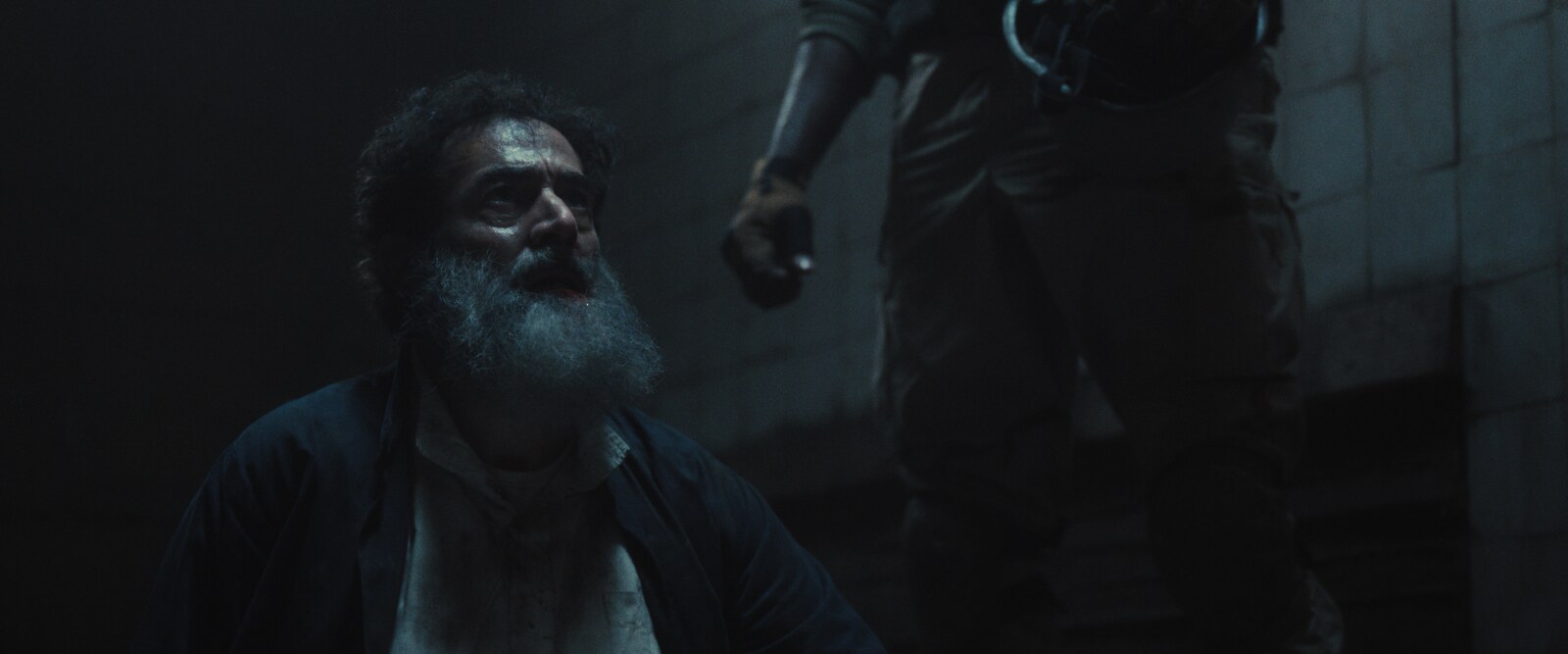
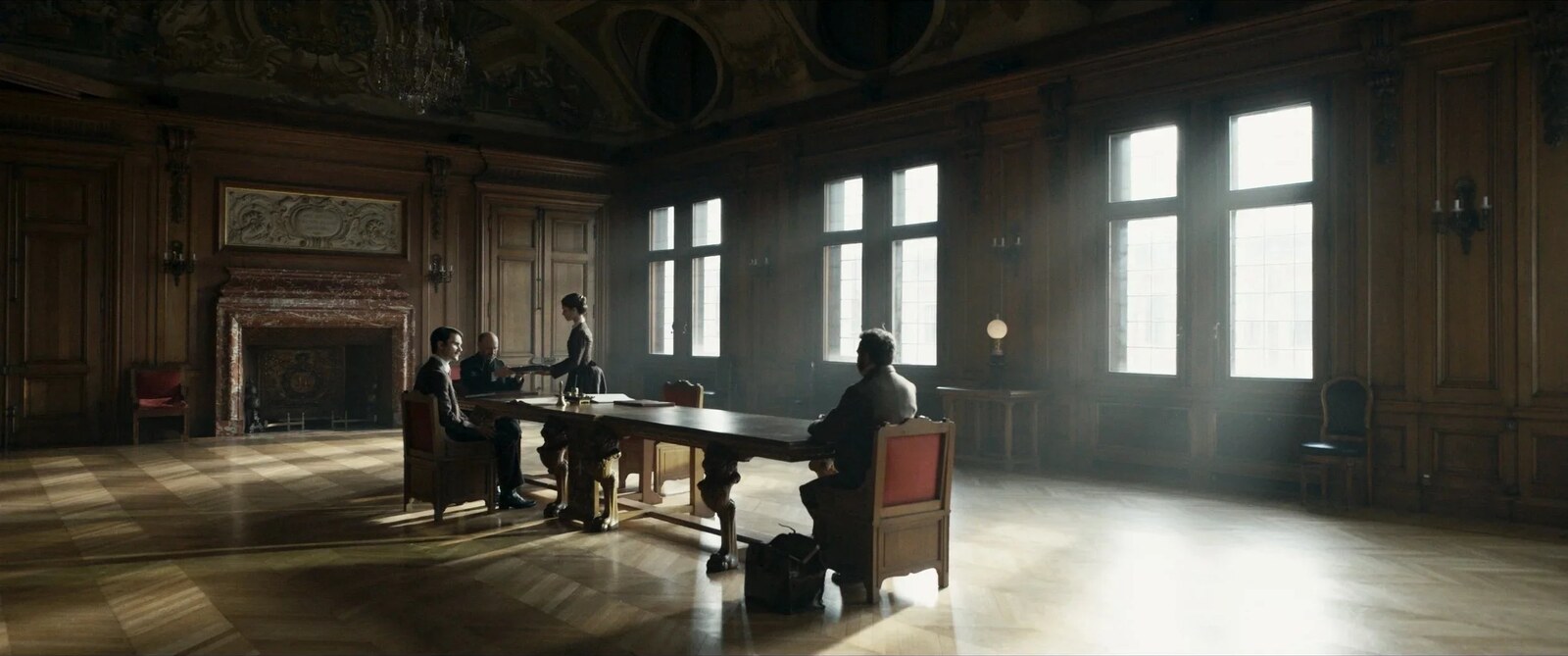
Yeah. This was also very early in the first discussion that we had. We knew this is going to be very small and very big at the same time. So what we wanted, we wanted to... We were reading the scripts and we were like, "Okay, we have six major scenes, interviews, happening during all the episodes, so we want to feel differences in between them, but we also want to follow a path which is like, okay, this is static and no negotiation is possible at first, and then suddenly something breaks, and then Saddam Hussein is weaker in that one. The US guys are a bit stronger in that one, or the opposite, they are weaker here. This is more, a bit more shaky in term of emotion here, so let's work this way." So we followed this and we said, "Okay, on the first interview we want things to be very static and straight, so no moves." And then on the second one we incorporated one move, which was circular initially, then during the edit you don't feel it that much, but... And that was moving like that. And then I was changing a little bit the lighting also, and then suddenly things are moving a bit more, and you have things, you see things happening for John Nixon outside of the interviews area, and you are like, "Oh, he's losing that frame." And so when he comes back, he has a different state of mind, and everything is more shaky. This is going to be confrontational, so we are going to be handheld for that one, and this is going to be only the 10K from the window because I want this contrast and I want to be handheld, and I want to be close so there is not four cameras or three shooting at the same time. We want to be closer. So I think this is how we worked, and we tried to change it all the time, the look and the style and the way we were also blocking the scene. Is it going to be seated? Is it going to be standing? Are they going to move? What we did also, they are watched by some CIA guys in the next room. So sometimes we were shooting the two rooms at the same time. So we had two cameras with Saddam and John Nixon, and we had one camera for all the reaction in the interview room.
So you let that happen live?
Some of them, yeah, especially for the first part of...
I really love that. You certainly didn't need to do that, but what propelled you guys to decide to go that route? I really like the idea.
Yeah, I think that was the idea at first, and I was like, "Mm, I don't like this idea because lighting-wise, this is near and near tracking." You have to think two different... for the sound, and because you have two different places to where to put the mic and also the reflection, and also you are, on top of that, all the surveillance cameras. All the small cameras looking, and they were transmitting the image in the viewing area. So we wanna, okay, we can put the camera, but we see one camera in the image of the watching the video camera. And then, oh, we have to erase that one. Oh, we see that light. We will erase that. But so that was a strange coordination in between everybody. And I think...
Was it worth it?
Yeah, I think so for some scenes. I think the idea was to keep the reactions and everybody kind of fresh. Like in the real world. It ended up working well for some scenes, not that much for some other scenes. And also when you shoot like that, you have to have all the actors. And so the idea was like, oh, the prep time I need, and I want to change him, and I want to go here, and he's not available on that day. Are you sure you want? Because he's visible only in that small TV window. Are you sure about that? Can we play back this for that shot? And so for some scenes, this became a nightmare. But for some of them, that was kind of useful and interesting.
That makes sense. I could see it going both ways. And I guess coming onto some of the last questions, we were talking about how a lot of this is referential, and it's obviously all historical moments and just little things that I caught that I'm just curious about the discussion that you guys had. In particular Abu Ghraib. And you had a very brief moment that referenced that prisoner that was in the... I don't even know how to describe it. He's like, when he's, they're standing on that box in that shawl or something. And you had it, but it was so quick, and it was like for those who knew would see it, and otherwise it wasn't... You didn't shine a real spotlight on it. And I thought that was really well done, and I'm curious what the conversations were about when these sensitive historical moments would come up and how you handled them.
We knew we wanted to show Abu Ghraib, but we also knew that John Nixon was not really in Abu Ghraib. He did this interrogation because just after this part in the story, I mean in the series, is just he's crossing a corridor, and then he's going to do an interview of one guy. So obviously that interview happened, but we incorporated the Abu Ghraib part because we are like, probably these kind of interviews happened in Abu Ghraib all around. You don't know. You don't find so many pictures. So Abu Ghraib a little bit, but for example, the BIF where they are doing all the interviews, you don't find. We only had one satellite image, and everything was like flat. No more building. Just the shape of the building. So that part of the story, we did choose to incorporate some images that we know, that for example, this guy covered with a black fabric and some dogs also barking. We knew that these images were part of the common images of Abu Ghraib, some photo that you can find online. And we wanted to incorporate them into one single shot, which was initially a steady cam shot. And during the edit they chose to cut it. But we did that. Okay, these guys, they are doing interviews, but they are walking. The idea was like, don't forget, they were walking in this kind of areas. And this is what they were doing around that. That was a way for us to show that without saying, "Oh, we are in Abu Ghraib. Let's see," and this and this and this. This was more like the evocation of Abu Ghraib and showing that, and then arriving to the final point where the story happened for us.
I thought it was well done and just the right amount. Was there any hesitancy about... 'Cause I think the thing that was most noticeable to me was the guy in the black cloth. Almost looks like a ghost standing on a box. Was there any hesitancy from anyone involved on the network part or anything about referencing that imagery, or it was really everyone was kind of all for it?
No, I don't really know about that part. I think we've discussed maybe a little bit with the production designer, and everybody quickly agreed on that. And we were like, "No, we are going to show this." And then you never know with the network, then they can go back to you and say, "No, we don't want to show that," or, "We want to show this differently." But I don't think so. I mean, this hasn't happened. I mean, we are kind of... it's in the show 200 miles apart, so.
And I'm glad it was done well. I mean, I think that kinda covers everything that was conjuring up in me as I was watching it. Is there anything else from your experience that you feel we haven't reflected on?
Well, this was an interesting way of working with multiple cameras. This show, for me, is like, okay, oh no, it's four cameras. With two cameras I can't work, when you hear that, oh, because this is killing the lighting. Oh, with three or four or five cameras, you can't. And actually, I think you can. So this was the conclusion for me, where on this one, on my personal beliefs and on my personal way of working, I was like, okay, this is not perfect. This is not giving the perfect lighting. This is not going to be perfectly shaped everywhere. But you can bring the mood, and you can create something, and you can still work with three cameras, at least for all the interviews that you see. Everything has been shot with three cameras all the time. And I was surprised how much you can push yourself to find some solutions to do this and still being visually interesting.
And what do you think you gained from it that you wouldn't have been able to gain going single cam? Besides, obviously, more time, but maybe that's the biggest factor that you gained, and what that allowed for you.
Yeah, and I think more freedom for actors because they were, for the interviews, they were very tense. Waleed, who is playing Saddam, he wanted to be the actual Saddam. So he was great and John wanted to be like John Nixon, like the analyst, not done for the field, but pushed to be on the field and to ask the questions. So they put pressure on their shoulder, both of them. So we wanted to shoot this as flawlessly as possible. So I think that was interesting. And also, for me, it pushed me to put the lights further away. And when you do so all your lightings are more realistic. Because you are pushed so much away that suddenly everything is far. Even if you are like, "Can I bring something a bit closer?" No, you have to walk from far away. So your lighting also change in a way which is interesting in term of style.
Do you think you'll bring that with you on future projects because of your experience?
Probably for some scenes, yeah. For some part of script or scenes or sets. Yes, probably. You are always bringing a part of you, your... very true of the previous project on the next one.
Very true. Well, that's great, man. I really appreciate the convo and hearing all about this. It was a huge undertaking, and I think you did a great job with it, and thank you for going through so much detail.
Thank you very much. I really appreciate it.
The work stays free. Someone still pays for it.
Every episode, every article, and both of the Resources tools are free to use. No paywall, no membership fee, no login. That is not a growth tactic, it is the whole point: learning to light a scene should not depend on what you can afford.
Sponsors cover part of it. The rest is people chipping in.
Monthly or yearly, from $5 a month, less than the price of a coffee. It costs real money to keep the podcast, the writing, and the tools running, and supporting is what covers it.