Send us a frame you lit.

A still, and a few sentences about how you lit it. We post one a week, with your credit and your handle.

It doesn't have to be from a job. Tests count. What tends to be worth reading is the constraint you were working around, so write about that rather than the gear list.

Submit a frame
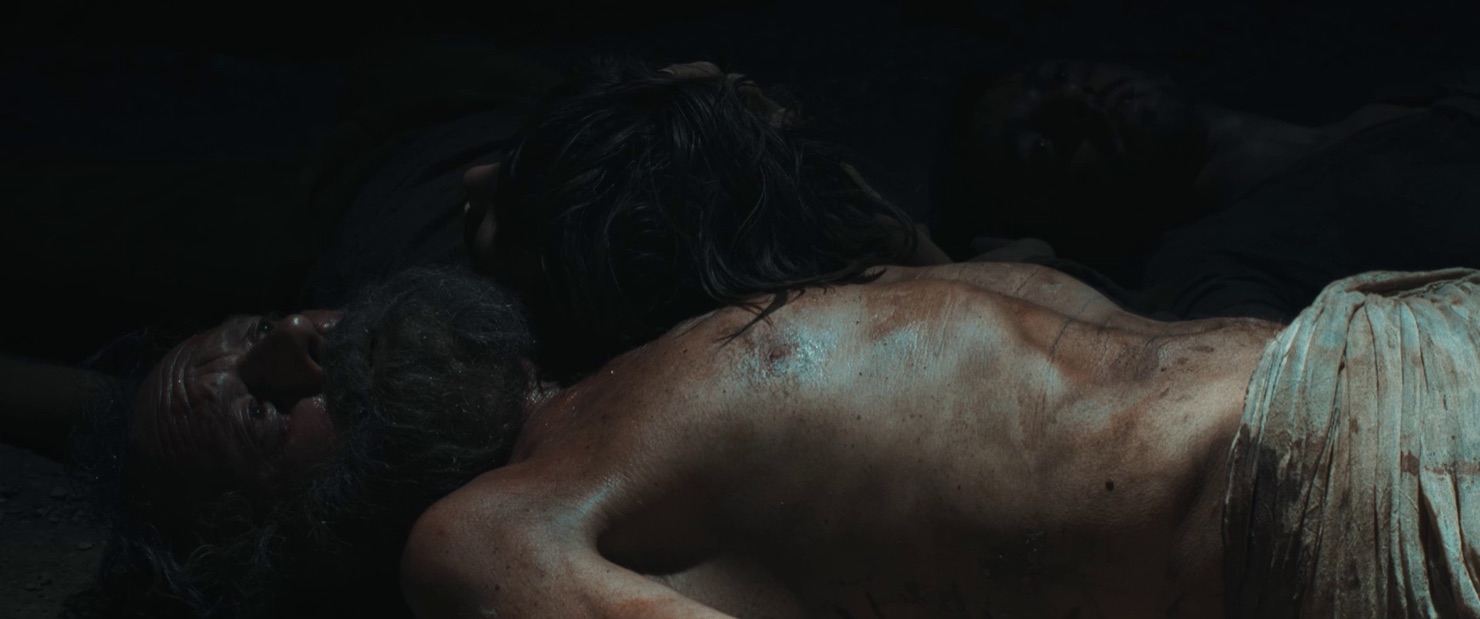
An old bearded man lies on his back on a stone floor in near darkness, his sons lying across and around him, their bodies lit hard from directly above, with one son barely visible in the shadow behind.

Ugolino, short film

Corrado Serri, CCS

@corradoserri corradoserri.com

This might be one of the simplest lit frames you've published. It is certainly one of mine.

Looking back at it now, I've decided to call it ‘Accidental Caravaggio’. The legendary painter is, of course, somewhere in the back of every cinematographer's mind, but I wasn't consciously thinking about Caravaggio when this frame happened.

Read the rest

I work on feature films and commercials, sometimes at an international level, but for some reason this short film shot might be one of my favourite frames I've ever shot.

‘Ugolino’ is a spec short film the director wanted to make as a visual study for a feature film we are yet to make, based on the tragic story of Count Ugolino from Dante's ‘Divine Comedy’. Ugolino was imprisoned with his sons and condemned to starve to death.

The short is very minimal and symbolic. For the medieval prison, we used the central chamber of a ‘Nuraghe’, the ancient megalithic stone towers found in Sardinia, Italy, built thousands of years ago from enormous dry-laid stones and featuring an opening at the top.

I lit Ugolino's prison in the most natural way I could think of: with the strongest light I had available on the job, a 1.2K HMI placed high above him, coming through the opening in the nuraghe, roughly ten metres above the subject.

Nothing else.

I admit that I was surprised by what happened when that hard, direct light started sculpting Ugolino's sweaty, dirty body, creating that dramatic falloff across the stone walls and the faces and bodies of his sons around him. It went beyond what I had imagined when I set the light. I had diffusion frames, fabrics and flags with me, but I felt that the light didn't need anything else.

And that's one of the things I love most about cinematography: sometimes the image surprises you. The light does something you weren't quite expecting, and suddenly the frame becomes something more than the sum of your decisions.

An accidental Caravaggio, after all.
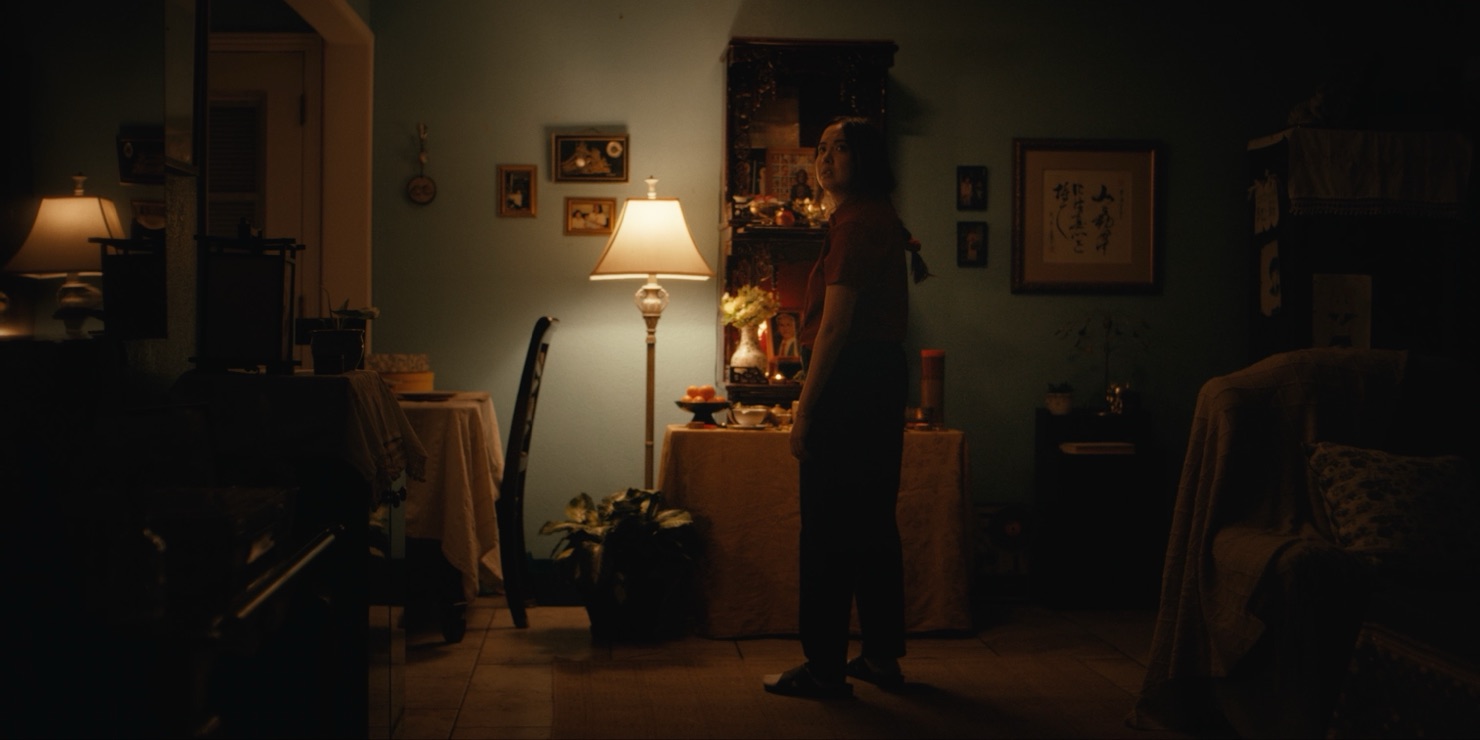
A young woman stands in a dim living room looking back over her shoulder, beside a small altar with flowers, fruit and framed photographs, lit by a floor lamp and a table lamp against pale green walls.

Nhang, short film

Wara Pornkulwat, TSC

@wara_dp wara-dp.com

This project won the 4th Project Spark Competition and supported by NANLUX/NANLITE. Thus all my units were either of their products.

As we wanted to be grounded in reality, minimal lighting was the way we chose to light the movie. I have my gaffer, Trevor Wilson, put 1’ Pavotube on the top to separate her from the background. We also have two Nanlite Forza 60Cs; one was hidden on the left side to create a soft wrap around through 4x4 frame with 250 on it, another one was attached with Projector lens and shoot up the ceiling, motivated by the floor lamp bounce, to get a nice toplight on her.

With just these 3 lights, we were able to control the ratio we want, but still feel motivated.

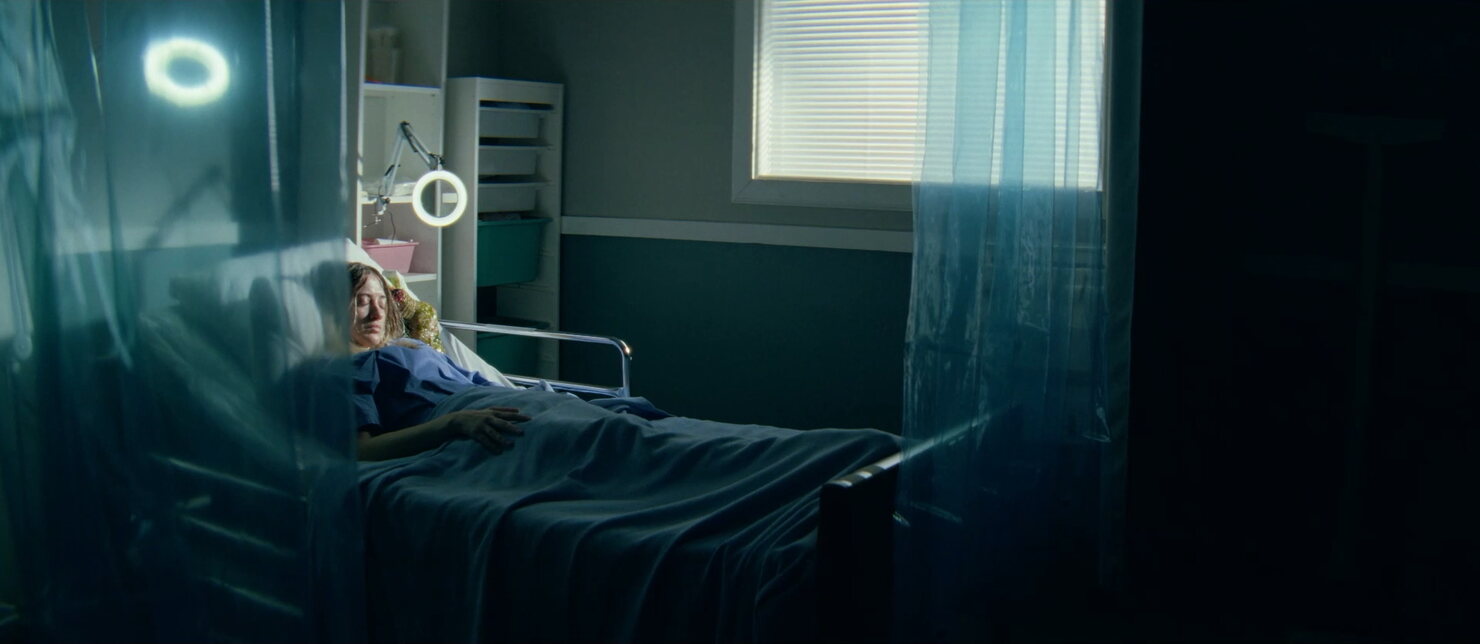
A woman lies in a hospital bed with her eyes closed, seen past a sheer blue curtain, with daylight coming through window blinds and a ring lamp glowing on a shelf beside her.

Short Film: Brain Worm

Caitlin Brown, Director of Photography & Action Cam Op

@caitwithacamera caitlin-brown.com

The moment after this wide shot, all hell breaks loose! Our protagonist rips a brain-eating worm off her head and falls to the floor, smashing into the walls and sink. The coverage was handheld and full of low angles, so any rigged lights would have quickly become a problem.

With that in mind, my gaffer Luke Becker Lowe and I lit solely via the window and practical fixtures. Story of our lives, the location was cramped and there was limited space behind the window. Our DIT had to share counter space with a ballast, but we got the quality we wanted with an Aputure 1000c + CF 12 fresnel through a 4x frame of 251. The fixtures added depth when we lost the window in tighter shots.

Read the rest

All the pieces came together - the lens flares, the production design, the grade…but it was our lighting approach that gave the scene teeth. I could camera operate with abandon and that totally comes through in the edit.

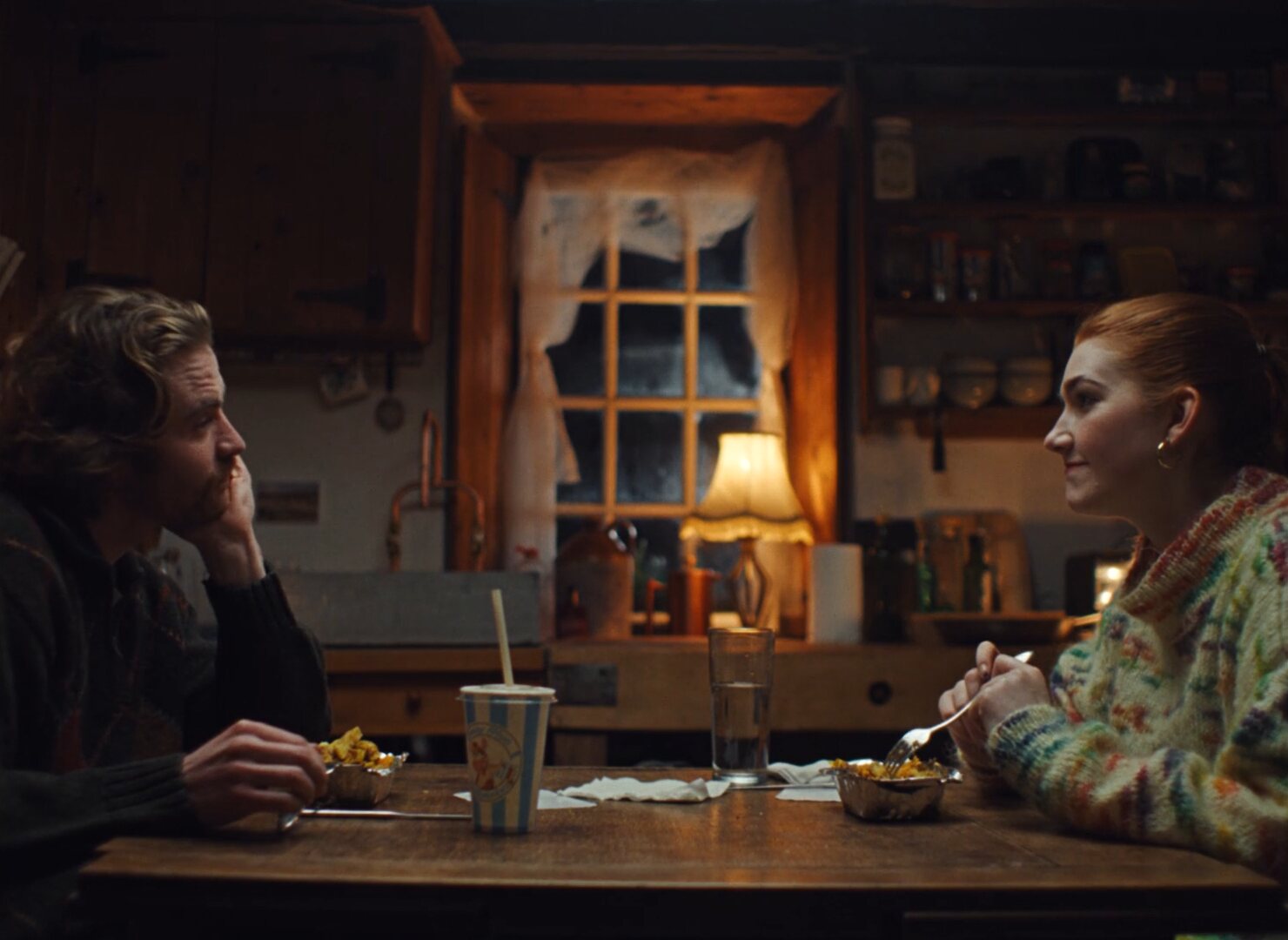
Two people sit across a kitchen table in a small Irish cottage, lit softly from above, with a condensation-covered window and a lit lampshade behind them.

Not It, A Short Film

Leon Forristal, Cinematographer

@leon.mf leonforristal.com

We shot this scene on a shoestring budget in a tiny Irish cottage kitchen with a low ceiling. There was no space for light stands inside this room but the ceiling offered a series of exposed wooden beams that we used to clamp an array of Astera Titan Tubes to. We then layered unbleached muslin across these and skirted the edges a bit just outside the top of the frame, creating a beautiful soft top light on our subjects.

We created some condensation on the window and bounced a small Aputure 300D light into it from outside to create some moonlight depth and texture on the window. Outside of this we used household tungsten practical bulbs on dimmers in the lampshades and small bounce boards for fill outside the frame.

A still from something you lit. Narrative, doc, commercial, a test, something nobody paid for. It has to be yours to share.

How you lit it, and what you were working around. Time, money, a window you couldn't move, a director who wanted it darker.

We read everything. One goes out a week, so most wait a while and some won't run. If yours does, it runs here and on Instagram with your credit and your handle.

Send it.

The frame

A still, as large as you have it. If the file is too big to attach, paste a link below instead.

Permission

We don't sell or share anything you send us. Frames are used for posting, with your name on, and nothing else.

Cinematographers at a Salon gathering

The work stays free. Someone still pays for it.

Every episode, every article, and both of the Resources tools are free to use. No paywall, no membership fee, no login. That is not a growth tactic, it is the whole point: learning to light a scene should not depend on what you can afford.

Sponsors cover part of it. The rest is people chipping in.

Monthly or yearly, from $5 a month, less than the price of a coffee. It costs real money to keep the podcast, the writing, and the tools running, and supporting is what covers it.