
Newsletter No. 007: Giorgio Scali, ASC: Light and Darkness in the Halls of Power on The Diplomat

Giorgio Scali, ASC had worked with Debora Cahn and Alex Graves on Homeland, and when The Diplomat moved to New York for its third season they called him. He is credited on four episodes of that season. Three are shared with Julian Court, who shot the England scenes, and Scali lit the New York work to match, with more fill than he would use by habit. The sixth episode, "Amagansett," is his alone. He asked Cahn if he could shoot it on K35 lenses, which the show had never used. "Do you think it'll look cool?" she asked, and then told him to do it.
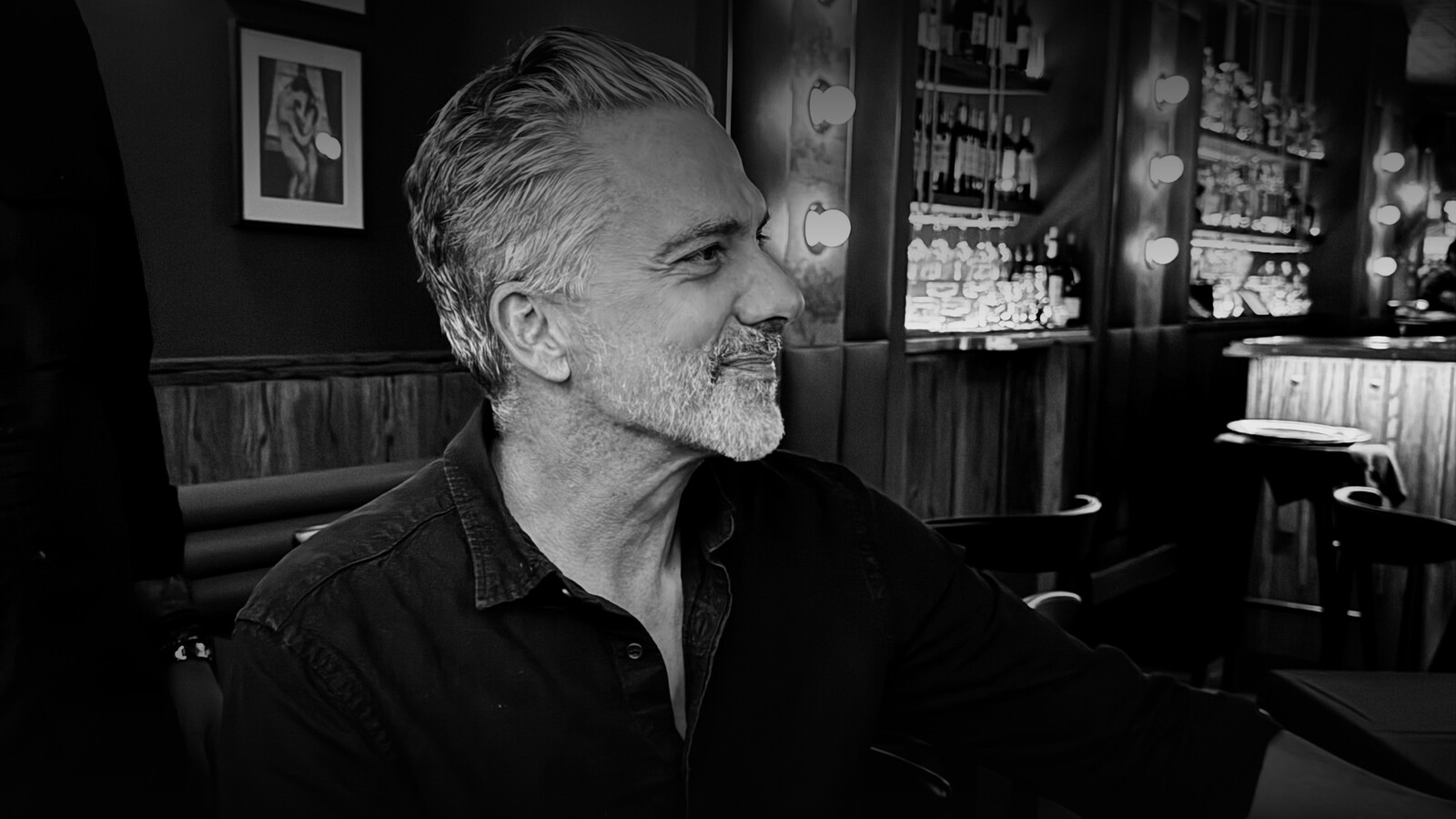
Giorgio Scali, ASC: Light and Darkness in the Halls of Power on The Diplomat
Giorgio Scali, ASC had worked with Debora Cahn and Alex Graves on Homeland, and when The Diplomat moved to New York for its third season they called him. He is credited on four episodes of that season. Three are shared with Julian Court, who shot the England scenes, and Scali lit the New York work to match, with more fill than he would use by habit. The sixth episode, "Amagansett," is his alone. He asked Cahn if he could shoot it on K35 lenses, which the show had never used. "Do you think it'll look cool?" she asked, and then told him to do it.
Most of his conversation with host Jared Levy is about Season 4, where Cahn wanted the picture to turn darker after a shooting early in the season. Scali filmed that sequence with a 90-degree shutter, passages at six frames per second, and bellows and tilt lenses from ARRI that leave the corners of the frame soft. A 13-page scene for Keri Russell and Rufus Sewell was rehearsed the day before and blocked between cold window light and warm chandeliers. For the president's study, Cahn's reference was The Godfather. On a training ship whose overhead fixtures were either all on or all off, his gaffer cut neutral density and blackout covers for them one by one. "Shutting off lights is more important than adding lights," he says.
David
Keep it free for everyone.
No paywall, no membership, no login, on purpose. Learning to light a scene should not depend on what you can afford. Readers who chip in, from $5 a month, cover part of what it costs to keep it that way.
The work stays free. Someone still pays for it.
Every episode, every article, and both of the Resources tools are free to use. No paywall, no membership fee, no login. That is not a growth tactic, it is the whole point: learning to light a scene should not depend on what you can afford.
Sponsors cover part of it. The rest is people chipping in.
Monthly or yearly, from $5 a month, less than the price of a coffee. It costs real money to keep the podcast, the writing, and the tools running, and supporting is what covers it.