
James Laxton, ASC: Shooting Beef, Season 2
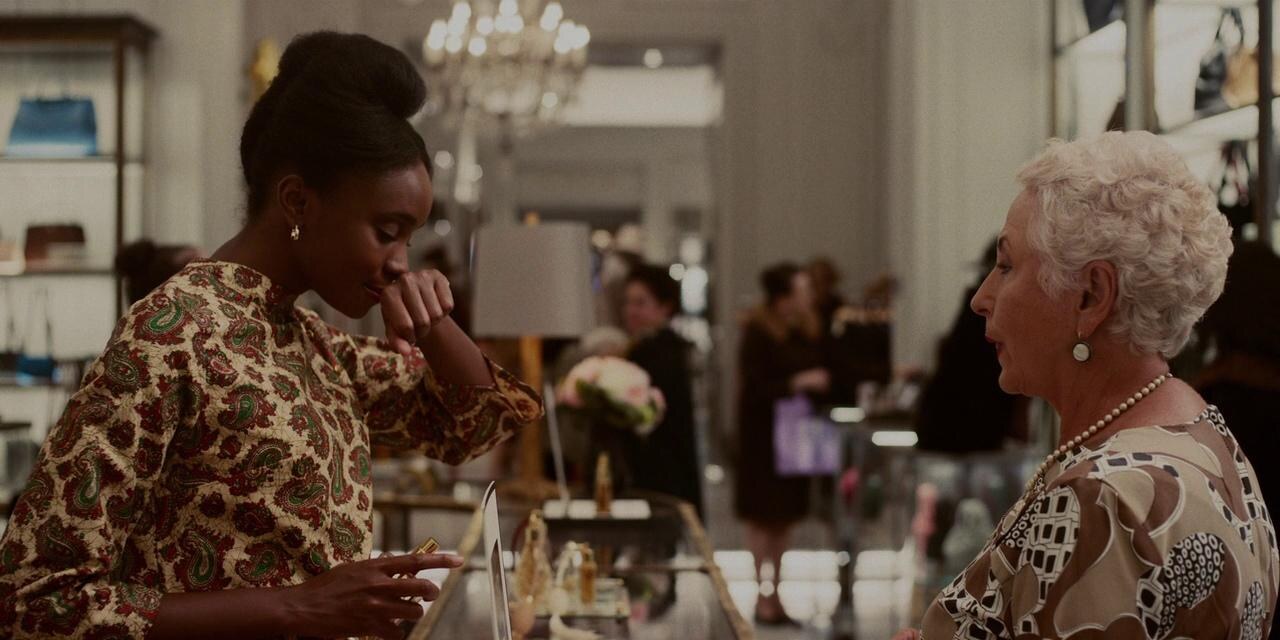
There is a certain gravitas to those portraits. I find myself sitting with an image in a way I wouldn't otherwise.
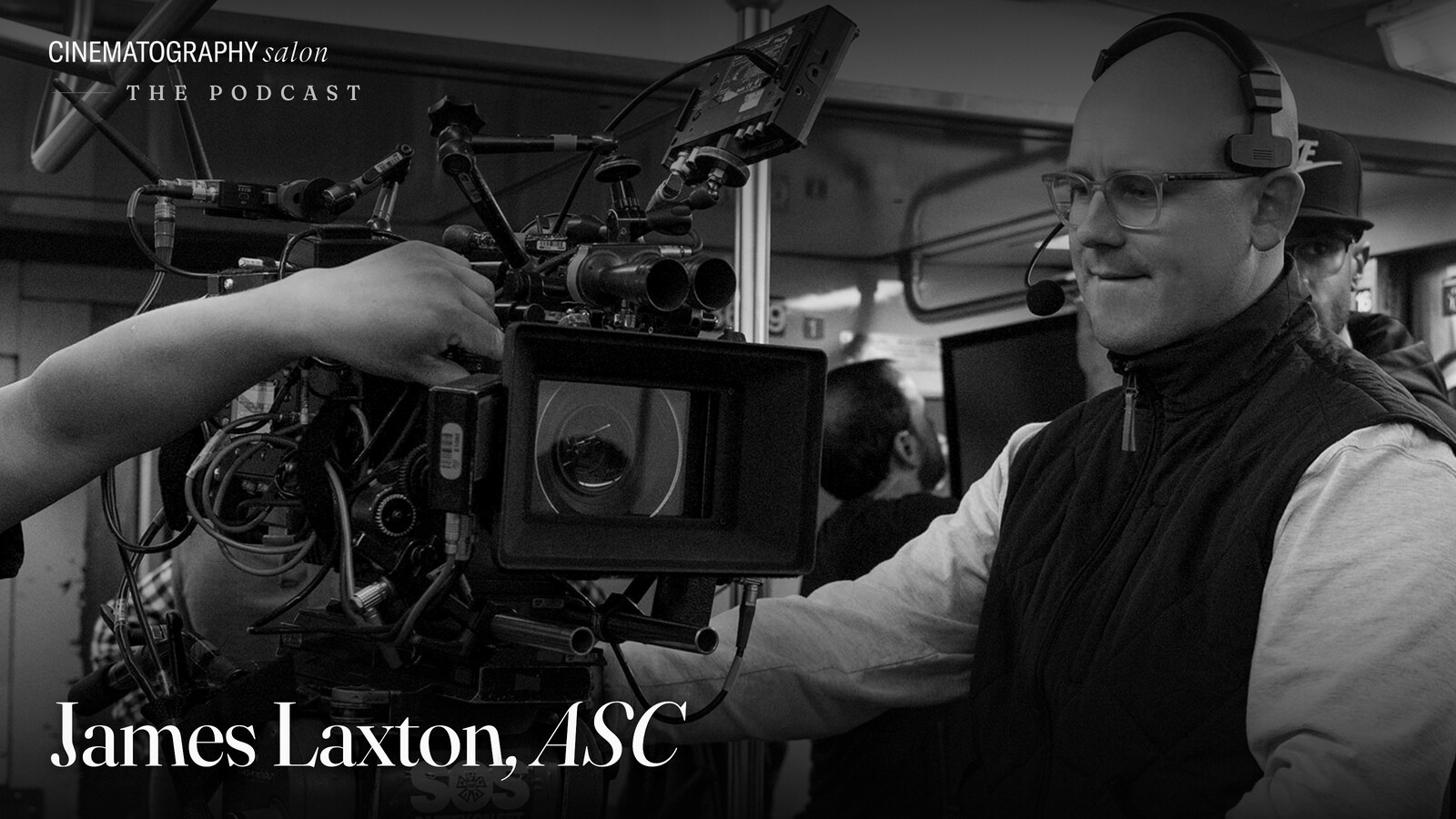
James Laxton, ASC came to Beef for its second season as the one new voice in a room that had already made something people loved. His job, as he saw it, was to carry forward what Beef is at the level of shot structure, whose shoulder the camera sits over, whose scene it is, how far back the wide holds, while telling a different story than Season 1.
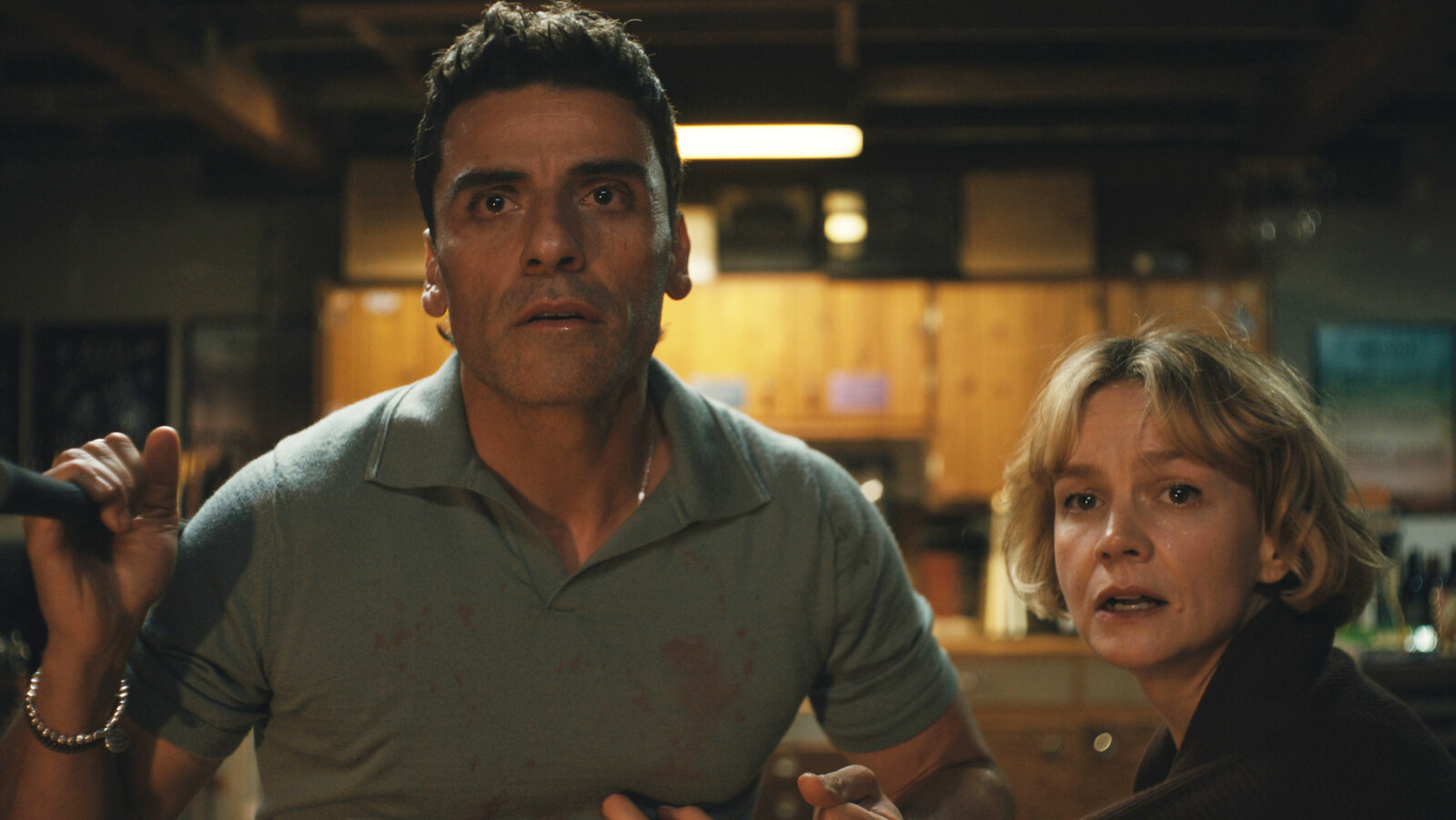
He and host Jared Levy get into the season's organizing idea: a season of the year for every relationship and for the club too, with the couples moving between them as the show runs, an ensemble led by Oscar Isaac, Carey Mulligan, Charles Melton, and Cailee Spaeny, and a color language built with the production designer, Grace, to track love across a lifetime. Laxton talks through shooting large format for the weight it gives a face, the episode-eight silhouettes he is proudest of, and the night he calls "impending doom," a car fight shot at the end of an already full day, where the thing he feared most was not the lighting but letting the actors down.
-
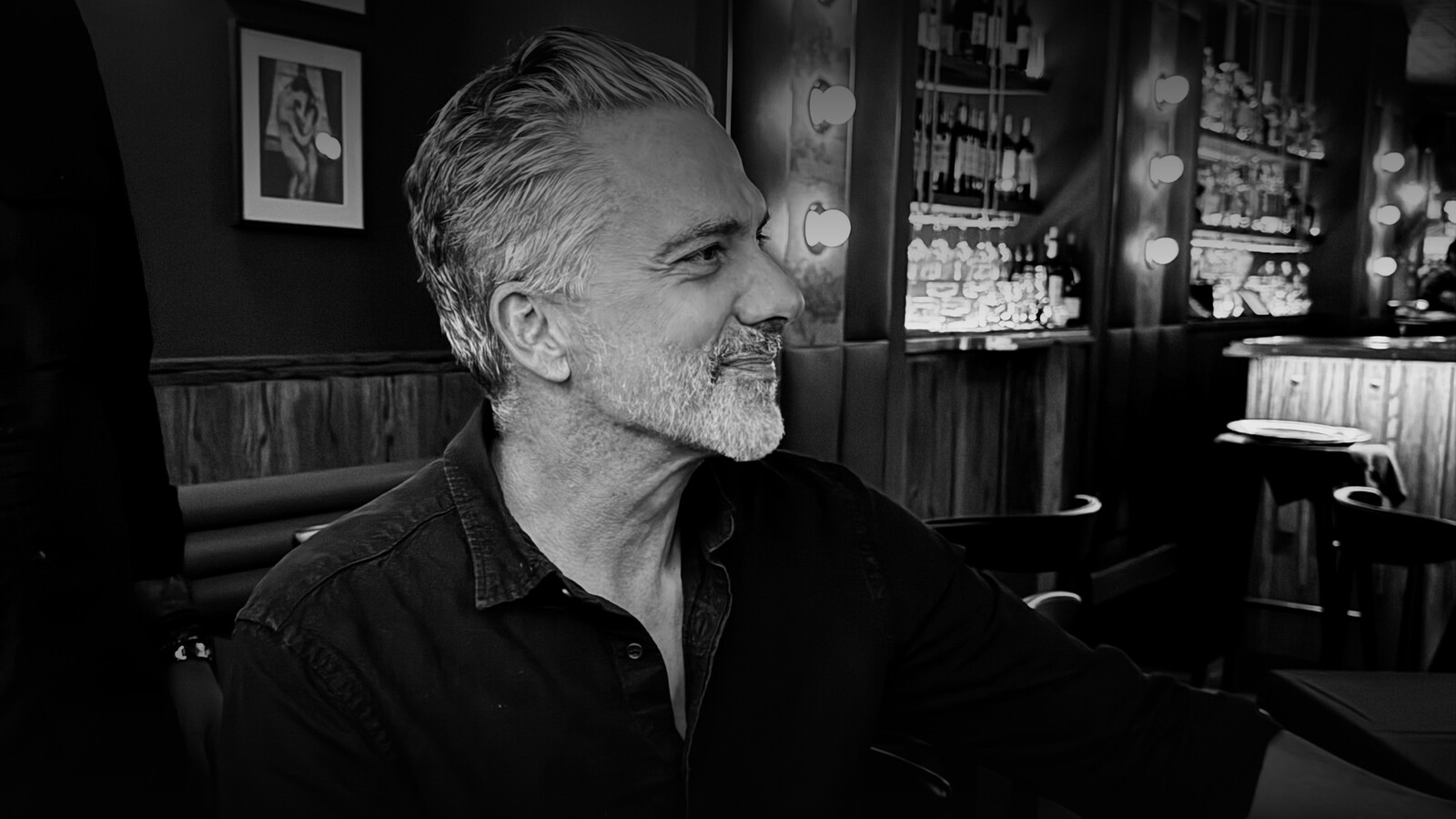
James Laxton, ASC
-
Jared Levy
-
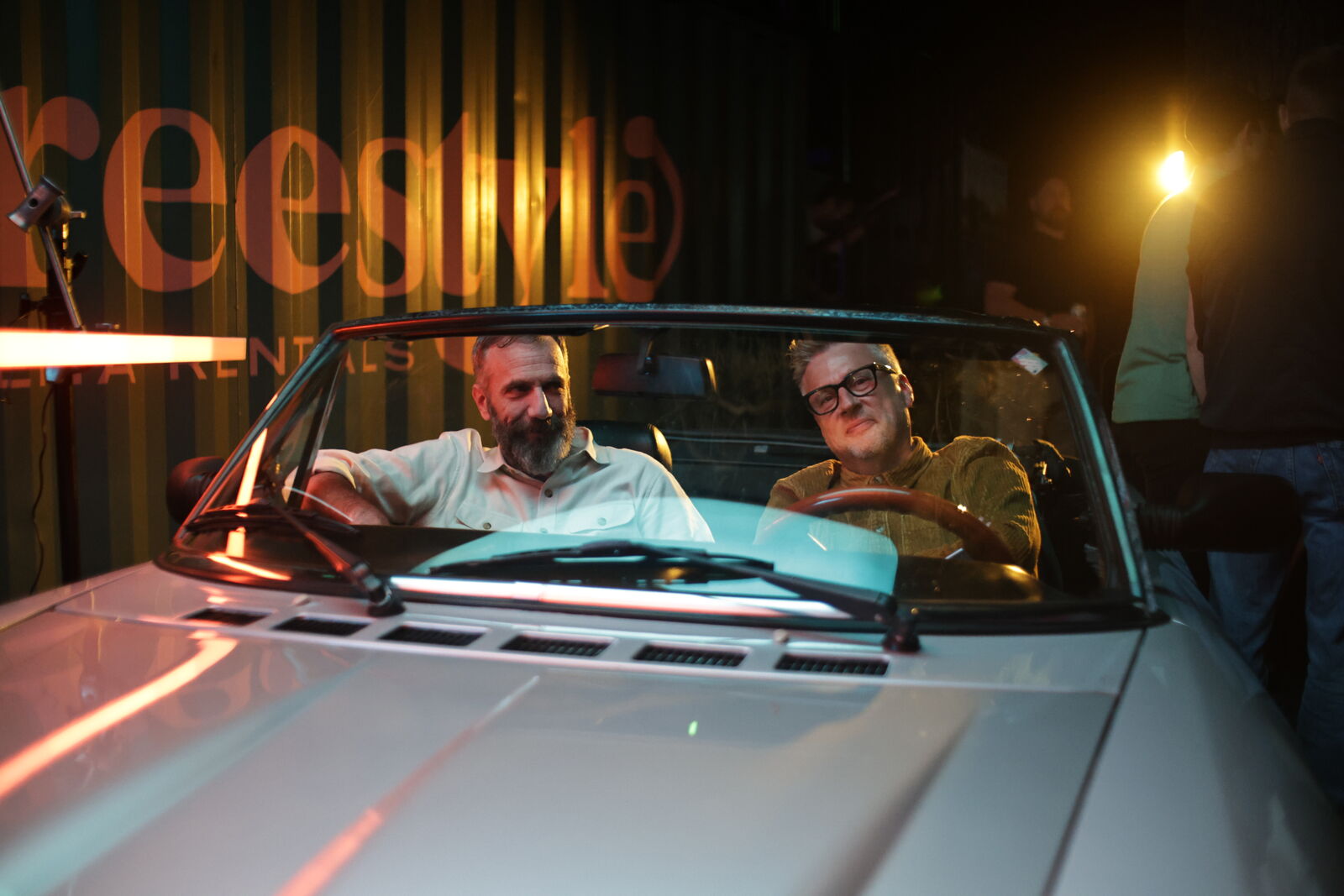
David Kruta
-
Topher Hammond
This episode is made possible by Fujifilm.

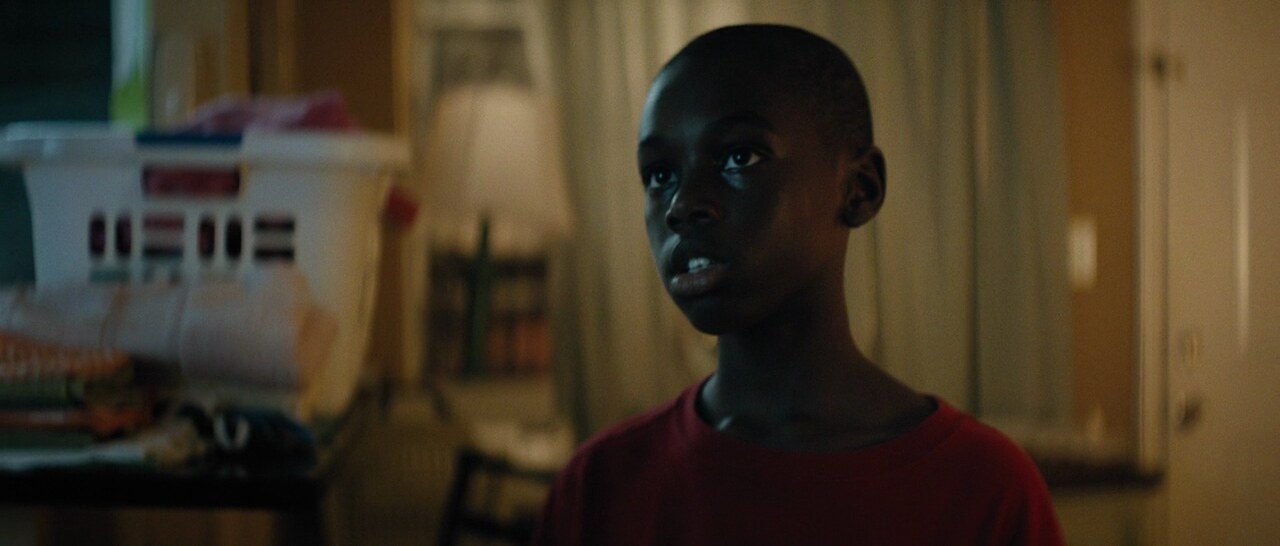
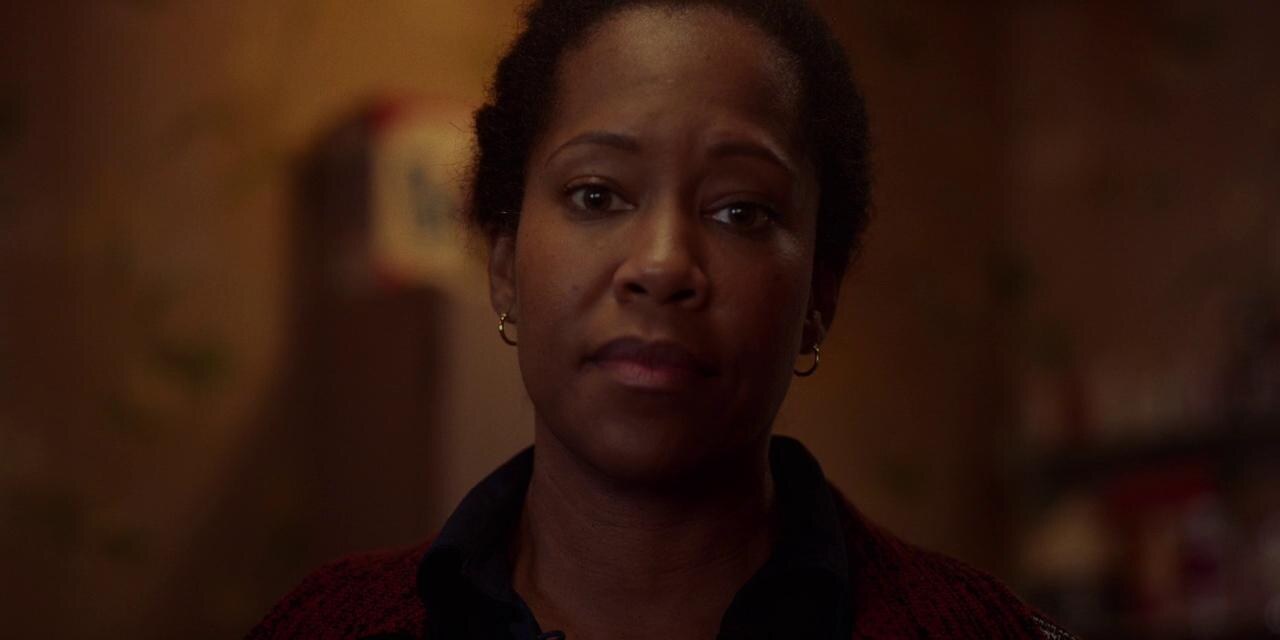
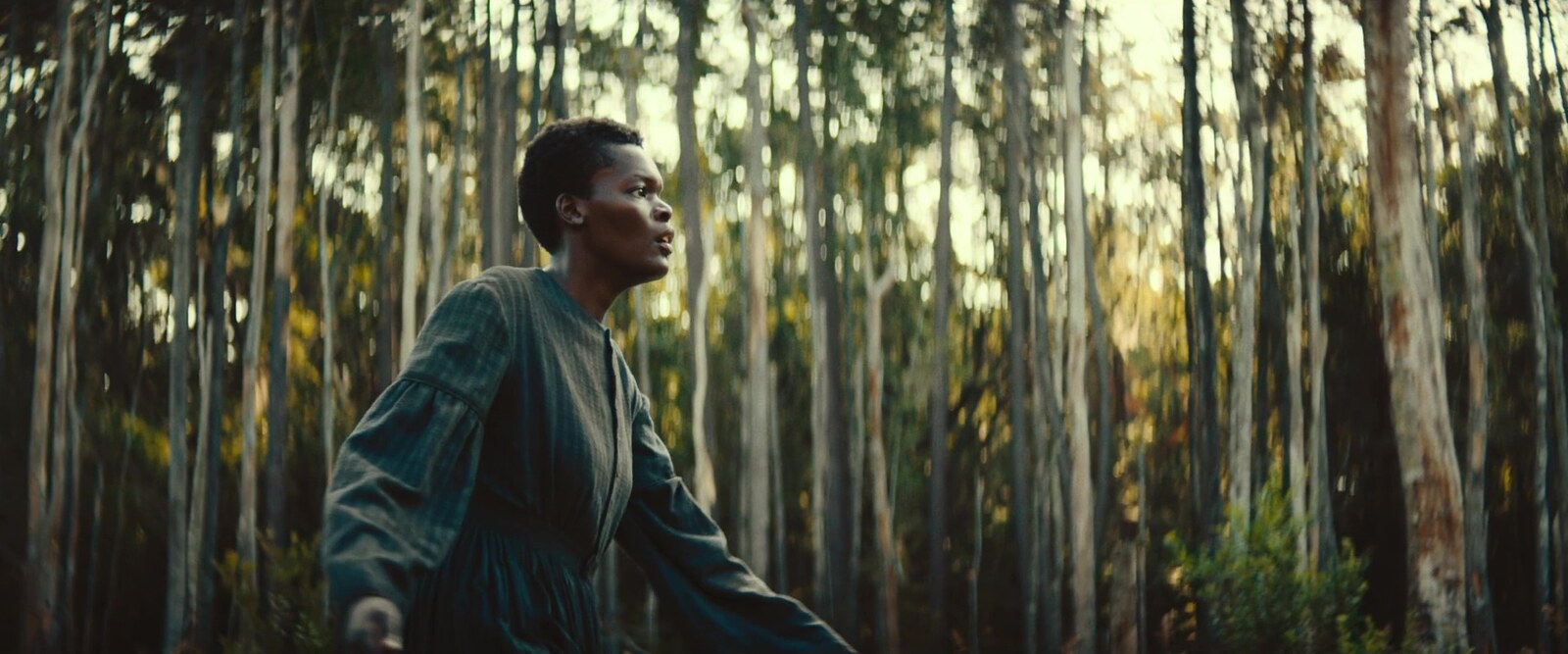
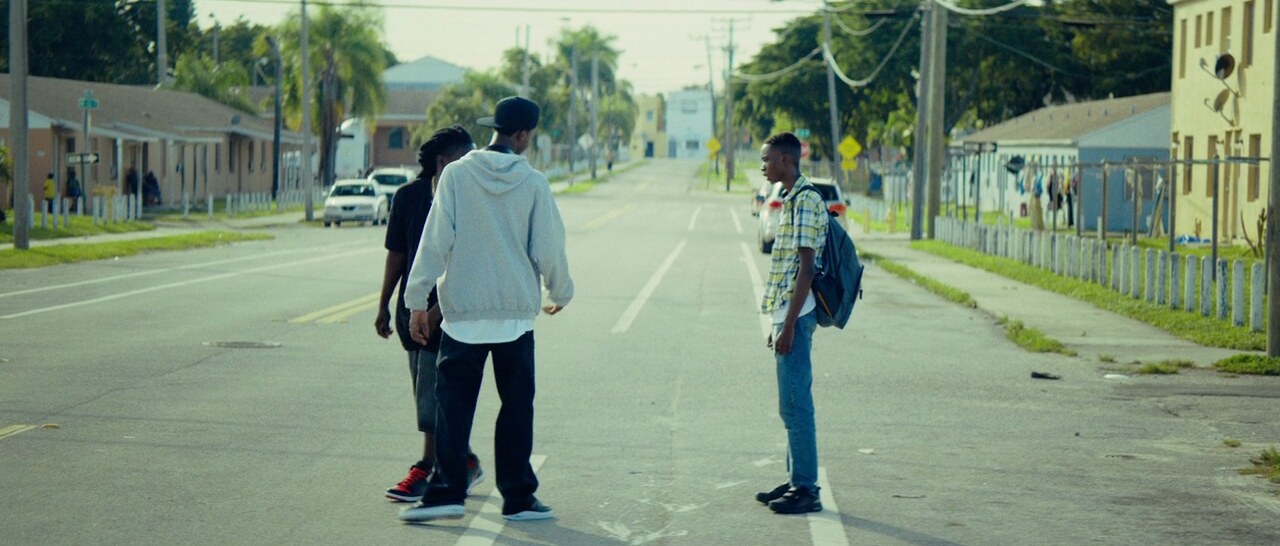
Read the full conversation
So yeah, just to start, I just wanted to say that I've been a fan of your work for a long time. And your relationship with also Barry Jenkins and the work that you've done with him has been really impactful for me. I was just referencing a lot of the work you did in Moonlight on this project I'm hoping to do in Miami. And so just the way that you handled the Miami... I mean aesthetic and the highlights of that, the sun there and the heat that you can feel in Miami. We were... We spent a lot of time talking about your work, so.
Oh, buddy. That's very kind. This is very, very generous to say, and thank you very much. And I'm proud of that film and I'm really pleased it's... It's always gonna, it's been a long time since that movie came out, but it still feels like it's connecting with people, so it's always nice to hear that, so thanks, man.
Yeah, of course. So getting into it, I was curious about just to start, how the opportunity to shoot this season of Beef came about and what were the first thoughts that you had when it did? And what excited you about the opportunity, and potentially if there are any aspects, I don't know if nervous is the right word, but what were the things you were thinking about when you're like, "Okay, these are gonna be the things that will challenge me on this"?
Yeah. I mean, so at first was a fan of season one. I thought season one was a great show, and thought Larkin did a great job on it, and really loved the visual language that Sonny and Jake and Larkin sort of had come up with and felt really connected to it. And I talked to Sonny in my first interview with him, and so talked about a lot of different things, but one of them was just it felt there was a kinship in many ways to sort of how I like to move the camera in past productions, and it didn't feel like a deviation in many ways. There were sort of things Sonny was talking to me about it in like a sort of a way that was he was nervous that it was something that I was not gonna be on board with or familiar with, and I just, I, we... I don't mean to imply by any means that my work in the past it resembles Beef's in a very particular way or a specific way. But there is a sort of a very subjective photography connection between the way in which the camera's moved in my past work and the way the camera moves in the show as well. And so I was, so it was... I met Sonny just really honestly on a general meeting. I had no connection to him or to the show or to the key collaborators involved, so I was new. I didn't really know any of them personally or otherwise. And so I was nervous probably more than anything else just about sort of how to collaborate. So it was hard, I find, maybe the same for you, and I imagine for others too. You're just sort of having these new relationships with directors and designers, et cetera, et cetera. Everyone collaborates differently, and I was anxious going in, to be honest, and as probably I am on every project about how is this gonna work and how do they like to come up with ideas, and is it gonna work with how I do this, et cetera, et cetera. But in the end, as often is, you sort of do find what makes people tick. And within a few conversations and a few days or a couple of weeks into the project, I felt like I was at home, which is nice. But yeah, I think in a general way my first and foremost concern was to not deviate too much from what season one was about. I wanted to make sure I was bringing something to the table of course, and I hope that I did. But it was really a conversation from my first time talking to Sonny, was just making sure that this was gonna be a blend with how season one went, and there is a sort of a shot structure from season one that he wanted to make sure was part of season two. And so there are some very foundational things that I think at its core is the show Beef's look. And I think I wanted to make sure that I wasn't gonna step on those toes too much. And I wanted to make sure that stuff was gonna live on where it made sense of course. And then at the same time wanted to make sure that I was doing justice to the story as well. This is a pretty different story than season one is. Not to mention just the obvious that it's these couples and it's not just one-on-one and it's gonna be a foursome or a six some and it's about these sort of relationships that are dissolving or evolving, depending on which one you're talking about. And all these sort of big, large sort of human structural topics are gonna wanna be sort of discussed and how to sort of while being a very character study sort of, kind of show, how to talk about these things in a way that's gonna really kinda connect with audiences. So there's a lot I was sort of going into in terms of how to express all these sort of lofty, big ideas in my head about, but at the same time wanna come off with as I hope a lot of my work it is to feel very natural at the same time. So it's all these sort of things swimming around in your head and you have to make sense of them in some way, shape, or form.
Yeah. It's a lot of push and pull. And I would also imagine that the way that you were describing it, that... 'Cause I think when you're on a film, let's say, that whole company is being created for that project. But with it, this being the second season of a show and a lot of the people having worked together and you're new there, that's an interesting dynamic and in terms of trying to figure out what you're gonna bring to it, I'm always so curious, especially to talk with DPs when they're talking about their television work, and there's a lot more of a passing of the baton on aesthetics and things like that. How you spoke about that with the director, maybe with last season's DP just about how did you find creative authorship in something that already has, to a degree, set visual language?
Yeah, I think I'm lucky in the way because in this show, in the way it's structured in terms of what season one is to season two, it's such a left turn that some of those sort of challenges don't really exist. So I know, but I know what you mean. I don't mean to say they weren't on my mind because they were. So I was concerned about them, and I, like I said, I wanted to make sure I was not drifting too far away from some of the things I wanted to make sure were, if there's a season three and four and five and six, who knows? That there would be like there's something about Beef that is a certain way, and that would hopefully, if a different DP took over for the other ones, that there would be something in there that would sort of be what Beef is. To me, that is important. And I wanted to make sure that...
How would you describe that?
Yeah, I think to... Yeah, it's a good question. What we talked about it being in the end was a lot of like, there's a certain sort of formula in many ways to the shot design and shot structure of how to make sure we're in whose perspective we're in, in a scene. That has to do with like, whose shoulder we're over or not over is important. And how far away or not far away we are to a certain character depending on whose scene we wanna make sure the audience is living within. And so I think that kind of stuff is what we felt like is the language of Beef. We didn't talk...
And would you say that you're like... Oh, sorry. I'm just so curious about what you just said. I'm sorry because obviously these are... I'm cutting in a little bit but, like, of course obviously those are things that you think about in every project, but it sounds like it took a specific, detailed view in this one, and I'm curious how it felt different to you than other projects, like the level of attention you were putting towards those things for this story.
Yeah. It felt to me, yes, you're right, you do have those conversations on every project, like, whose scene is this? And where's the camera... you do make these choices on everything you're doing, hopefully, if you're doing your job well. But the distinction I would make with other projects and this about that topic would be there's a real mantra that is very rarely, if I don't think ever, deviated from in terms of how specifically, within almost measurements from one scene to the next, we're gonna make sure, if it's Charles's scene, we're that distance from him, and we're on that lens to make sure that some of these things feel like they're always true, they're ever present. And I think also too, yeah, I think when to pop, when the wide comes in. So I think shot structure was for me the biggest sort of way in which there was a through line for what Beef is. And I think if you go back to season one, I think a lot of that stuff still feels true for me as well. Yeah. I watched season one going into pre-production. I didn't watch it again through, so forgive me if I'm mistaking some things, but I... No, but yeah, I felt like my memory of what they were doing, what, well, Larkin was doing and what Jake and Sonny and others were up to had a lot to do with, yeah, just camera placement is a real clinical thing for these guys, in a great way. I'm sort of smiling 'cause it is a little bit of a cultish-ness to it, but in a great way.
But no, but it's the best. I mean that level of intentionality is what I think we all hope to be on projects like that. And I guess when there is that level of intentionality and specificity, how are you able to still allow for the spontaneity that is required so that things don't feel stilted?
Yeah. Good question. Yeah. I mean, one really easy answer is largely 'cause of just how condensed television prep times are. We had a shot list going in, but we didn't have much more than that. With the exception of a few scenes that might have been storyboards for sort of special effects or stunts, reasons. And so I think there's a little bit of a fly by the seat of our pants mentality to things. So while there's a specificity once those choices are made, and they're nine times out of 10 made, on the set on the day of shooting. And so we're largely, reacting to what cast is bringing even on the outset. Yes, we do know there is this push in between, Cailee and Charles, and it happens in this moment because this is the moment there's a character change within the scene, and we know we wanna be over Cailee's shoulder and because it's her scene, and when we're on her close-up it's clean on Cailee, not on over Charles 'cause it's Cailee's scene in the end. And so there's some things that we do know going in, but how those things happen are really up for grabs. And all the sort of nuanced details is all done in the day. And yeah, I think that's sort of where we get this adaptability. So there's a real precision to the overview. But in terms of being flexible and being able to sort of see the sun setting a certain direction and all of a sudden changing an idea or a cast member realizing that's not really where they wanna be in a scene because they wanna sort of take a different choice otherwise, that's easy to sort of adapt to. So there's a structure to things, and those choices when they are performed want to be captured with full intention and with specificity, but kinda how that stuff happens in a general way is still easy to evolve to.
Yeah, and then like the things about that you were mentioning earlier about like just in certain shots, like the distance from the lens that a certain character needs to be because of where it was coming from in another scene or the previous direct shot that'll happen right after that, that kind of thing. Who... How... I know that it could be so easy to get swept away in the madness of the day on set. Like, how are you keeping... Who's keeping track of all that?
I mean, you do have the camera team with their notes. They have a great system that they have all the notes. And I could ask them, "Hey guys, I'm so sorry, I forgot to ask before did you write down where, what lens we were on when we shot Oscar three weeks ago on the stage in that scene where X, Y, and Z?" And they would have it, which is amazing. I would probably give them five minutes, but to sort of go back in their notes to make sure, to double-check their work, but they would have it, which is amazing. And so those...
Yeah, I guess that's a great answer.
Yeah. Have a great camera team is the short answer.
Well, 'cause you go into this stuff and in prep you can be so detailed and like, "We're gonna do it this way, we're gonna do it that way," and then you can get... There's just a lot that goes on and I don't know, sometimes it just becomes a little harder to track. So it's...
Yeah, you can't, I mean...
So that was really...
I think I'm lucky to be a department head. There's a lot of people underneath me to support me and full credit needs to be given to them because they're amazing at what they're doing. But yeah, no, I think you can't keep it all in your brain. I mean, I don't know how. I don't have that kind of brain anyway. Maybe others do, but... I think... Yeah, I have to have some help somewhere. To...
Speaking about the first episode, and I was also thinking about the first shot of the first episode of your season, that opening oner. I was curious... the genesis of that, and was it always that way? Was it something that the director always had in mind? Did you find the blocking, or was that something that was storyboarded out from before the, and you pretty much did as is? I was curious for how that all came together.
Yeah, I mean, the opening shot is... Yeah, it wasn't written like that. I don't mean to... I don't, wasn't... My memory was the script doesn't sort of say in a one or X happens. But yeah, I think from the outset Jake did have this clear intention to make sure that that scene unraveled in a way that was conducive to a oner. And I really love what he came up with. This sort of profile tracking that introduces all these different characters that we are gonna meet later on in the show and then finds our heroes there up on the pedestal as they give their speech. But yeah, it was, I think, from the outset, it was that. And it came from talking about it for quite a bit of time. There was times where we sort of deviated from a different tool to what we ended up in the end. But yeah, no, I think it works really well obviously. But yeah, I think it's funny, it wasn't written in the subject line, as I said before, as a oner. But I think even before I talked to Jake, and even talked to Sonny for that matter, I felt like it was written as if it knew it wanted to be a oner. Just the way in which it introduced different characters throughout the scene and, I don't know, it's funny. It's always... You sort of realize you're in a good place when you sort of come to the first meeting with the director and you sort of have come with the same notes, and I think that was sort of... We still saw it a little differently, but I think in the end there was the same sort of basic goals were sort of the intentions were there, which is felt like, "Okay, well, this is gonna work. We'll be okay."
And there's also something too, like it's coming off of such a successful and celebrated first season that you kinda, the way that the second season starts, there's just something so, in a way, self-aware of that, like in a good way. Like it knows that it's, this is the first shot of like what would be the next like iteration of this thing. And maybe that's just in the subconscious of you guys and no one's actually talking about that out loud. But like how much of that do you think existed in the ether there, if at all? There's... And it could be none.
No, I think... it's funny, sophomore sort of shows are always kind of hard. There's a lot of expectations that are on your shoulders. And I sort of knew going in everyone, rightly so, was gonna be judging it against what a brilliant season what it had and that was gonna always be sort of a challenge to get over. And I think I'm proud of it in how we handled it because I think in the end maybe what you're alluding to a little bit is there's a great playfulness with the season. There's a way in which the camera moves and even with the cast performances and the other aspects of the process, I feel like they're having a good time. And I think when you can move from a sort of thriller genre to some comedic stuff to some romance and blend all these sort of genres together, which I think is what Beef does so well, the audience is having fun with you and you're having fun with them. And there's some, even though they're not there when you're filming and in post, et cetera, you can sort of feel them throughout. And I think our hope was to sort of make the show feel that playfulness and I think that was sort of the way out of the sort of concerns of what a sophomore show might otherwise be.
Yeah. I think it can get too cerebral if you let it. Yeah I wanted to speak actually to how it's like it functions as so many genres because I'm curious about the way in which that may or may not change your approach because I think something that I like to do is to not think too hard about a genre that I'm shooting 'cause I feel like let it be that in the ways that it is versus kind of like hammering it with tropes, so to speak. And especially if a lot of these genres are happening for you within one episode or sometimes in a single scene. It's like how cognizant are you of these, like, quote-unquote, "genre shifts" or are you just like, "I'm shooting it the way I'm shooting it, and if these moments are funny, or if this moment has more tension, or if this moment is more romantic," it's like it's not so much on your shoulders, per se? How do you think about all that?
Yeah, it's interesting. I know what you mean, and I think because I was keenly aware that in this show, in this season I should say, really more than anything else, that there was, that I needed to be aware of when the show wanted it to move from one genre to the next, that I actually was actually relatively conscious of it. Good or bad, I don't know. But I think in the end, I kind of felt like I needed to know when, for example, in, say, episode four when we're in the hospital episodes and we're sort of doing sort of weird push-ins on feces on the floor and the lighting is a bit more ominous, that I needed to know that I was gonna emphasize that sort of genre, so to speak, in one moment, and then on the push-in on the reverse, there's a push-in that's slowly kind of from the perspective of the feces on the floor back on Cailee. That like there is, clearly there's a sense of dread on her face, but kind of in the same time it's also a little bit funny. So, like, there's a funny, there's a silliness to that too that I needed to be like aware of, and maybe that had to do with like a combination between how I was sort of gonna light her with some overhead fluorescent-y vibe, but I wasn't gonna be too oppressive to where I was gonna show my, show too much into that genre. I needed to make sure that there was still gonna be a moment of a little silliness built in to sort of the ambient levels otherwise. And so there was... At least that was my take on it. I mean, Sonny may have a very different one. In fact, I think sometimes I would go back and forth about how bright it wanted to be and I was sort of maybe preserving too much comedy at times, and that was the great conversations like he and I would have was where there's a subtleness. There's a slippery slope and a very sort of thin line between how bright or how toppy or what kind of cool light works and not, 'cause the sort of dance we're riding on that line between all the different genres was so thin. So to me, yeah, like I think that was something I felt like I needed to sort of be conscious of as opposed to sort of let's see how it goes in the edit kind of feeling.
Oh, totally. And I think that a lot of times, that healthy push and pull between you and the director on that makes for a better end product 'cause you're both thinking about it in certain times same ways, and other times different ways. And it's like that relationship and the back and forth is so great. I... The thought came to my mind when we were talking about The Wonder, and I was just curious about, I think a lot of directors prep differently, and sometimes you're presented with, like, this is the shot list, and you guys just talk about it, or you guys come up with it together. I was curious how this came together, what you maybe, I don't know if prefer is the right word, but what you find you do the most and how this compared, and what that... what this approach allowed for.
In terms of preparation, in terms of going into the shoot?
Yeah, for shot listing.
Yeah. Cool. Yeah, it's funny, 'cause due to the nature of just schedules and Sonny was writing through a lot of our prep still, and where we could all be at one time. Jake was in post-production on Thunderbolts for quite a bit of our prep process. That I think in the end we all sort of made our own shot list separately to a point. Yeah. I mean, I took... I think I ended up doing my own for, like, one through four or one through five, and then at some point we all just sort of got together towards the end to do it together at some points. And they were all sort of different, and I guess what you're pointing at is something I totally agree with, that push and pull on this production specifically. I really enjoyed. It was all respectful and we really got along with each other I think in the end. But yeah, I think coming to the table with thoughts that I had sort of come up with in my own office by myself and each of them doing the same I think was a healthy way to do it in a way. 'Cause although different filmmakers would want to do it differently, but I kind of enjoyed it. Even just for my own brain and my own sort of creative process to sort of think about lighting and other topics. Doing a breakdown like that actually helped me a lot just to make sure I understood the story to a certain point. When you're doing your own shot list, you're doing your own sort of pre-vising it ahead, and to do that you do have to know the story really well. And so I was rereading and rereading and reading the scripts to make sure I was familiar with what was going on as possible, and to make sure that when Sonny or Jake would come to me and say, "It's on this line where in their minds there's a tension shift," and how they're performing it, it's changed from what was initially thought to a different idea, and that now that line is here. And to be able on the fly communicate those things to the camera operators, dolly grips, et cetera, was really important to me. And so yeah, I... It was just a cool way to do it. Largely I think just by sort of accident in many ways, but that's just... Sometimes things work out well.
Yeah. And it's funny though, it's like, you prep yourself in that way so that when the curve balls are thrown you're coming from a more rooted understanding of stuff just because of how much you've had to think about it on your own. I'm curious to hear about what you would consider, like, the most challenging setup that you had all season from a lighting perspective, and to hear what was challenging about it at the onset and how you figured it out and what you did. I'm just curious to hear about the things that were challenging you.
Yeah. It's a lot of ones. I mean, there's some big night exteriors that are obviously hard. That's the classic DP's answer is that night exteriors are oftentimes the most challenging. And they were. I would say for me, another challenging one that I feel the most proud of in many ways is in episode eight, and that was the silhouettes in the cells in episode eight, and making sure working with the art department and talking about sort of texture of what, how opaque those windows were gonna be and not be and making sure that I was working with Jake and Sonny to talk about, like, well, to get that level of specificity of silhouette to where you're gonna understand Charles's posture as he's sort of kneeling down against the windows. He's gonna really need to be pretty close to the window or this far away, et cetera and et cetera. And all these different sort of things, making sure that they functioned in the sort of lighting approach, I'm particularly proud of, I think probably because it just had, we've had sort of more communication than otherwise. It wasn't by any means like, "Oh, I just had this idea in my office and I went with it." It was about, like, talking to each member of the cast and also the production designer and costume designer to make sure that what they were wearing was gonna sort of silhouette in a way that made their character stand out particularly well. And so that was probably the most challenging just 'cause it took so many different disciplines to make them sort of function well and there was great... Those are great scenes that I really want to make sure that were gonna sort of sing and to connect with the audiences in a great way. That's the whole... So the show is being summed up in those moments. So there's a lot at stake that was sort of... It's funny
It's great to hear you talk about that because that's not something I would've thought on my own. But obviously hearing you explain the amount of layered thought that had to go into making those silhouettes legible is... It makes total sense, and it's just not something that I would've really thought about. But yeah, that is definitely... It's always challenging.
Yeah. It's fun. I mean, the most challenging sort of scenes in my work and my career in general are the ones where you sort of do have to work with other people and collaborate in a more grand way. I like that version of filmmaking more than I like sitting alone in my room and having a thought that works for me. And these sorts of things, really. And I think that's the best part of filmmaking, is just to sort of make sure that what we're doing is working for the cast and what the production design is doing is helping me understand where the light goes. And all these things are working together, and I think that's, to me, that's my favorite bit about what we all do.
I'm just curious now that we're talking about the collaboration that you have with the production designer, are there any other scenes or sets or things that stand out from the pre-visual part of prep and trying to figure out how they can help you light something that would've been challenging without their, without the help of how things were constructed? Anything like that come about?
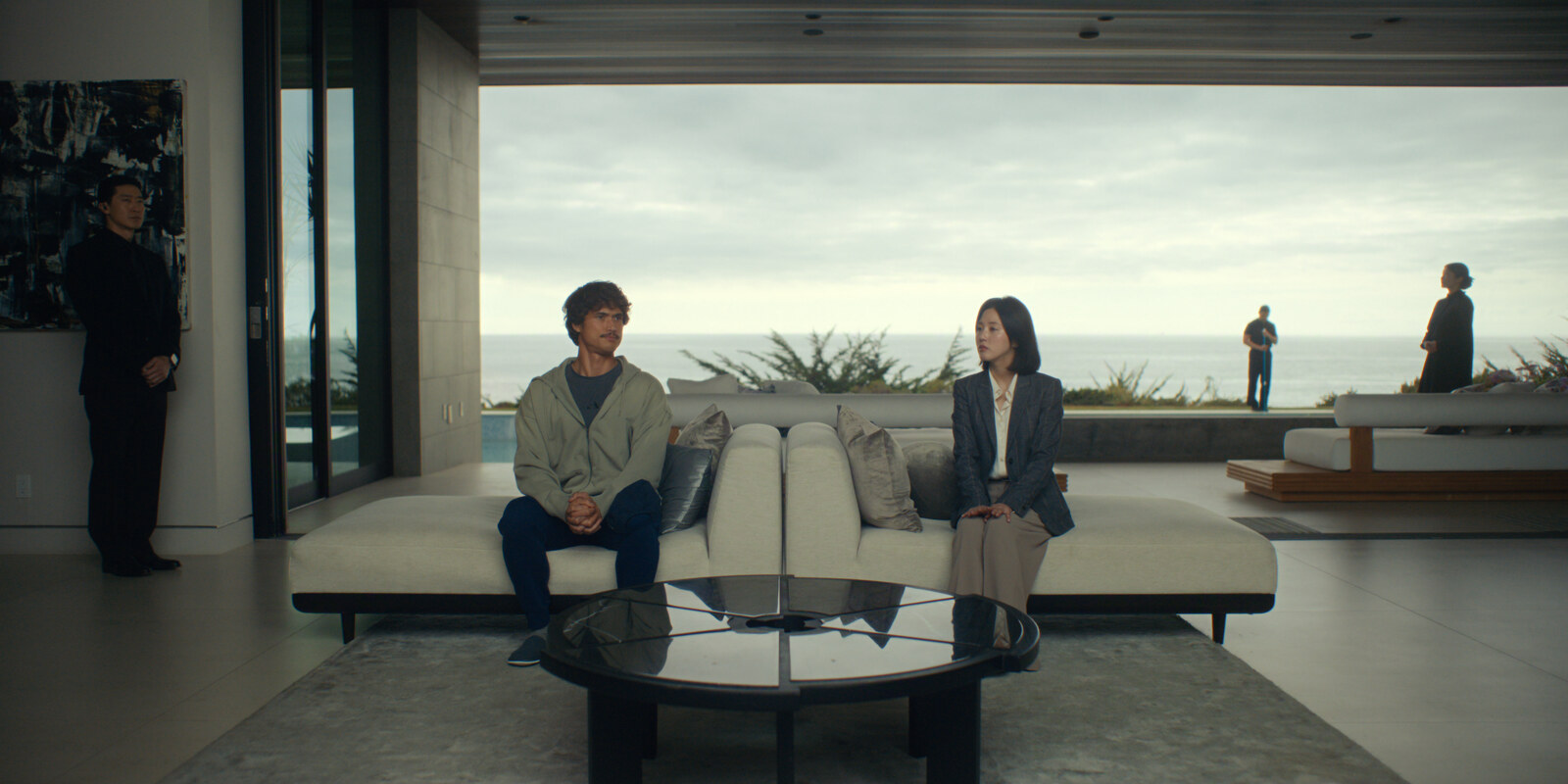
100%. Yeah, I mean, a big element of what this show is about is the club, right? I think we literally haven't even talked about that too much yet. No, not at all. The club is this huge element that has so much to do with the wealth and the privateness of it all and the dream of Southern California living. I wanted to make sure that when we're inside these rooms, and we built these on stage, that that classic Southern California light was gonna always be ever present, and we need to make sure that what was being built with the production design team, and of course with collaboration with Sonny and Jake and the other, and Kitao, the directors, was gonna be able to sort of... I was gonna be able to sort of continue that thought throughout in terms of that classic Southern California color palette, light color kind of coming through those windows, and yeah, worked really closely with Grace, our great production designer to make sure that she was always giving me opportunities to make sure that where we think his desk is in his office is gonna be by a window, that I can make sure that that sort of warm hue of sunset is gonna come through at times. And the facade of the beautiful classic California lifestyle is always gonna be there when under the surface of it all, of course, things are obviously unraveling in a more depressing and dark way.
Yeah. I was curious, what... You gave a couple examples. Just, was that generally how it was achieved? It was the answer there was more about allowing for window light to play a very significant role in these environments?
Yeah, that was the goal for sure. I mean, you may have... The one thing we've not talked about was this concept that was talked about in pre-production with Sonny and particularly with Grace as well, and a big part of her approach in terms of production design was these sort of each relationship and each, if you're gonna have the club as well, was a season. You have the young couple, the spring, and life is budding, and so much of their color palette was these sort of spring color sort of pastels. And the club was meant to be summer, and this sort of endless summer kind of lifestyle that's always glorious and always backlit and, like I said a minute ago, under the surface of all that is this... checks are being written to pay off X, Y, and Z person, and there's so much under the surface that no one's privy to, but that, yeah, to the members of the club and to us as, to capture it was to be able to sort of control this ever-present sort of late California sort of afternoon where warm light comes through windows. And the hope was for every one of those scenes, with the exception of a few for particular reasons, was gonna always have that in them.
Yeah. No, that's cool. Especially the seasonality stuff, how much of that were you relying on color grade to help affect that, and how much was stuff that was happening in camera?
Both for sure. I mean, you definitely always want to enunciate stuff when you're in the grade, and we definitely did so. But I think, yeah, I think what the hope was to sort of design it as such too, and Grace was really particular about that kind of thing. You'll notice the colors of walls in Charles and Cailee's apartment, certain tones were applied there to make sure those choices were gonna be able to be emphasized clearly. The color of the club is very sort of summertime color palette, very bold kind of colors, things like that. And then you have autumn for Oscar and Carey's colors for their relationship, and you get a lot of those kind of autumnal tones. And then for the elder sort of Korean couple, there's this sort of like wintry palette as well. And you'll notice when you go to their house, even on the Malibu beach side, it isn't this sort of glorious, sort of warm, backlit environment. We've actually taken a lot of the color out, and you talked about in the DI that was particularly ever present there, where a lot of the sky color was removed, and ominous clouds. Ironically, we're luckily captured on the day, and sometimes goodwill is given to you. But yeah, what the hope was that some of these choices were then definitely gonna be in cam as much as possible to allow us to in the DI just to, yeah, enunciate here and there a little bit.
Yeah, and the designer is obviously coming up with these color palettes. How much of a discussion are they having? What's your dialogue back and forth on that before they are committing to certain elements like that?
I think I was involved early on. I mean this idea I think was from the outset. It was not something that was discovered sort of like later in the prep process. It was a choice made by them early on. And so hearing... And it came from many things, but it came from the idea of in the writer's process, this idea of cycles coming in. You have the different sort of relationships ebbing and flowing. Of course for those who've seen the show, the springtime couple is now the autumn couple at the end of the show. And how these relationships cycle through and in our lives in general, and how love changes from when you're in your 20s to when you're in your 70s. And that's true for everybody, and it's part of growing up, and it's part of relationships evolving and how love means something different at each of these stages of your life. And so the idea of cycles was a concept from the very outset, I think, for Sonny even in the writer's room. So taking upon that, Grace moved forward with this idea of how each couple would be symbolized by these colors, and then I would run with that in terms of how lighting would work within each of these things. And I think everybody sort of did the same sort of thing to help support the concept, costume design, et cetera, et cetera.
Yeah. It's great talking to you because it's like I can't say I'm surprised, and it makes so much sense. You have these conversations, and sometimes they can be more on the technical side, which is cool. But I'm not surprised that there's just so much of a really just digging into the fanatics of everything. And there are like the technical results that happen because of that. But it's just so much about the caring about the intricacies of the story, and allowing that to really dictate everything that you're caring about it almost as like a writer would. Is kind of the... And I guess... It's funny, not really a question, I'm just saying it.
No, no. It's weird you say that, 'cause I think this is new for me too. I don't know sure how one would describe where I am at my career. I feel like early on when I first was starting, sort of, 10, 15 years ago, the conversations I would have with a director would largely be about like, "Yeah, and then there's this new lens that I think would be really great to sort of use on this project. And it feels like this... I had this idea of shooting on this film stock, and I thought it could mean this and that." And my ideas came from, I think, the tools at my disposal. And I think like that's nothing wrong with that at all, by the way, first of all. I mean, that's just, I think there's nothing negative to be said about that 'cause that's true for our DPs. And true for me to a certain extent as well. But I think as I've grown in my career and the conversations I wanna now have with the collaborators I collaborate with, I wanna step back from that first for a period of time. Eventually we'll get into camera choices and lenses and things like that. That will happen inevitably, 'cause at some point the producer will knock on your door and say, "What are we shooting on?" And we have to make a decision. So that will happen. That's inevitable. But if you can sort of step back at least for the first few weeks and have different kind of conversations to sort of really understand what's making this director tick and what's really on their minds about why this film makes sense for them to do and what are they passionate about in the story, in regards to. And what are the sort of 1,000 foot views about the goals that we're all trying to push towards. It helps me to know what camera format to shoot on. Yeah.
Yeah. Well, I mean, that's for sure. And I guess I'm curious, that exploratory time that I think it happens throughout the whole project, but particularly in the beginning, how... Can you recall how it shifted your understanding of the project?
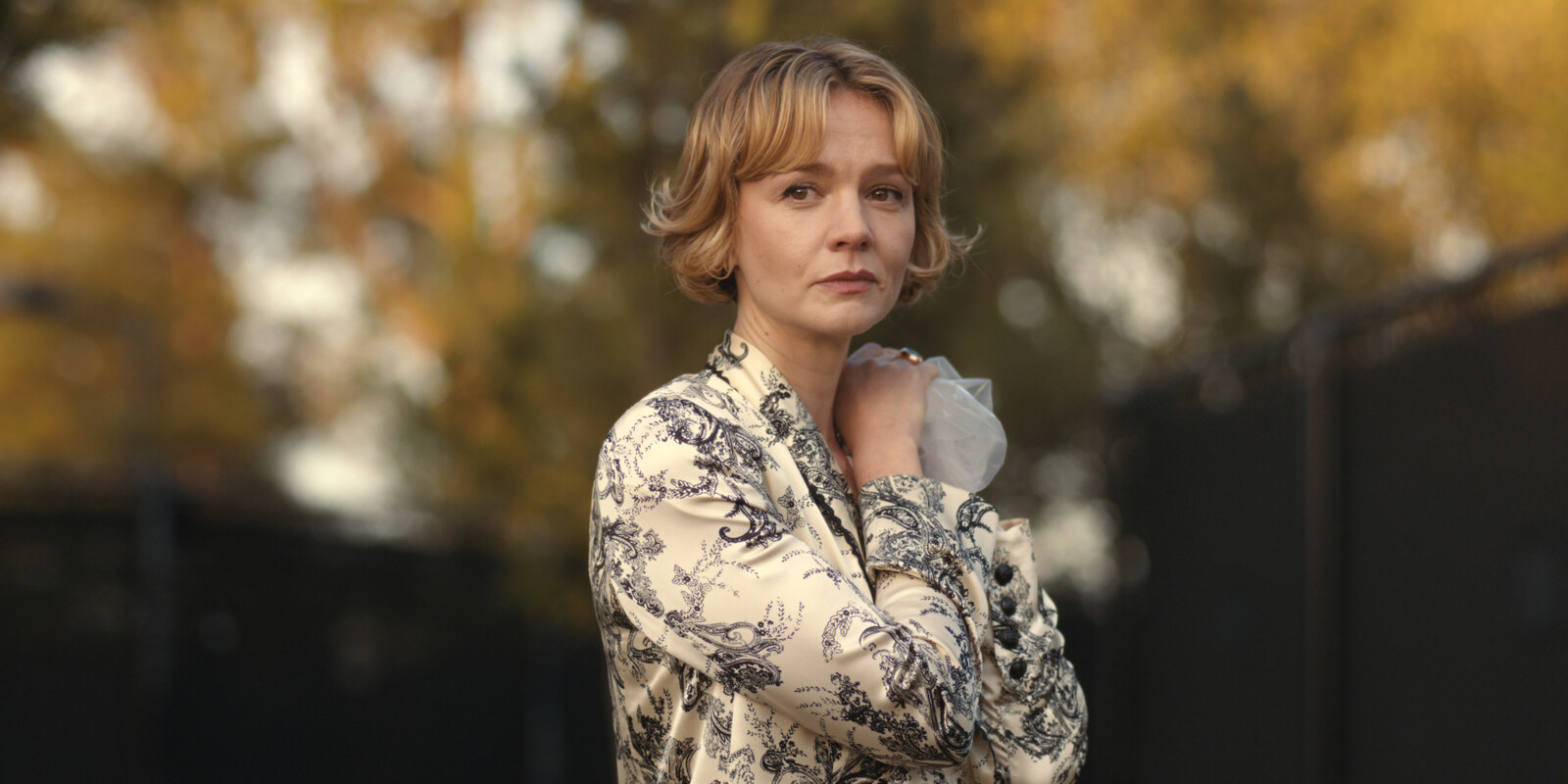
For sure. Yeah, definitely. I think when it... So the way it went for me is I read one through four, I wanna say. Is that true? One through two? I can't remember. What I was given initially was not the whole season, of course. So you read a certain bit, is this something you wanna participate with? Yes. Let's have a meeting and blah, blah, blah, and you go on from there. And I think the cycle idea as an example, I don't know that I... It wasn't particularly on my mind as I read the first few episodes, in the dark of the conversations I would have later on. So I think, yeah, I just felt like it was a beautiful character study of these people and their lives that rang really true and felt very connected to... my life is not like these characters' lives, but just that some of the things they were discussing they felt like my life. I felt seen on some level. Yeah. Humanity. Universal. But once I talked to Sonny about these ideas of what was really important to him too was how these characters would evolve and, I guess one of the reasons why I didn't necessarily understand the cycle idea was because I hadn't read sort of five through eight, and had no idea what was coming. But in his mind he of course knew, and so hearing about the cycles concept and what the generations, how they would move from one to the next and how that was really important for him, all of a sudden my mind started to go, "Well, okay, well this is not necessarily just a slice of life show. This has a lot more to say than that. This is not just like, 'Hey, watch these characters go wild and crazy and say funny things and do crazy things.' This is a show with much more intention that wants to sort of speak in a language that has much more purpose actually." And that changed a lot about how I felt like it wanted, the show wanted to present itself. I think the idea of large format was my first change of perspective on this. Initially I think I wasn't necessarily thinking the large format would suit it, but once the ideas of cycles kinda came in and how the show wanted to sort of speak to these sort of bigger topics, I felt like... Well, what if we sort of present faces, subjects, and close-ups and shots, et cetera, in a way that made it feel a bit more glam, and made these characters feel like they had more to say than just what they were saying, but they were standing for something that felt much more sort of symbolic, actually. And so for me, that made a lot of personal...
That is where my mind goes when I think about the show. Those are the first images that I conjure up, those tight portraits, thin depth of field. Yeah, those are the first images that come to my mind.
Yeah, and I think to me, this is just a personal thing and maybe doesn't work for anybody else besides myself, but for me, when I guess I sort of see those kinds of portraits, I can fixate on them in a different way than I would otherwise. In a way that like... there's a certain gravitas to them. Like, if you see a medium-format portrait in a museum or a gallery, I find myself sort of sitting with an image in a portrait in a different way than I would if it was shot, like, on 35, let's say, for example. I'm speaking generally here, so don't get too excited, but I'm just sort of speaking in a very sort of thousand-foot perspective here to say I find when I look at something with that sort of thin depth of field or with a field of view that sort of speaks to a different thing than it is to on 35, that I find myself feeling like this image carries with it a different weight than it does on a different format. And when I say weight, I'm also somewhat meaning meaning as well, so a weight and meaning to kind of carry a different thing on a 65-size sensor, let's say, for example, to me than a 35-size sensor, for example. So that's my personal interpretation of it. But I feel like when I'm watching those images, when I'm seeing those kind of images, that's at least how I react to them personally, and that's why maybe I make those kind of choices when I'm a cinematographer as well.
No, totally. And it's funny, I... Your portrait work in general has always been really striking to me. I think the portraiture in Moonlight, the portraiture in The Underground Railroad, especially that extended edition cut of just so many portraits that you guys did on The Underground Railroad, which is just...
It's constant.
One after the next. It's just like, man, so beautiful and deep and intense, and then paired with the right music, and you're like, "This is just transportive." Really. So I guess it's not surprising to hear you talk about portraiture in that way. I mean, I think that it's been indicative in the work. 'Cause I guess there's nothing better to film than a human face.
I think so. I mean, that's... Yeah, I was gonna say that's something that's quite similar to what you just said. I mean, when I see, especially a beautiful face, a strong face, a face with meaning, and thankfully to have been involved with some other productions that just have incredible casts that you just can't... I don't wanna move away from these faces. You wanna just let them sit with you, and you can sort of sit on them in a way that... I find myself just enjoying and wanting to sort of just witness in a way as opposed to sort of wanting to sort of look away to some extent you want to sort of... yeah, watch.
Yeah, no, a good actor, you can watch them watch paint dry, and it's fascinating.
And then true for this show for sure. I agree, yeah.
Oh, yeah, I mean, the cast in this, I wanted to ask you about the cast in the sense of, I'm just always curious to hear about... Obviously, good actors are great at that specifically, but then I think sometimes you have these moments where they're impacting the filmmaking beyond just their excellent performance, and it's about the ways in which they might be impacting how you're thinking about a scene. They're making decisions with their blocking that you never thought of that now illuminate a different idea for a shot. And I'm just curious if you had those experiences and what they were and if, what memories that might conjure up.
For sure. I mean, that happened on a daily basis, multiple times a day, being inspired by all of the cast. They brought so much to the table that when they came up with something that felt like it made sense for them, it wasn't a very complicated decision to sort of say, like, "Let's try that and see if it makes the scene even better." So that was true for a lot of the show, even in subtle ways. I mean, I don't know that I can think of right now, a particular specific one that carried more weight than another, but if I think of one in this conversation, I will. But I can just certainly attest to the idea that, yeah, those guys brought it on a daily basis and really, we're lucky to sort of be there when they were giving such beautiful performances in a way that I think really inspired all of us behind the camera as well. They, sort of when you're with them and they're in that fight scene in episode one, and they're going at each other in a very sloppy way, and it feels very raw and visceral, it certainly influences the camera direction as well. Wanting to make sure, this could be sort of a scene by which we sort of sit back and witness the actors perform this in a beautifully emotional way. We could have made that choice. We didn't. It didn't feel like the right one, and so it felt like they're really bringing it. It feels like we should be in there with them, and we should be participating as the camera operators, sort of do sort of move with them through these spaces and react to them and move in a way that felt like it matched their energy, to sort of make sure the audience feels like they're in it with them, as opposed to just watching the couple sort of fight. We're in that fight, and I think that's the kind of filmmaking that I really love, and I think the kind of filmmaking that Jake and... sorry, Jake and Sonny love as well. It's that perspective stuff that I think just really feels connective, and I think audiences really enjoy feeling participants in the scene, not just sort of witness to.
No, totally, and it makes me think about earlier in the conversation about the... Going into a scene like that with a plan but having it allow to not feel too stilted because you're still being spontaneous and reactive. It feels like that's actually the perfect summation of that idea.
Yeah. I think as an example, I think, I mean, I could be misremembering, but 'cause it is a while ago now, but my memory of that shot list for that scene is not necessarily what was shot. Yes, we did have close-ups, of course, and medium shots in the list, but I think there was a lot more to it than that. There's a few things that we did not sort of get to. That's one way to put it, but another way to put it would be, and a more true way to put it, actually, would be say that I think we sort of realized what we were doing was working so well, there wasn't really need for all these other things that felt like, oh, that was an idea on paper that made sense in an office a few weeks ago. But here we are with these great performances and to carve out time in a schedule or to do a few extra things just felt like... We wouldn't be doing service to what we were sort of had already captured with what they were up to. So I think cast and certainly this cast particularly had a big influence on what we then chose to do in the end.
Yeah. A question that I'm trying to, as we're wrapping up and getting towards the end that I like to ask each person is, for the project, what was the most challenging day, both physically and or mentally in terms of... Those could be two separate days, but I'm just curious to hear what that was and how you dealt with it.
Yeah, it's interesting. I will sort of speak to an exterior. My memory of a particularly hard one, it was the end of a day that we had a lot to do in general, which is true for a lot of days on a show like this. We all wish we had more time, et cetera. That's true for every show you're on. But this was a day where we were finishing the day with a scene where Charles and Cailee are fighting in the car. Forgive me, is it episode three maybe? And they're having this long sort of walk and talk in the parking lot, and they're sort of discussing sort of Charles' feelings with Eunice. And how that relationship is sort of budding for... so I keep saying Charles, but for Austin. And they get in the car. It's a sequence that may feel very simple in its viewing, but was a little challenging to sort of actually go through the places and get to all these pieces. Long walk and talk, get to the car, coverage in the car. Car starts moving. We're not gonna cut to process trailer. We're in the parking lot shooting active car driving sequences with a stunt where she opens the door, jumps out the car, then pick up her in a steadicam shot where we walk her through some bushes. She falls out of frame, and then I think we shot the fall, the tumble into the water on a different day. But take that out of the equation, that's almost one day really. We shot, I think, two or three scenes outside of that scene on that day as well. And so it was a tough one, and one that's a really important scene in the show. But I love that. I also really love what we ended up capturing, and it was a sort of a beautiful sort of color, lighting color choices that I think are really great in there, mixed color temperatures between some of the warm tones of some streetlights and some moonlight stuff going on, some sort of headlights and brake tail lights kind of flaring the lens at times. And so there's a lot of fun things going on with it that I'm really proud of. But yeah, that was a tough one. That was when you've sort of felt like you've finished a day, and then you have another scene to do, and it's that scene.
Yeah. Going into days like that, are you... Like is nervous the right word? Or is it, what, if not, what is the right word?
I think it's impending doom. I mean, yeah. No, I mean, I think I knew at like, I think the call time for that day was probably like 11:00 AM or maybe noon or something like that, and we knew we had probably a little bit of overtime baked into some of our shooting schedule that day. I'm sure we went past that. But it was sort of like, I knew as I got to set that day that it was gonna be a nightmare. It was just like I knew it was happening. Yeah. There was no avoiding it.
Was there apprehension about wondering if you were gonna be able to achieve what you wanted? Or was that never in question?
The truth is, the thing I was most worried about, and this may be a strange thing for a DP to be most worried about, but I was worried about the performances. I was nervous and scared for Charles and Cailee. I knew it was a big, important scene for them. I knew that they were gonna be rushed through it, and I wanted to do what I could do to just have them be as the less rushed I could get to give them, the more I could do. And I was trying my best through the first two scenes of the day to not dismiss the value of those, but to sort of get through those in a way that felt we were on time and giving our best shot for the last scene of the night 'cause it was a big one. And it was gonna be complicated for all involved. And so that was what was mostly on my mind. I felt like I knew the lighting diagram well. I felt like the crew knew what they were gonna be doing. I wasn't gonna be so nervous about that. There was gonna be time built in to sort of manage that kind of thing. But I was just probably more than anything else worried for the cast, 'cause I just felt like I was gonna, if I didn't give them the time, or if we didn't give them the time, I felt like that was gonna be a failure on our part, on this.
Well, honestly, that feels like a great summation of this chat because I think it just highlights what I was mentioning before about the things that you clearly are focusing on. And yeah, no. I really enjoyed this hour and chatting with you. I've admired your work for a long time, so being able to talk is really awesome, so thank you for coming on.
I appreciate that, Jared. That's very, very kind of you, buddy, and I appreciate that, obviously. And it's been a great chat. I hope everything's well. I hope you again.
Yeah. Thanks, yeah, for another project.
Yeah, exactly. All right. Yeah, for sure. All right then, well, enjoy.
The work stays free. Someone still pays for it.
Every episode, every article, and both of the Resources tools are free to use. No paywall, no membership fee, no login. That is not a growth tactic, it is the whole point: learning to light a scene should not depend on what you can afford.
Sponsors cover part of it. The rest is people chipping in.
Monthly or yearly, from $5 a month, less than the price of a coffee. It costs real money to keep the podcast, the writing, and the tools running, and supporting is what covers it.