
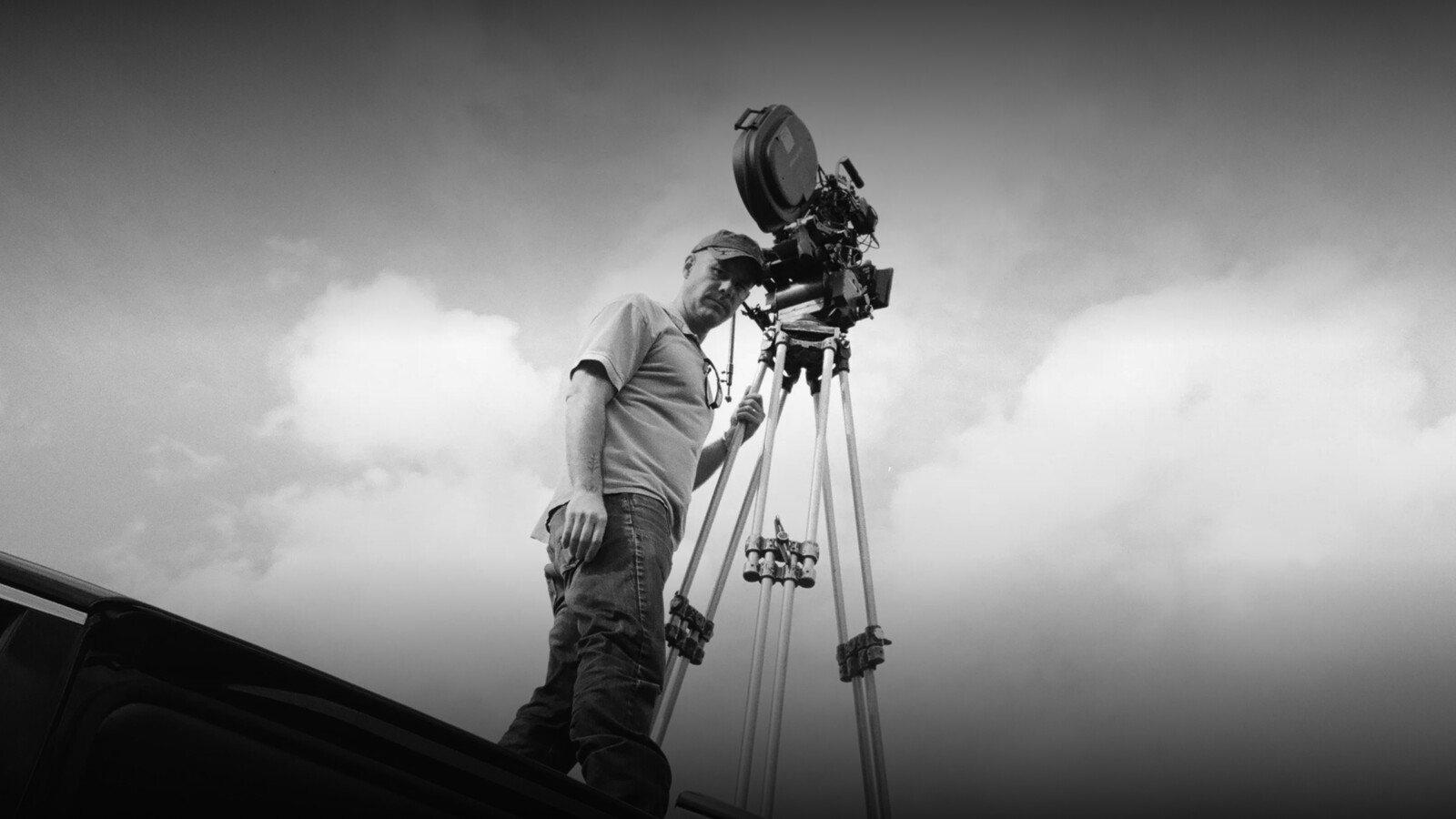
Adam Newport-Berra, ASC: Four Faces in One Apartment for The Invite
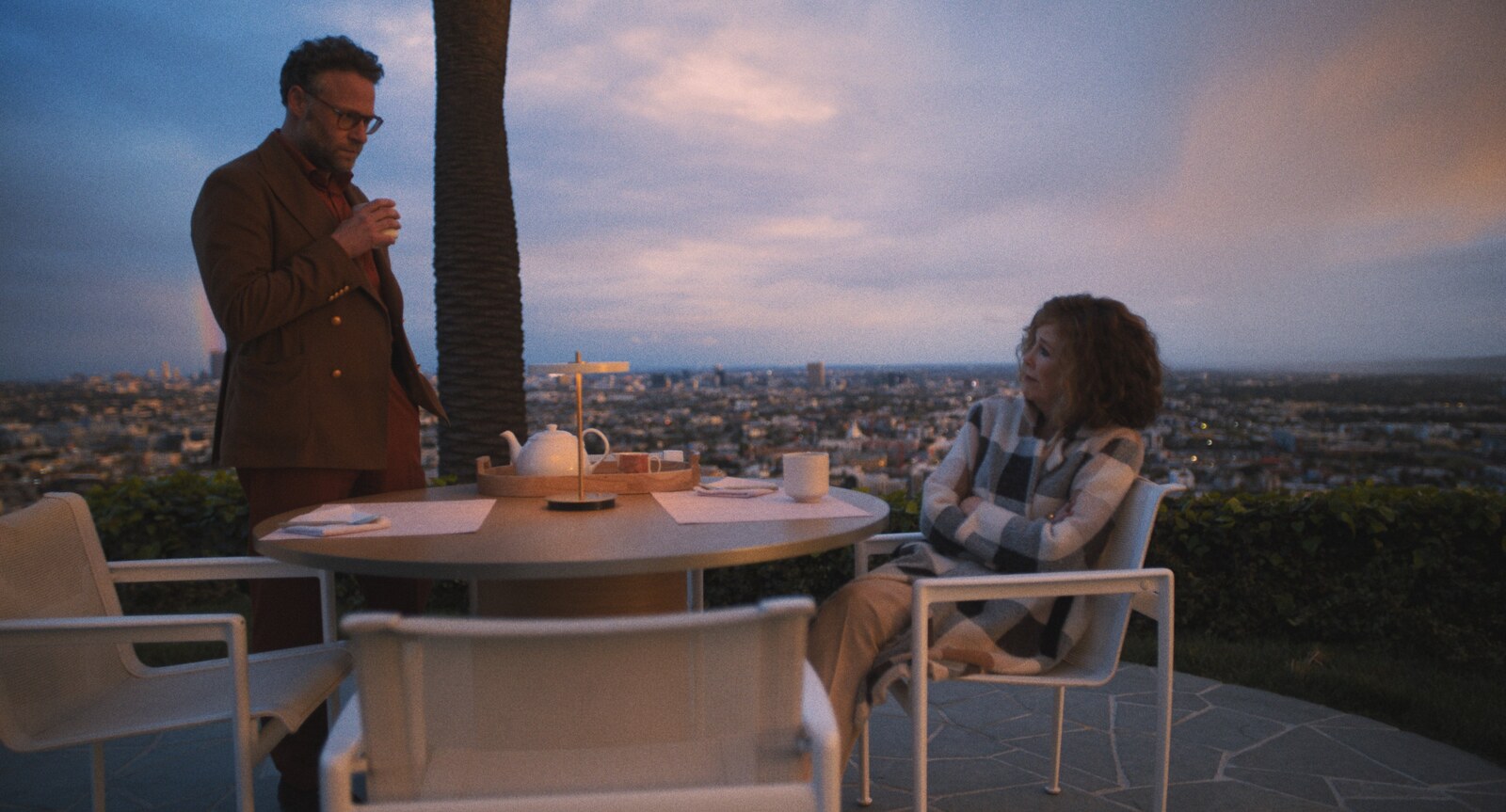
The darker everything around them is, the more their faces are going to pop, because this movie is about the characters' faces.
The Invite, Olivia Wilde's comedy for A24, plays out almost entirely inside one San Francisco apartment, where a couple played by Wilde and Seth Rogen host an evening that goes sideways with visitors played by Penélope Cruz and Edward Norton. Adam Newport-Berra, ASC photographed it on 35mm, in story order, on a Los Angeles soundstage with a single day of exteriors in San Francisco. The brief he set himself was that one enclosed space should feel, in his words, like a landscape, and never like a set.
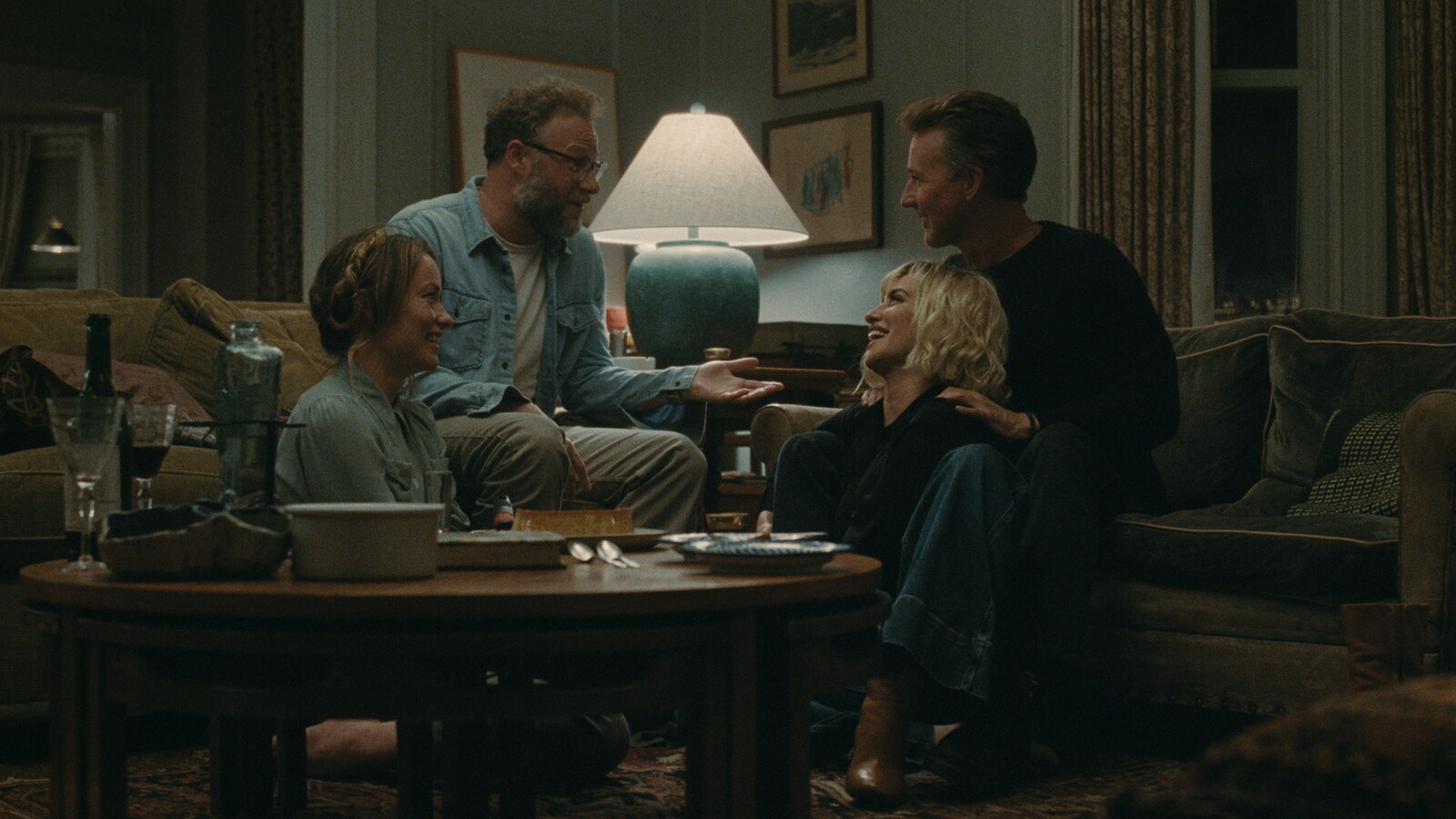
The first plan was to light it practically, in the spirit of Husbands and Wives, and let the actors move in and out of shadow. A test with the cast said otherwise. Nobody liked the dailies, and Newport-Berra got some phone calls afterward. What replaced it was hard ceilings, because an open set lit from above reads as a set, with the light built into the ceilings. Key grip Adam Kolegas fabricated low-profile softboxes, tube fixtures wrapped in muslin and skirted, light enough to hang from putty knives slid into the stretch-canvas ceiling and quick enough to pop off in ten minutes when the camera needed to tilt up. Gaffer Len Levine ran them by remote. Doorway moldings that dropped a foot below the ceiling hid the boxes behind them, and six to eight more lights sat on the floor for nearly every setup. With production designer Jade Healy and costume designer Arianne Phillips, the walls, the wood, and the hosts' clothes were kept dark so the faces would carry the light; the visitors' wardrobe was made to stand apart from the room. Every shot in the film, he says, is very lit.
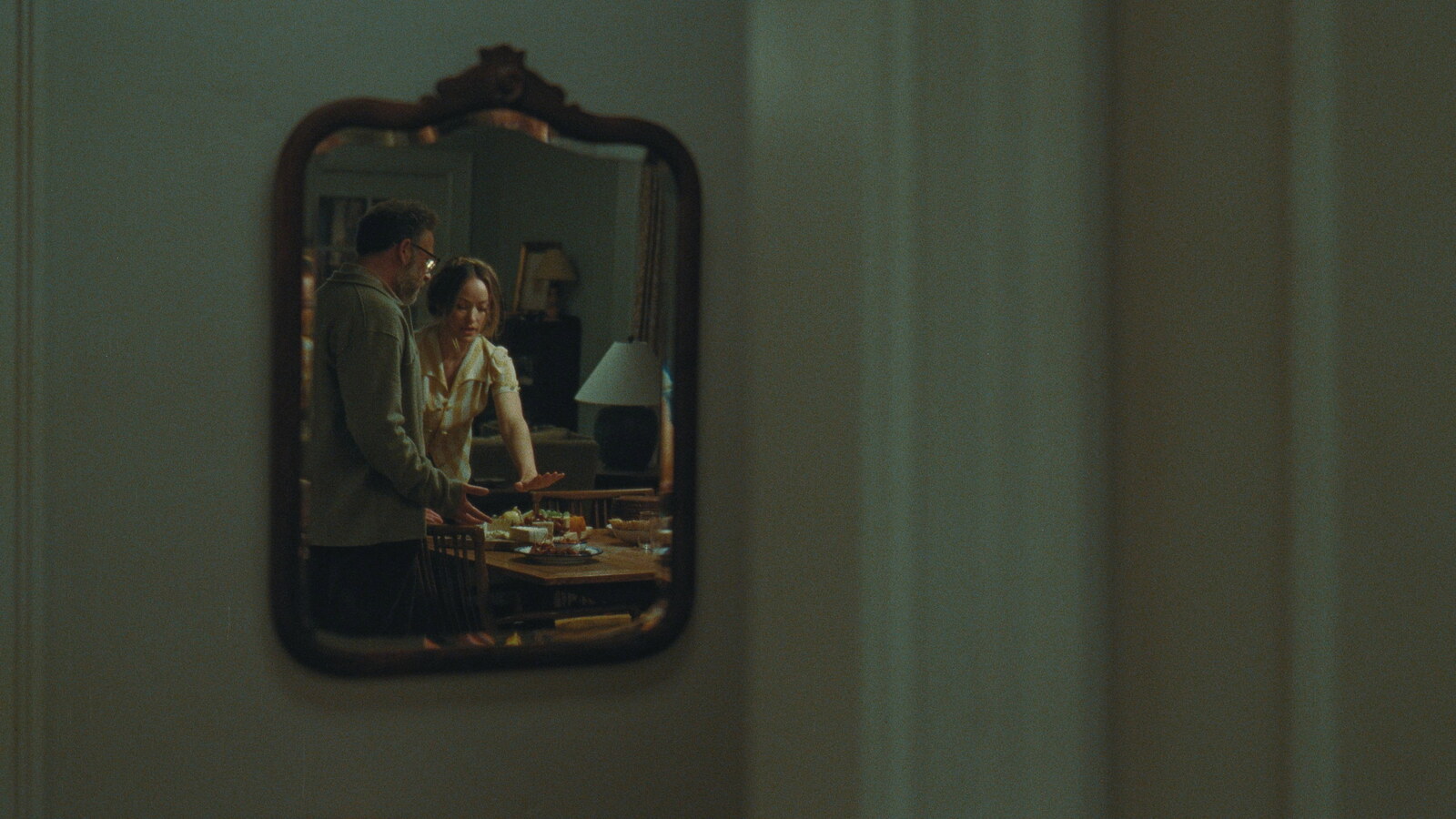
There was no shot list on set. Newport-Berra wrote one for the whole film, in a Google Doc, and says he never looked at it once. Prep was a wall of two hundred reference frames, and each morning he walked the set before anyone else arrived, photographing angles on his iPhone with his crew standing in for the cast. Wilde, who stepped into the role of Angela after an actor dropped out, ran each scene with the cast, then handed it to a stand-in and watched from outside while she and Newport-Berra picked frames. The camera stayed on the dolly and mostly locked off; there is no handheld in the film. The tools were lens, height, and eyeline. Norton is held slightly low on a 35mm, almost heroic. Cruz moves on Steadicam on a longer lens. Rogen and Wilde are pinned flat against a wall with too much headroom. For the couple's first argument the rule was cat and mouse: never on the same level, never in the same frame, together only in mirrors and window glass, until the scene lands on a head-on two-shot. The last shot of the film, a move through the building's shaftway that Healy had designed the set around, went at four in the morning on the final night on stage.
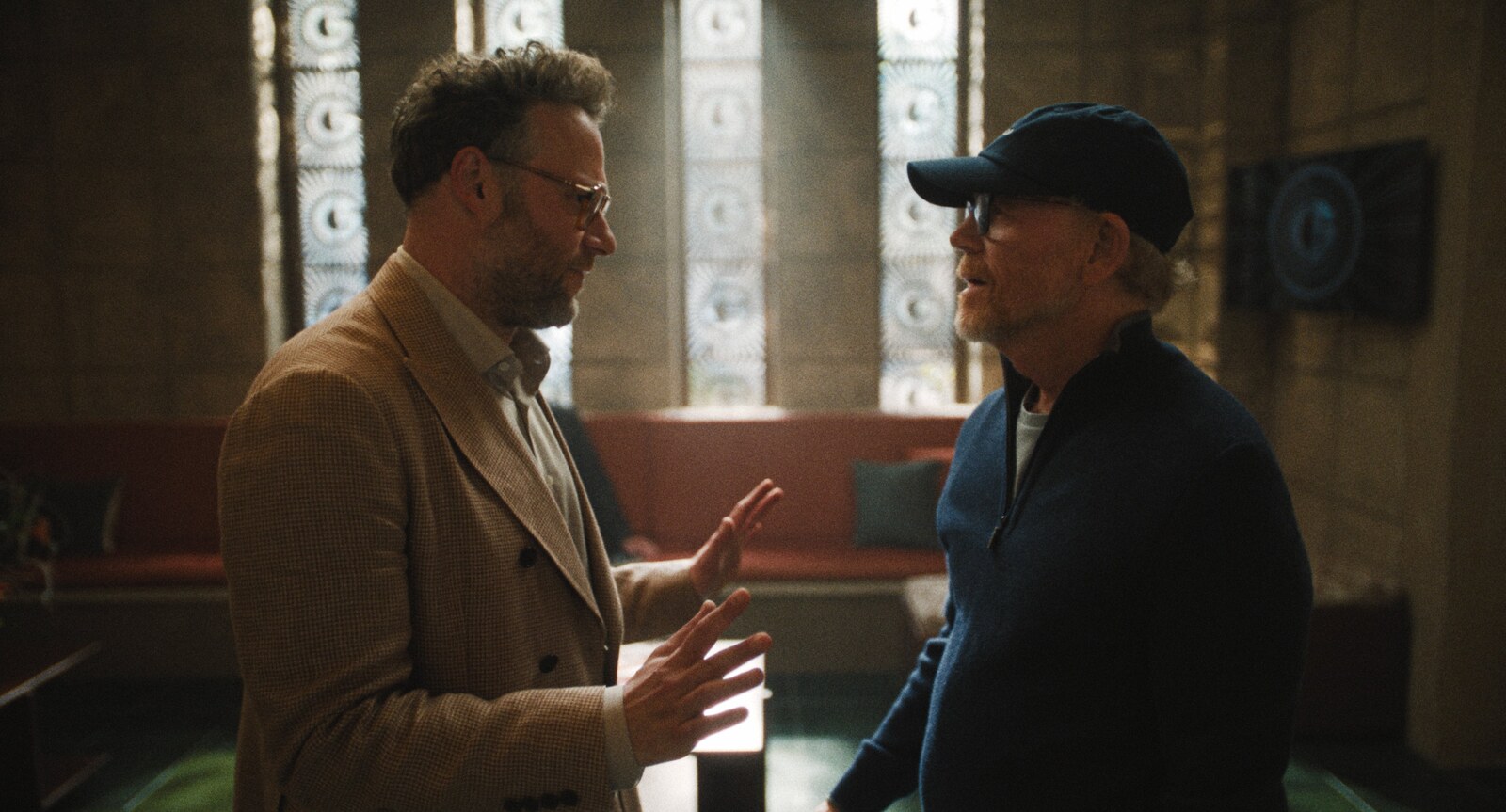
There is also the matter of Seth Rogen's glasses, which Newport-Berra has been lighting around for four years: anti-reflective coatings tested with the props department, a stand-in wearing the frames while lights get moved, and a lot of light from above. His one ask of Wilde before he signed on was that the film feel effortless, which, he says, usually means you are trying much harder.
-
Adam Newport-Berra, ASC
-
Jared Levy
-
David Kruta
-
Topher Hammond
This episode is made possible by Fujifilm.

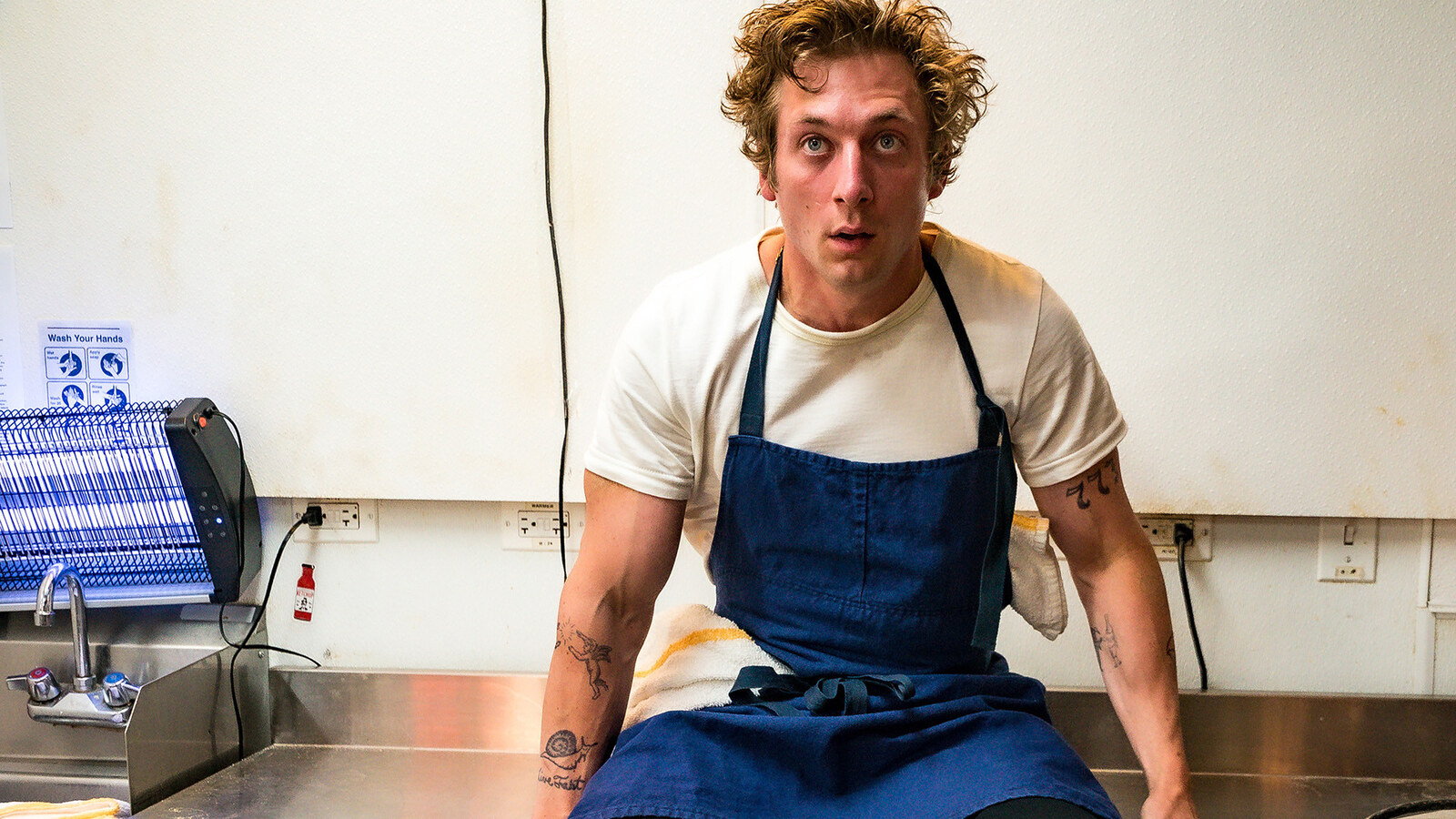
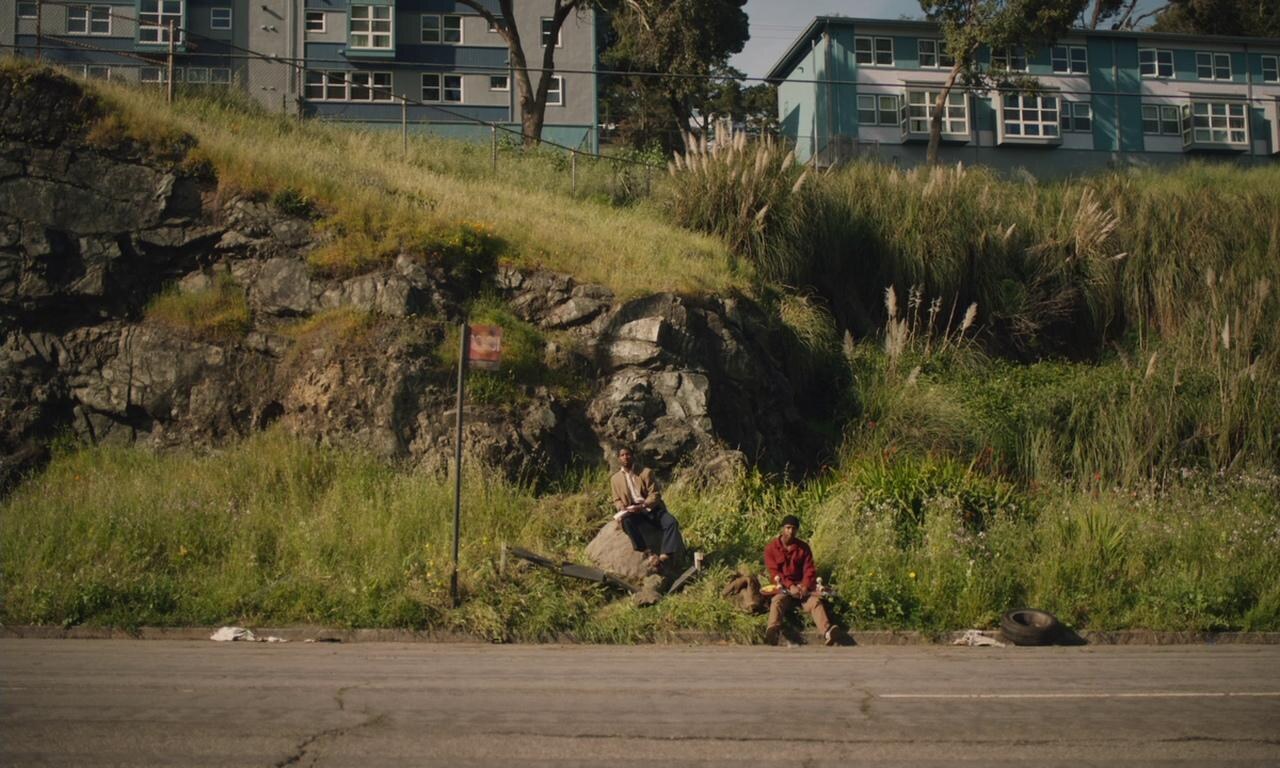
Read the full conversation
Chatting with you again, we had two conversations on the Art vs. Commerce podcast years ago. In the last one we were talking about Last Black Man in San Francisco, so it's been a minute, and I think kind of ironic that the next movie we're talking about is also set in San Francisco.
It is funny.
Yeah. You've been on quite a journey since then, so I'm excited to talk about this movie in particular. I was curious just to start, and just start from the beginning of this project and the film, how did it come to you, and what were you thinking initially when you heard about the project and thinking about what it would entail, what was exciting or did any aspect of it give you pause, make you nervous? I was just, the initial thoughts on the project.
I think the first time I heard about the movie was through a friend of mine named Saul Germaine, who's a producer who I've worked with in the commercial world, and we had been trying to find a movie to work on together. And Saul worked with Olivia quite a lot in commercial production, and really wanted to be a part of her next film. And so Saul texted me. He's like, "Hey, so Olivia's doing this movie. I'm really excited about it, and would you be interested in reading it? And Seth is in it," which was great, 'cause I was working with Seth at the time on The Studio. And so I read it. I really enjoyed it. I had worked with Olivia on The Studio season one in episode seven. She's kind of the star of episode, I think it's seven. And I don't know. I got a good vibe from her, a good energy from her. And I enjoyed the script. I think the first pause I got was that I often work with directors who are directing their own material. And I find that I enjoy that most. So that was one of the first things I wanted to talk to Olivia and kind of get her read on the script.
So you've sensed a noticeable difference between those experiences when the director's not the writer? How would you define that as you've experienced it?
I think I've been lucky enough to work with directors who are writing material because that's all that they wanna make. Or that's kind of their calling. Whereas often, being in positions where I'm speaking to a director who's not directing their own material, it's kind of their interpretation of something they're interested in. And it can sometimes feel different. I'm not to say that it's a bad thing. I just think sometimes there's inherently more cooks in the kitchen because you have producers and writers who are kind of forming the interpretation of the project. Whereas with a writer-director it's often much clearer and there's more of a god figure, which I found I really appreciate. That said, this was not that case. And so Olivia and I talked about it, and we both talked about what we loved about the script, what we thought could be better, and we both kind of agreed on a lot of those same things. So that was really exciting. And not to say the script wasn't good. The material was great, but I was like, I wanted to dig into the characters more and kind of understand them more. And it was kind of a journey together, talking about the characters and what drew us to them and what pushed us away from them. Yeah, I mean, I was excited about it.
What were you guys aligning on in that conversation about the film?
I think my big thing was that I really didn't want this to be a story about unhappy relationships. That was... I didn't want it to be depressing or miserable or subjecting the audience to the torture of watching two people suffering. I think there's enough of that in the world, and I'm really personally uninterested in that. And I have a really incredible relationship, and I'm like, "I wanna talk about what's beautiful about a relationship, not what sucks about relationships." So that was a big part. That was a big thing for me was I just don't want these people to be... I don't want us to be scrutinizing miserable people. That to me is just not interesting.
I agree with you a lot, and I think it was actually one of the things that I love so much about the film in general is that aspect of it. And I'm curious, was it reading like it could have gone that way based on script alone?
A little bit. And I think I'm more sensitive to that than other people, and I think Olivia reassured me that it wouldn't be that. And also, another thing that drew me to the project was just the talent involved. Like having Edward Norton, Penélope Cruz, Seth Rogen. I knew that these were gonna be characters people wanted to watch and people loved. So, all of my hesitations weren't major red flags. It was more like making sure this wasn't like... I didn't want the movie to be dreary. I think for me, when I read something, I always want to from the very beginning, see... I wanna be able to look beyond the moment and be like, "What do I want for this character?" Or what's the best case scenario for this character? 'Cause then I can root for them, and then I can cheer them on even though they're going through hell. You know what I mean? I think that when I read a script and it's people going through tough things and I don't see the light at the end of the tunnel for them, I kind of tune out. So for me, that was a big part of it, was being like, what is Joe and Angela's sort of ideal scenario? And it's not saying like, oh, living a happy life together. It's what kind of resolution could there be...
I don't think... Yeah, you're not shoehorning everything to forced to have some sort of perfect happy ending. It's just more, where is that ember of hope coming from?
Yeah. And what's the conversation we're having? So that was a big thing, and I think Olivia and I talked a lot about it, and it got me really excited about the project. And Olivia actually wasn't supposed to play Angela. We had an actor drop out, and then they were feverishly trying to recast it. And everyone, mostly the main cast, were like, "Olivia, why are you not just acting in this movie?" And she pushed back on it for quite a while. I think in the back of her head she knew that she was actually the best choice for it. And I think she's the reason why the movie works so well. I think she's incredible. I think her performance is the best performance in the movie.
I can't imagine it without her.
I know. She's so incredible in the movie, and because she just understood the tone and she understood that tightrope we were walking on of it being funny but also dramatic and also sad and also really beautiful. And she was able to just dance between all these different emotions and feelings and guide the other cast in a really interesting way. So I think it was a massive blessing in disguise that we lost our actor.
Yeah, it feels very kismet. I mean, have you had a lot of experience working with the director who's acting in a lead role?
That's all I've done for the past five years. Starting with, not five years, but starting with, I did a movie called Good Fortune with Aziz Ansari, which he starred in. And then right after that I did The Studio, which Seth Rogen acted and directed. And then I did a movie called Splitsville which was directed by Mike Covino, which he also starred in. Then I did The Invite. I think that was the next thing I did. Anyway, and then after that, my most recent film called Club Kid, directed by Jordan Firstman, who also stars in it. So that's kind of been my pocket lately. And it's by no means, by no means is it by design. It's just kind of happened that way, and I think what I've found is that I work really comfortably in that zone because as a cinematographer, I come from a place of deep understanding of the material. I don't do something unless I feel like I really understand it and understand what the director wants to do with it. I'd like to consider myself a filmmaker. I mean, I am a filmmaker, but cinematography is just my way into making movies. I don't feel like being a DP is just the job I'm good at to help make movies. At the end of the day, that's what I just wanna be making good movies. So I think people respond to that and respond to my ability to very quickly understand what someone's trying to do with a project. So my goal as a DP is to become an ally and sort of part of the brain trust and basically just the backup brain. So I think people notice that and hired me to be that person. And I also think it's a really amazing dynamic because when I work with a director who's also acting, we're kind of like we're cooking from the inside and the outside. It's, the director's inside the scene seeing things I couldn't see, and directing the scene within it, and then I'm on the outside kind of observing and catching those moments, but we have insight from inside and outside the scene, and it just becomes this really dynamic interplay in the movie.
That's an interesting way of putting it, 'cause I was gonna ask, beyond just the cerebral reasons that you're well positioned to do that type of collaboration, just from a workflow perspective, when a take happens and there's that decision, are we good to move on? I feel like the director's probably looking to you and the AD in particular to know that. And so, that puts more of a directing... Not that you're directing it, but that, I mean, you're taking on some of that. So, how is that? Is that what the workflow is like?
Yeah. I mean, it depends on the project. I think on The Studio, for example, Seth and Evan are directing together, so Evan's behind the monitor and he's really able to sign off on things. But I am very involved with the way the performance works with the camera and the blocking. It's a very integrated role. And I think it's because I get the show and I really understand what we're doing. And I think with The Invite, there was a lot of trust put in me. We also had a great team of people behind the... Saul was there behind the monitor weighing in a lot. The AD was helping out. But yeah, I think there wasn't a lot of watching playback just 'cause we didn't have time and it was also just exhausting 'cause we were doing these really long takes of performance. And I think Olivia would really feel it from the inside and be like, "I feel like we got that." And then on the outside I'd basically just be bolstering that. I'd be like, "Well, the camera works or it doesn't work." And then from there, I would chime in ideas and notes when it felt appropriate. You just have to take the temperature. Sometimes it doesn't make sense. And I would help. I would offer insight into what I was seeing through the lens 'cause I was operating it. I was right there next to them. So I'd be like, "What if you just change your blocking a little bit?" Or "What if you lost this line or added this little thing?" Again, all very subtle things that I don't think make or break the movie, but I think just help push. It's just me seeing what they're trying to do and being like, this might be better conveyed through the lens if you do this or that. And there was a lot of trust there. There was so much trust there, and the fact that Olivia and the actors trusted me to do that was really humbling and fun and cool.
Yeah, I mean, that sounds like some of the best aspects of our job right there. You're right in the heart of it. And it makes sense that Olivia would still be able to make the calls based on how the performances felt from herself and the experiences she's having with her co-actors, but that you can confirm or deny if something was working in camera. That makes a lot of sense.
And we would go through the coverage. We didn't shot list the movie. We would show up every day, rehearse the scenes, and we would basically build a shot list. We had a really great stand-in for Olivia, Olivia would run the scene with the actors, and then the stand-in would watch. And then Olivia would jump out, stand-in would jump in and they would run the scene again. And Olivia and I would go through and pick frames, and I'd be on my iPhone and just writing down all the shot ideas and taking pictures. And then we would just review them for like 10 or 15 minutes and talk about priorities, and then we would just start banging through them.
That is so interesting because I've found that, a few thoughts and to talk, and we'll talk about each, but one, a continuous story in a single location has such a pitfall of feeling so much like a play. And not just in the performances, but in the visual representation of it. And I felt like at no point did it ever feel like I was watching a play. It always stayed a cinematic experience, and I think that is really reliant on blocking that feels super lived in and then the camera behaving in ways that takes that on. I mean, the movie happens in what? Five rooms max? And it never felt old or that you kept returning to the same shots. There was something, it stayed fresh the whole time, which as I'm watching it, I was just thinking, knowing I was gonna talk to you, I was like, man, that just must have been so difficult. And to hear that you didn't have any shot listing prior. If you didn't have shot listing prior, what was prep prior to shooting?
A lot of prep was Olivia working with the actors and working through the script. So I had a lot of time to myself. I kinda would steal moments with her whenever she wasn't... She was really deep in the process with the writers and the actors most of prep. And me and Jade, the production designer, and Arianne, the costume designer, would basically just steal her whenever we could find time to work with her. And Olivia and I spent a lot of time really early just talking about references and films we loved. I spent a lot of time, as did she, pulling stills of frames from movies we loved, photographs, and then just talking about what we responded to. So a lot of prep was just talking about what we loved, like movies we loved, shots we loved. And then we literally had a wall, an entire office wall that had probably 200 images on it, and we would talk through the script, and I would ask her questions about the script, and she'd be like, "It kind of feels like this shot or this scene." And we started doing a visual map of how we wanted different scenes to feel, and sort of, we had a narrative, a visual arc to the movie that we talked about a lot. But we never wanted to get into detail of specific shots. There were maybe a few times we did, but it was just we didn't wanna ever tie the actors into something that we had pre-designed. Because we knew the acting and the blocking was gonna bring so much to it. So what I often did was during prep when I didn't have Olivia, I'd be working with Jade, and while she was building the set I was just walking through the set just taking pictures of different angles and finding compositions I liked. And I would just sit with the script and think about what are the sort of key conceptual words that pop out to me when I read this scene? Does it feel lonely? Does it feel sexy? Does it feel seductive? Does it feel awkward? And I'm just kind of taking those keywords and then thinking about frames that we love that convey that sort of keyword, and then that became the inspiration for a lot of what we did. So we sort of had this toolkit of ideas that we'd come at every scene with but we didn't sort of bore ourselves with the monotony of sitting down and writing out shots, 'cause I find that shot listing is just maybe one of the most soul-sucking things I can do. Unless a director has a really specific vision for something or I do, or it's an action scene or something where we have very little time or access to a loca... Obviously if production demands it, shot listing is great and storyboarding is great, but when you have the caliber of talent we had and the ability to be in a space for four weeks, it's just why would we paint ourselves into a corner before we've gotten there?
No, that makes so much sense, because I was just thinking about the physics of it and figuring out, oh, I'm assuming that you're building a set and then are you making shot listing based off of your understanding of the geometry of that set? But then you don't really understand the blocking, and I was like, which came with the cart before the horse kind of thing. So what you're describing just sounds like such a better way of still doing the work and being prepared, but being prepared in a way that is advantageous to the spontaneity of what's happening on a day-to-day basis and not creating a rigidity that is stifling.
Yeah, exactly. I think that's the key. And what I did, what we did was for the first scene with Joe and Angela in the apartment where they're arguing alone, we talked a lot about trying to avoid them being in the same shot at the same time. And also seeing them through reflection. Basically, distancing them through use of the space. So that was our big guiding light for that first scene. So I was looking at every mirror, every window frame, every hallway. And I was like, how do we make this a dance where they're chasing after each other, but they're never in the same frame and they can never get on the same level? And it's not until the very end of that scene that they get into a two shot. But it's a really, instead of a comfortable two shot, it's a really confrontational two shot where they're just head on at each other, they're about to butt heads. And so for me, it was just about those sort of guiding principles informing our shot decision. And then from there, we just started cooking and trying to figure out the most dynamic ways to use the space and trying to move scenes into different rooms and every time we're in a room, trying to shoot it differently so that something that seemed familiar seems new and fresh to us. So I think that kind of built meaning over the course of the movie.
Well, yeah, and you achieved it. Because the whole time I'm just like, it's amazing that this is maintaining a cinematic flow when there's so much working against that being the case. And it's interesting hearing you say, 'cause I wrote down questions about the motif of the mirrors and reflections. I loved it, and it just felt like you must have had that as a thought process ahead of going into it. But I guess I'm curious, knowing that you were really shot listing based on the blocking on the day, was there this push and pull of trying to shoehorn in these mirror shots because you knew you wanted them? Or was it just something that kind of became a thing as it was happening and you realized it was a thing in the moment as it...
Oh, it was definitely... I don't think we had to shoehorn it. I think Seth and Olivia knew that's what we were trying to do, and they were really excited about it. 'Cause Seth is a director. Olivia's directing. I've worked with Seth a lot, so he trusts me. And so we went through the blocking and we were like, "Okay, how do we make the..." The big directive was it should be a cat and mouse, that they're chasing after each other and they can never catch each other, and they can never get on the same plane. So we knew we were gonna move through the whole house, whole apartment, and I was just looking for reflections, and I would show them a shot and be like, "This is cool 'cause I can see Seth in the dining room and Olivia in the kitchen." And they're like, "Oh, that's amazing. We'll tailor our blocking to that." And then there's a little bit of that, and then there was a little bit of them being like, "We're gonna be in the bathroom for this. How do we make this interesting?" I was like, "Well, if I put it in the corner and you open the cabinet, all of a sudden the mirror ends up in frame and I can see Seth peeing while Olivia's at the sink."
Yes, that is so good. You guys are looking completely different directions. You're not even looking at each other?
It was a bit of a balance of us just playing off of each other, and I think a big part of it was that there was just mutual trust that we all were making the same movie. And so I could pitch them frames and they would just get... Instead of them being like, "Oh, is this just a cool shot Adam wants?" They knew that it was motivated off of something that they were doing thematically and emotionally. So, we were able really play. And that was fun 'cause that was the first few days of the shoot, so it was just Seth and Olivia. So it kind of felt, it felt like three film nerds in a room just making really fun choreography and fun...
And what an embarrassment of riches. You get to do that working with two actors who are just so good at that part of the job. I mean...
Exactly, yeah. So that was a really good way to start the movie and because we shot sequentially, which was amazing, I think it set a really high bar for the rest of the show. And it also, once the crew started to really see what we were doing, I think it got them really excited to the point where I feel like everyone working on the movie had amazing ideas for blocking or performance or jokes. It was really cool, I'd get my crew walking up to me and whispering in my ear ideas, and I'd be like, "That's actually a really good idea." That's one of my ACs standing in the corner of the room that I hadn't looked at. He was watching the rehearsal offset through a window and he's like, "Come take a look at this. See this." And it's cool because Olivia really came to love my crew for that and respect my crew, and it was really fun because it just felt like we were all making the same movie and it felt like a bunch of kids at film camp. It was really, really special.
Yeah. It's hard to get that feeling, especially on the bigger projects where everybody's in the same boat rowing in the same direction. 'Cause it's a circus. So that's amazing. The set. Because it was a set you were having wild walls and ability to move things around I'm assuming, right? It was built with that kind of...
We talked about that. Well, I think we made a couple wild walls, but we ended up not wilding anything. I mean, I think that comes from... One, wilding walls is a fucking pain in the ass. It sucks. It's just, it takes so long. And the set design and set dec was so thorough and so beautiful that moving a wall meant taking 1,000 books off the wall, and every little trinket, and moving a bunch of furniture that had been placed very specifically, and it's like, "Oh, this is gonna take hours to do." And then they have to put it back. And so that very quickly I was like, "Okay, this is just..." And I was also like, it's not that movie. I really hate when I see a set, and I see someone photograph a set and I'm like, I know that's a set because that's the only way you could have gotten that shot. 'Cause it immediately takes me out of it. And I came up shooting movies in New York City, and you're just forced to be creative with shooting in a fifth floor walk-up that has 500 square feet. How do I make this interesting? So I think I really liked that obstruction. And to the point where we decided, we talked a lot about having a hard ceiling or having it open so we could light through it. And I was like, "Well, if we light through it's gonna look cheap, and it's gonna look like a set." And so we decided to do hard ceilings. And we still lit from the ceiling, but we lit in a way that I feel like feels more natural.
I wanted to ask about that because it totally does. And I was so curious how you were achieving that because everything did feel motivated practically, and that obviously that's a challenge no matter what, but then it's also that much more of a challenge in smaller rooms, lower ceilings. How were you going about that?
We went through a lot of iterations of how we were gonna light this movie. It started out with like, "Oh, let's light it practically. Let's shoot it like husbands and wives and just like go into an apartment and have a bunch of lights." And we just, characters move in and out of shadow, and we just embrace the practicality of it. And we shot some tests with the actors doing that, where I barely touched any lights, and we just looked at it and we're like, "Man, this doesn't look as good as it could." It just It looked, real and everything, but I was like, we have four movie stars that all have incredible faces and give incredible performances. I wanna, see them and feel the texture of their face and like see their eyes popping, and I just wanna, I was like When we were shooting the tests, I was like, "You gotta walk over here and then over there, 'cause if you're there you're not really lit." And they were game for it, but I after watching the dailies I was like, "This doesn't even look that good." I'm not happy with it. And no one was happy with it. I think, there was a lot of silence in the room when we were watching the dailies, and I was like, "Fuck, am I gonna get fired right now?"
That's an interesting place to put yourself. I mean, that must have felt kinda hard.
Yeah. It was definitely, I definitely got some phone calls after that test screening. And everyone was very supportive, but they were like, "Is that how the movie's gonna look?" And I was like, "I don't think so." And so we went back and we just started, lighting things. And to be honest, we lit the hell outta that movie. Every shot of that movie is very, very lit.
It seems that way, but in the best way. And I only mean it because everything looks the way it should, which is obviously so hard to achieve.
Yeah. No, we definitely worked our asses off to make it feel as natural as possible while also, really feeling, sumptuous and saturated and sexy and rich, and I'm really happy with how it turned out, and it took a lot more effort than I actually anticipated it would. And we built soft boxes into all the ceilings, like really, really low profile soft boxes that we, had constructed, and we actually went through multiple iterations of that, 'cause I kept asking our key grip, "Can we make it smaller? Can we make it smaller?" 'Cause I really wanted to shoot a lot of verticality. I wanted to be able to catch the ceiling as much as possible, so we maybe...
So are you saying that a smaller square inside of the ceiling was a soft box?
Yeah, exactly. And there were tons of six-inch soft box that were just smashed into the ceiling... Six inches with tubes in them. And I think even, maybe even thinner profile than that in some places. And Adam or Adam Kolegas, our key grip, built them really beautifully so that they could be popped off if we wanted to see the ceiling. So there'd be times where I'd be like, "I wanna be low-angle on someone and I'm gonna catch that part of the ceiling." So he'd be like, "Cool. Give me 10 minutes. I'm gonna pop that soft box off, and then we'll find a different way to add some light from there." "And I'll be able to see more of the ceiling." But he had them all over the house, and they were all obviously remotely controlled by Len Levine, our gaffer, and they created just a really nice, sexy base level for the apartment so we could see all the incredible set decoration, all the scenic painting that they had done.
It works beautifully.
Yeah, I mean, the set was so beautifully constructed, and the set decorator did such an amazing... There were a lot of Adams on this movie. The three or four Adams. But our set decorator was incredible, and our scenic painters were amazing. I mean, they spent days just painting the window sills, and then repainting them, and then painting them again so it felt, if you get in a close-up and you see the window sill, you see that it's been painted 15 times. And they were adding cracks. And even the hardwood floors, they spent a day just dragging chains and furniture over the hardwood floor to give it that patina, just all the stuff that makes it feel so lived in and to me, those little details are what make the movie what it is, it just feels so real and lived in.
I mean, all of that stuff, it's all little percentages that the more of them that exist, it just keeps adding, and adding. So are you saying that it wasn't that you were making the fixtures from scratch because you were just using LED available stuff, but your key grip was making soft boxes and things that didn't exist otherwise. He was fabricating that stuff himself.
Yeah, they were doing some metal fabrication. I think they built some out of wood, and coming up with really clever ways to mount, 'cause our ceilings were just stretch canvas, so we couldn't affix to the ceiling. So they had to find ways to span it across the molding without pushing the ceiling up from the molding. So they had putty knives connected to arms that they would just slide into the ceiling. It was really, I mean, I could nerd out over it for a long time. Adam really just found this amazing way to build these boxes that were light enough that could be held up by four putty knives. And they're big. They were like eight by four feet. And a bunch of tubes.
What were the units inside them?
I think they were just like tubes. Like Titan tubes? And then we would wrap them with muslin so they were just super soft. Skirt them. Adam had different lengths of skirt cut so that if we could afford it, we would drop the skirt lower. And if we were right on the edge of the box, he would, either replace the skirt or tuck it back. Adam is amazing. He's like me, he's always looking one step ahead. So, a lot of times I would just tell him my shot list and be like, "I'm gonna go wide here, close here, medium here," and he would just be watching what we were doing. And the second we'd cut and he'd see we're moving on he's like, "I know you're gonna want that soft box moved. I gonna know you'll want that one on." They were so on point with just sort of dancing with...
It's so great when you don't have to give every single piece of direction in regards to that technical stuff. It's just so nice to have people that are, they have a head on their shoulders as well. Totally. I mean, the value of that is hard to put a price on. Yeah, no, this is really great to hear because I had a previous episode with Tari Segal, and her describing the interior night work in rooms was nice and refreshing to hear 'cause it was a way that I would expect because they weren't doing this level of their own fabrication. So to hear that you were doing this is really fascinating. And it makes sense because I mean, those ceilings were not high at all?
No, it was... The nice thing is we had a lot of doorways within rooms that dropped down a foot. So I was often able to use an L-bend doorway molding and framing to...
Like a spreader.
Block a soft box that was behind it. But yeah, it was still a challenge. And I think what Adam and Len learned early on was how our desire for being really versatile and mobile, so they built everything with that in mind, and they were really emotionally prepared to be moving things around a lot. And then yeah, we also lit a ton from the ground. Like every shot has probably six to eight lights on the ground. It just doesn't feel like it, I don't think, because we tried to make everything feel really soft. And also we did a lot of work with the production design team to put objects and textures in frame that absorbed light...
So those were in-depth conversations you were having about that specific characteristic?
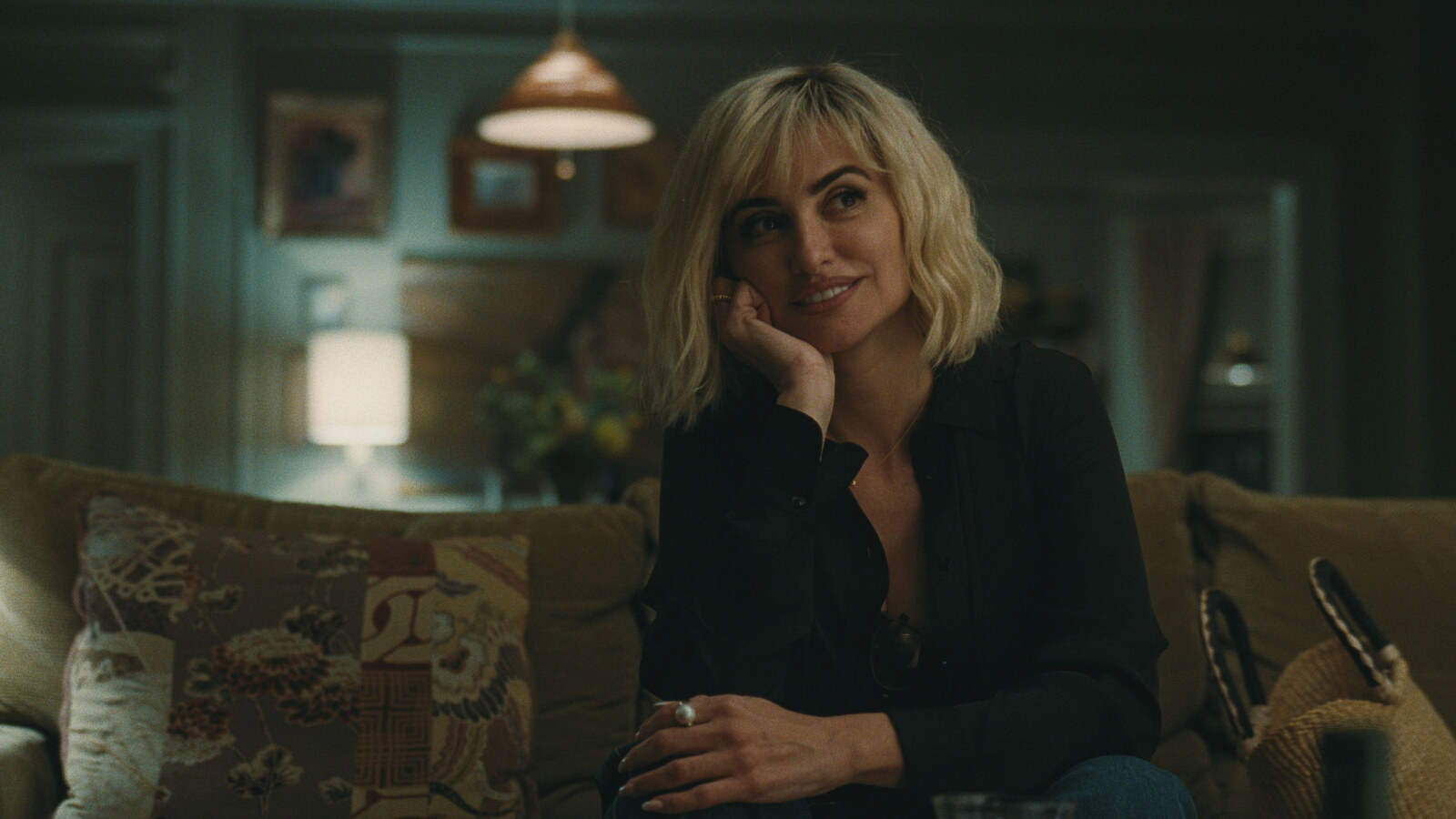
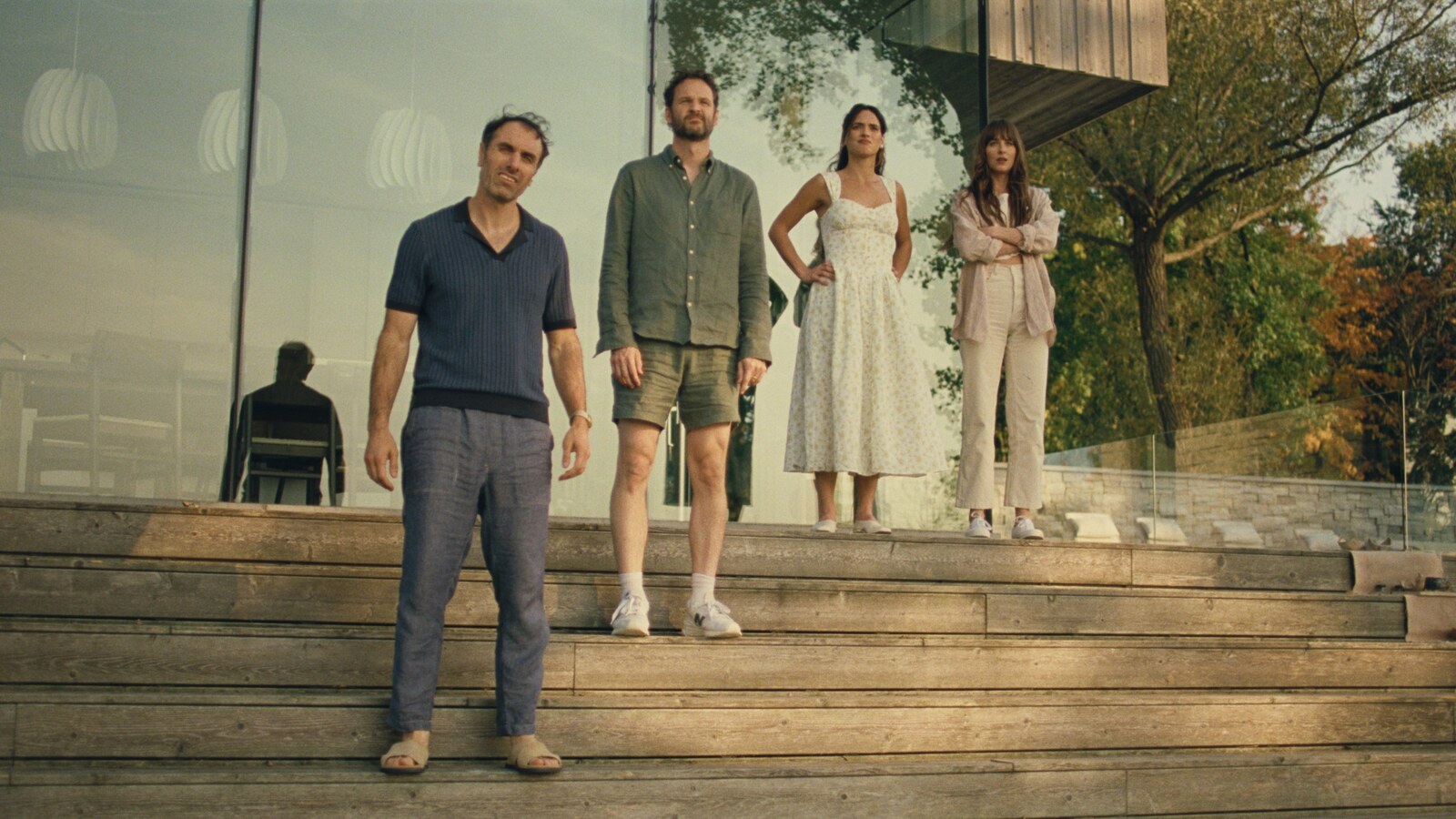
Yeah, I mean, it wasn't always that technical, but we were really gravitating towards dark wood tones and green tone. I was like anything that absorbs light is going to allow the actor's face to reflect more light. You know what I mean? It's like the darker everything around them is, the more their faces are gonna pop because this movie's about faces. So we kept gravitating towards darker tones, wood tones, and darker paint colors, and it really works well. I think it really allows the actors to pop out, even down to their wardrobe. We worked a lot with Arianne, we put Joe and Angela in clothes that blended into their apartment so that they kind of felt like they were just a living extension of the apartment. And then Joe and Angela have these really contrasting outfits that pop out from the apartment. So we did a lot. But everything was dark, and rich, and absorbed light so that no matter what, people's faces are really just popping off screen.
Yeah, no, I hadn't thought about it until you're saying it, but it's really true. And when Penélope Cruz and Ed Norton walk in, they feel like it's not their space. Especially in regards to their attire and yeah, they're dressed like they wouldn't have... That wouldn't be their home based on just how they're dressing alone, which is such smart... And that's layered storytelling stuff, beyond the fact that it's helping you on a technical level. And I really loved how composed the movie is especially in the beginning, and as you work it up over time and the tension ratchets up over time, the camera gets looser. I was curious what that conversation... I'm assuming that was probably the goal from the beginning and how you were just thinking about that and executing that.
I mean, to be honest, it doesn't... It gets somewhat looser, but I think that's more subconscious in the performance. I mean, the camera's on a tripod pretty much the entire movie. There's no handheld in the movie. There's a couple dolly shots. There's a couple steady cam shots. But for the most part, it's all on a dolly, usually locked off.
I was thinking a lot about when the foursome meets back up after they've broken off into their pairs. That felt like that was the one moment where the camera really felt much more alive in terms of movement.
Yeah. I mean, wait, which part are you talking about?
When they sync back up after having their moments together, and I think...
Like in the living room?
Yeah, and I think that it is primarily on Seth because he's coming in hot and the camera is matching his emotions in that moment.
Yeah. Yeah, I mean, again, a lot of that is just locked off shots that are somewhat panning or there'll be a fast tilt. But it feels a lot looser than it is. And a lot of it is editing, too. When I think back on that scene, I can tell you where the camera was and it was mostly in the middle of that room, and we were just literally shooting different people. And Seth has a couple dramatic movements where we tilt up with him quickly as he stands. A couple pans. But it's actually, I think it's all because the movie's building up to this, the energy just feels different. And then we went through a lot of iterations of talking about how to shoot this movie and we talked about doing wonders, we talked about handheld, we talked about a lot of steady camera, a lot of dolly. And what we ended up on was kind of reverting back to films we loved, which is a lot of very simply composed shots that are very gentle, and allowed performances to really play and let us drink in the actors. And we were able to find so many great compositions that were like, we don't need to fuck with this. Let's just frame the... And we did small things, we really, really wanted Penélope's energy in the space to be more seductive and exploratory and a little more invasive. So we did shoot Penélope on steady cam, and I think that created a nice rhythm. And with Edward, we did a lot of low angle stuff or high angle stuff where we wanted him to feel, mythical is not the right word, but just sort of a different presence or force in the space. And I think that worked really well. So a lot of it was just fine-tuning lensing, choosing what lenses we chose to shoot people with, what focal length, what distance away we were from them, and then camera height, and then also eye line. We played a lot with eye line. We tried to be really intentional about when we were gonna be close to someone's eye line or if we were gonna be far from someone's eye line. So all of these little tools actually ended up making, when you think of what you're doing as this massive toolkit of eye lines, focal length, camera distance, camera height, I don't know, camera movement, you really actually have a million tools at your disposal. And you can from there actually create a very, very dynamic movie because you can constantly play with all these tools and modulate them and I think that's what people respond to is that we really understood the tools we were working with. Even though they were limited, we were working on a very epic scale. I kept telling Olivia, I was like, "I want this movie to feel kinda epic. I want it to feel like we're in a landscape." And so for me, a landscape means you're looking at it from different angles. You're sometimes going in tight. You're sometimes breathing from a wide shot. It's really about exploring it as much as possible.
Yeah. 'Cause it's also, it's like that thing where perceived simplicity is really veiled complexity, and there's just a lot going on under the hood of your decision-making. But in the result, it seems very straightforward. But I think the reason that it doesn't feel like a filmed play, and it manages to maintain that cinematic quality the whole time is really with everything that you just said. And I also gotta believe that based on how you were lighting everything, the fact that you were keeping it on sticks and more composed helped you keep very thin margins between where the edge of frame was and where your units were. Which if you were handheld and things were a little looser, that would probably be a little bit more difficult.
Totally. Yeah, and I think it conveyed a sense of precision to everyone, especially the actors. Then the actors started to understand what we were doing and how intentional we were being. And I think that level of intention we were putting into the cinematography translated into the actors being like, "Oh, we're really dialing this in." 'Cause I think you can, if an actor shows up and you have a digital camera on your shoulder, they're like, "Oh, cool, we're just gonna shoot a bunch of shit and you're gonna find it in the end." You know what I mean? And I think, when Edward and Penélope walked on the set and we had a film camera and we had their shot that was lit for them, they're like, "Okay, we're doing this," like, "This is my shot. I'm going to give you what you need and I'm gonna push it as much as I can." So I think that set a lot of intention. And then I think, yeah, you said, it feels simple but I've found that making something feel natural is often the most complex thing in a lot of ways, especially with interiors like this. And yeah, I think the one thing I said to Olivia early on was I want... I was like, "If I do this movie, I really want it to feel effortless. I don't want to feel like we're trying too hard." And I think we did a good jo... And that doesn't mean we aren't trying hard. We were trying very hard. That doesn't mean you're trying way harder. And people talk about the simplicity of the cinematography. I'm like, don't get me wrong, it was so complex and there were so many layers to it and it was a very difficult and challenging shoot. But I think it was all with the goal of making it feel effortless and making it feel really natural and human.
Yeah. And with the humanity part too, I wanted to talk about there's obviously so much awkwardness that happens in the dialogue that happens between these characters, and a lot of that, majority of that is coming down to the direction and the acting itself. I was just curious how you viewed it from within your realm about filming awkwardness and were you doing anything proactively to heighten that feeling? How were you thinking about it, if at all, in particular?
Yeah, 100%. I mean, I was just doing an interview yesterday where we talked about that, and there's an amazing scene... Early on where Hawk and Pina have just entered the apartment and they're all standing in kind of, we call it the Spider-Man standoff, where everyone's in a different part of the apartment. They're standing awkwardly and there's a lot of space. And we shot Seth and Olivia flat against a wall with a wall divider in the middle of the frame, and them kind of awkwardly trying to find their position against that line. And so they're always, middle of frame but slightly off center with a ton of headroom. And they're in their own shots. They're facing each other, but they're in their own singles. But the singles are a medium shot and they have just as much headroom as they do room below their head. And then Edward is shot in this very beautiful, kind of slightly low angle, 35 millimeter medium shot that feels very natural and very almost heroic and makes him very handsome and very strong looking. And then Penélope is shot with this very sexy, seductive, longer lens steady cam shot. And so you immediately set the tone for Joe and Olivia being these awkward, bumbling people. Whereas Edward and Penélope are these muscular, beautiful, sexy, kind of comfortable in their own skin characters. So we played a lot with headroom and negative space and lensing to really heighten that sense of awkwardness. Also to the point where we'd shoot Olivia in a close-up, but her close-up wouldn't be with a medium lens. It'd be with a long lens. So all of a sudden we're in a close-up, but it's very, feels very compressed. It feels kind of claustrophobic. It feels very flat, and it feels like the wall is right behind her. Whereas if we shot her later in the film with a more medium lens, like a 29 or a 35, you start to feel the roundness of her body and her face, and you start to feel her pop out of the space and feel more three-dimensional. So we played a lot with dimensionality and whether we wanted to flatten somebody or sculpt them out of the space.
Yeah. No, I mean, it's a real mastery of understanding the consequences of the choices you're making. And I guess knowing that you were just talking about how you weren't necessarily shot listing, and there's this level of precision and intentionality on these choices. Is all of that coming to you that day, or was a certain amount of this understood, and a part of your plan heading into it? 'Cause everything that you listed in regards to that scene seems very dialed and knowing that you weren't shot listing, what level of that did you know going in regardless of what you might have discovered through their blocking in the rehearsal or whatever?
Well, honestly it's hard to remember at this point, but I think we talk a lot about keeping distance between characters in that scene and wanting to make Jordan, Olivia feel far apart and also blend into the apartment and feel the awkwardness. And we talked about how we wanted Penélope to feel sexy and seductive and also kind of like she owned the place. So all these keywords kind of helped. And then I knew that there were compositions that would translate that kind of before we started rehearsing. And so, I'd suggest, what if you stand him this side of the room and Seth you stand on that side of the room? And not saying this was my idea, but I can't remember, sometimes everyone had ideas for blocking, but there'd be times where I'm like, "It's gonna look really funny if you stand against this wall and I shoot you flat against it." And Olivia would see and be like, "Okay, yes, that's very funny. That works really well." Or Olivia would see something and be like, "Take a look at this. This is super sexy or super awkward." So it was really that. It was really just about us talking about the scenes and understanding the vibe and then from there rehearsing it and me, I feel like my brain moves at a million miles a minute whether I want it to or not. So I feel like I'm really good at reacting to things in the moment, drawing a point from A to B and being like, "Oh, I know this reference we love or this frame that we saw in the apartment we love. I can take that and apply it to this moment." That's my strong suit. I feel like I'm really good at reacting to that. So we were able to really do a lot of that on the fly.
That's the best, man. I mean, that's like when you're on set feeling like you're playing jazz or something.
Yeah. And a lot of it, too, is just, trust. A lot of it was just Olivia trusting me to find those frames and present them to her. And she's also acting and directing, so she had a lot on her plate. And I would come in. I'd walk onto set every morning before anyone else was there and just read the script and often use my crew, I'd have my crew stand in spots and take pictures of them. Just so I have all this stuff in my pocket to, once we start rehearsing, to show Olivia to be like, "What if they stood over there? 'Cause I have this shot right here." And she'd look at me like, "Okay, yeah, that works." Or she would be like, "Oh, I don't like that because it's not the right vibe, but let's try this." So it was really coming prepared with a lot of ideas was super important. It wasn't just showing up and being like, "Let's figure this out." It was like every day I had... I always, even when we're improvving that way, I always have a backup plan. And to be honest, I probably shot listed that entire movie in a document somewhere just for my own sanity. I'll just go through a script by myself and just write down shots. And so at least then at the end of the day, I can always reference. And at the end of the day, I probably never actually look at it. I don't think I looked at it once, but if I dug through my Google Docs folder, I could probably find a document, the end my shot list. But it's really just, it's kind of like studying before a test.
No, totally. Yeah, no, I get that. It's kinda nice you do all this preparation when you actually don't need to look at it on the day 'cause it's kind of just in through osmosis or something. Speaking about the seductiveness, obviously a lot of the tension builds up to these sexual scenes, and I was curious how you were thinking about filming those scenes in particular. The conversations around that, was there a lot of collaboration with things like an intimacy coordinator? You could have shot those scenes in a lot of different ways, and you ended up with something, to the credit and the way the whole film went, very subjective, very specific. And I was fascinated to learn how you landed on that for both couples.
I think for Seth and Penélope we wanted something kind of overly intimate and all, almost kind of comical because Penélope's character is such a romantic at heart and wears her heart on her sleeve and is so just kind of open and flowing that we were like, "Okay, let's just shoot this in steady cam close-ups and get really intimate and sexy." And I think that contrast with Seth's character and how awkward and bumbling he is was where the comedy sort of lied. And I don't think it's particularly sexy, but I think it's very funny. And some people might find it sexy. But I... Some people do find it sexy. I mean, but...
Well, Penélope, sure. But Seth, your mileage may vary.
Yeah, Penélope looks incredible. But yeah, she's so beautiful and I think it worked perfectly for the scene. Whereas with Edward and Olivia it was more about Edward's confidence and sort of physical dominance and Olivia's awkwardness and desire to be submissive. So her scene was a lot more static shots. It was a little awkward, but it was also Edward kind of occupying these frames in a really strong physical way. And yeah, I think that we weren't entirely sure how to shoot those scenes. I think it was maybe one of the harder things for us to do. Because it felt very climactic, but at the same time not what the movie was really about at all. It's kind of great the movie was kind of over by the time it got to that point. You know what I mean? By the time they got to it, it's like everything had already happened that needed to, to set the ending on its course. So it's like we were kind... Well, I think that those scenes we tried not to overwork them, if that makes sense.
Well, it does. And what I loved about it is that you think that the whole movie's leading up to that, and then it doesn't go on as long as you think it will. And then the most interesting aspects of the film happen after, obviously in the conversation, in the conversations that unfold after. And it's not that it's a misdirect, but I didn't see that coming and that was so nice because then I realized what the movie was actually about. And it's nice that wasn't so clear in a way that was obvious. It was a pleasantly surprising thing where I think my appreciation for the film overall grew as I watched it because I had almost maybe in a subconscious way I thought I knew what the movie was about and then it wasn't about that. And it made me like the movie a lot more. Only a couple more questions. So with Seth Rogen's glasses, that must have been a real pain and reflections. How are you dealing with that?
I mean, I've dealt with it for the past three years of my life, so I'm used... or four years now. I mean, so I guess it started with Aziz' movie and just ended now with season two of The Studio, so I'm used to it. And I work really closely with the props department to get glasses that have AR coating on them, anti-reflective coating on them. And we test different AR coatings, 'cause there's different colors of it. Like on The Studio I think his AR coating is gold, and on other projects it's been blue, and then I think on this we had no color in it. It's a pain in the ass, and I think fortunately Seth is aware of it and he's very generous with... I'm like, "Seth, can you please just keep your eyes up here or turn your head this way?" But I try to... A lot of it is sitting with the stand-in and watching what the glasses do on the stand-in, and then being like, "Oh, that shot's not gonna work. I'm gonna move the light over here." There are times where it's like a total head-scratcher, and then times where it's not so bad. But we lit from above a lot, which helped, and then from below we would do a lot of smaller sources and bounces, so we were able to move them a lot, and that helped a lot.
Okay. No, and that was an awesome answer. I hadn't thought a lot about the reflective coating, but that makes a lot of sense.
It's kind of a nightmare. And then as far as otherwise I think compositionally, he always wears pretty big glasses, so I feel like it doesn't block his eyes too much. And we're able to shoot him from the side a lot and see his eyes through the other side of the glasses. But yeah, I guess I'm kinda used to it now, but it is one of those things where you set up for a test shoot, and they sit down, and you're like, "Oh, fuck. I forgot they're wearing glasses. This is gonna completely change what I'm doing."
Yeah, yeah. No, it's a huge challenge and he's wearing them the whole movie, and it all worked, and I am floored by that. So I'm glad to ask you that. So I just wanted to talk about the last section, the last moments of the film 'cause I thought it was just so beautiful. The shot with Seth's hand at the piano and then Olivia's hand joins them, it was just the perfect shot for the moment, and I'd love to just know how that shot came about.
Ugh, I wish I could tell you. We were shooting that scene at, that was the last night we were on the stage, and we were gonna get kicked off the stage, and we had to go to... We shot it in LA, and then we shot a day in San Francisco, and we had to load out of that. It was our last day on stage. We were a little behind schedule because we had just shot the climax of the movie and everyone was exhausted and we did a million takes and we're like, "Oh, fuck, now we gotta shoot the end of the movie." And so I think we did a 20-hour day that day. It was 4:00 in the morning when we shot that scene, which I think actually really helped, but it was really painful. All I remember about shooting that scene is how delicate I wanted it to be. I wanted it to be really sweet, really tender, but also kind of a question mark on everything. I didn't want it to have too much closure. So we were really thoughtful about the amount of shots we had and the intentionality. And I really wanted everything to feel really simple. I felt like we had worked so hard to make something that feels effortless and human and just kind of invisible that I was like, what are the simplest shots we can use to tell this story? And it was like a shot of his hands, a shot of her face, a wide shot of the apartment, and then we ended with that really, really special shot zooming through the shaft way, through the windows. It was so good we were so excited about that shot and we knew as soon as we found it, and Jade kind of designed that shot by the way, she designed the space. We were like, "Okay, we have to save this for the end." We used those angles a little bit, but we were like, "We're gonna use this one shot for the end," so we were really excited. So it's really just whenever I think of that scene, I think of those four shots. It's basically those four shots that tell the story, and I really wanted to live with them and drink them in and just be really delicate and patient with them. But the hand shot, I honestly don't remember where that came from. But we also just wanted to let people know that Seth was actually playing the piano. 'Cause I think there was a worry that he was just gonna be at the piano doing his thing, and everyone was like, "Oh, that's fake. You can't actually play the piano," and we really wanted to show that he was actually touching the keys.
Yeah. Well, it was a beautiful, poignant way to end it, and your hope for that scene was definitely realized. So it was great. But yeah, but that was the last shot of the movie, and it's the last question I have, so. But thank you, man. Being able to hear your detailed insights on all of this has been really great, and I'm not surprised at the simplicity of it is really so much thought behind the scenes. So really, really enjoyed the conversation.
Yeah, definitely. Thanks for the good questions. I'll talk to you soon.
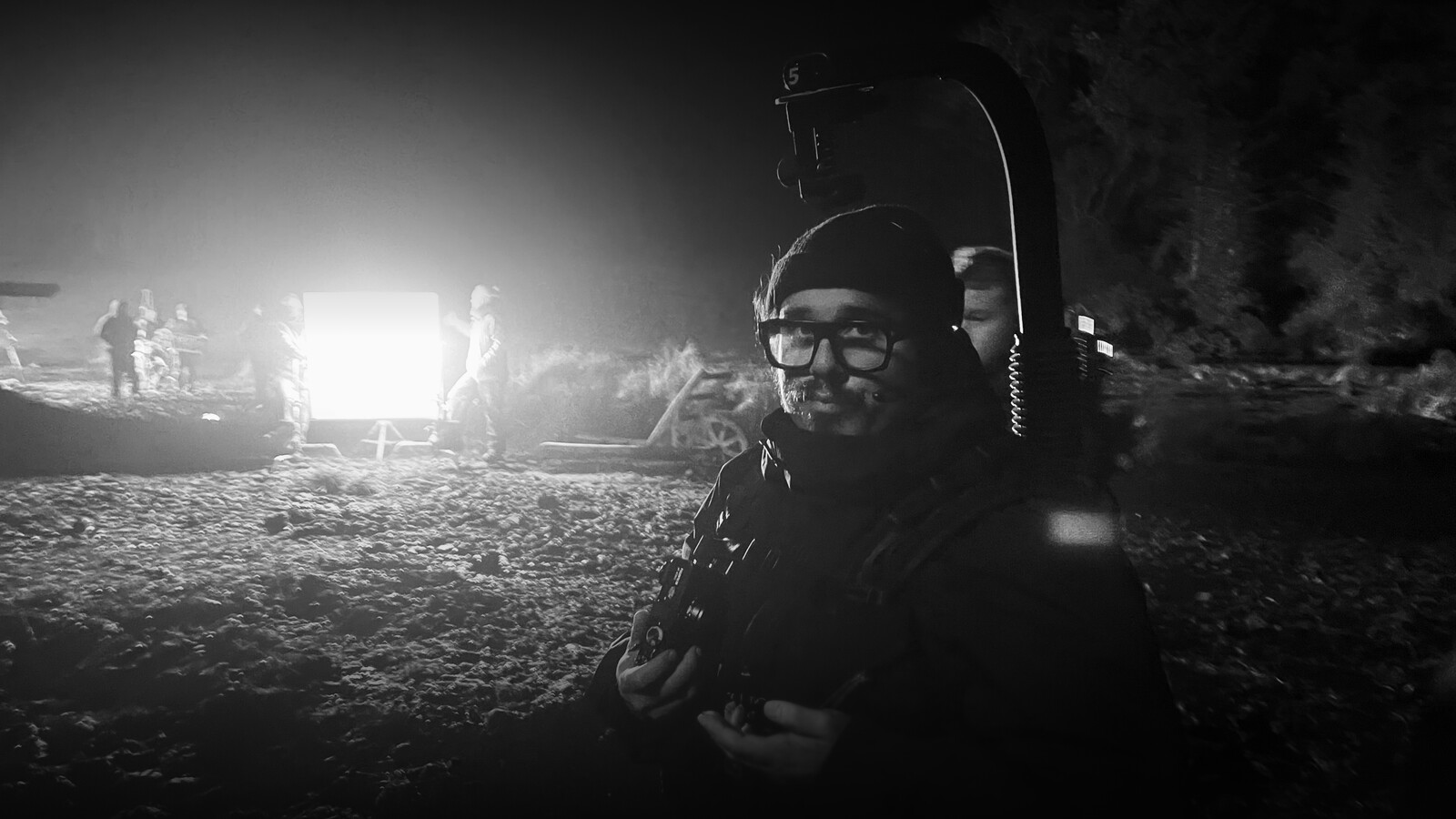
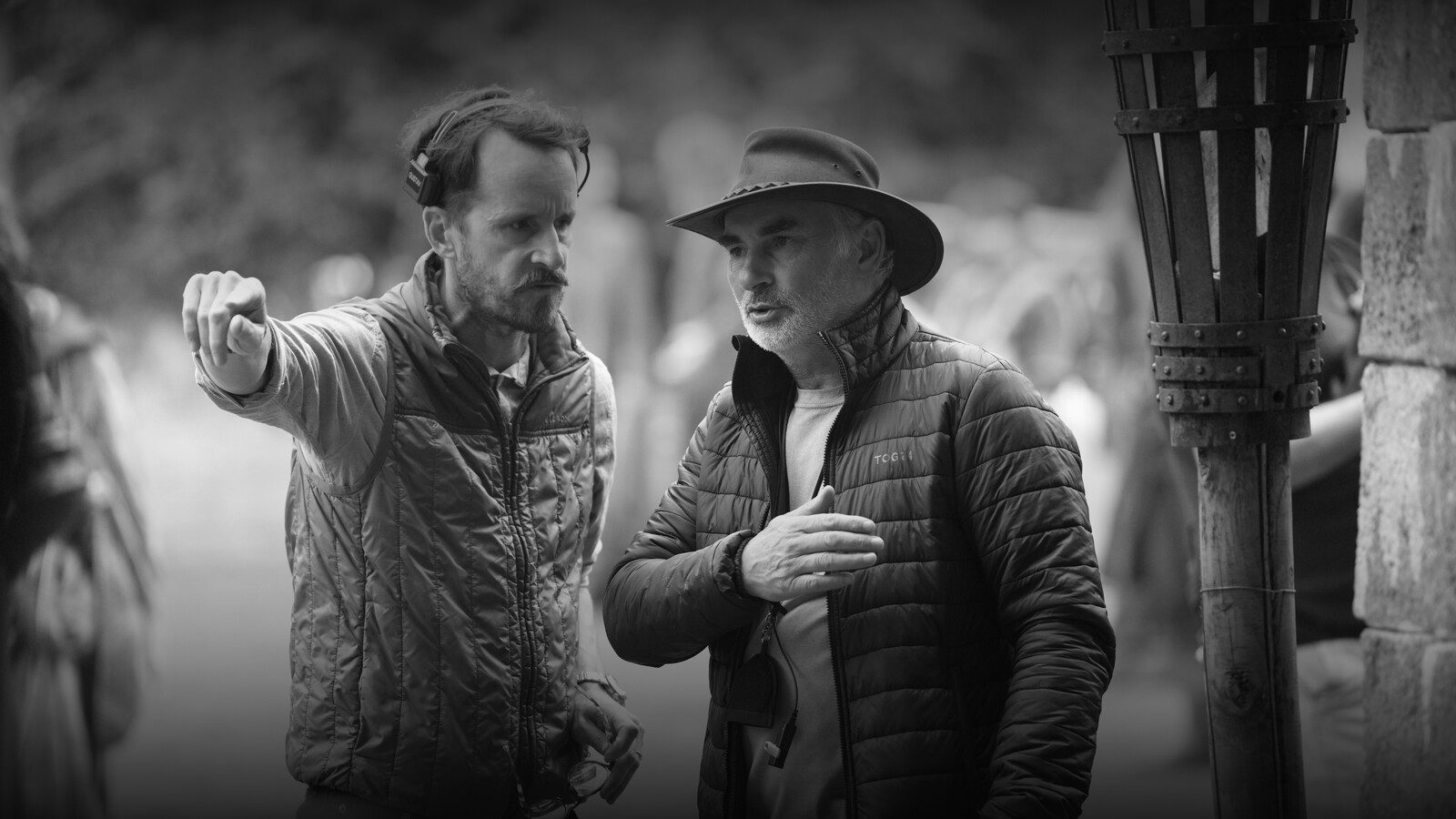
The work stays free. Someone still pays for it.
Every episode, every article, and both of the Resources tools are free to use. No paywall, no membership fee, no login. That is not a growth tactic, it is the whole point: learning to light a scene should not depend on what you can afford.
Sponsors cover part of it. The rest is people chipping in.
Monthly or yearly, from $5 a month, less than the price of a coffee. It costs real money to keep the podcast, the writing, and the tools running, and supporting is what covers it.